India’s chip moment arrives
New Delhi, 17 September Six countries have built pavilions of their own on the floor at Yashobhoomi. Six hundred companies have taken space. Fifty-two countries have sent someone. For a country that had no commercial fabrication plant of any size a decade ago, that is the number worth pausing on.
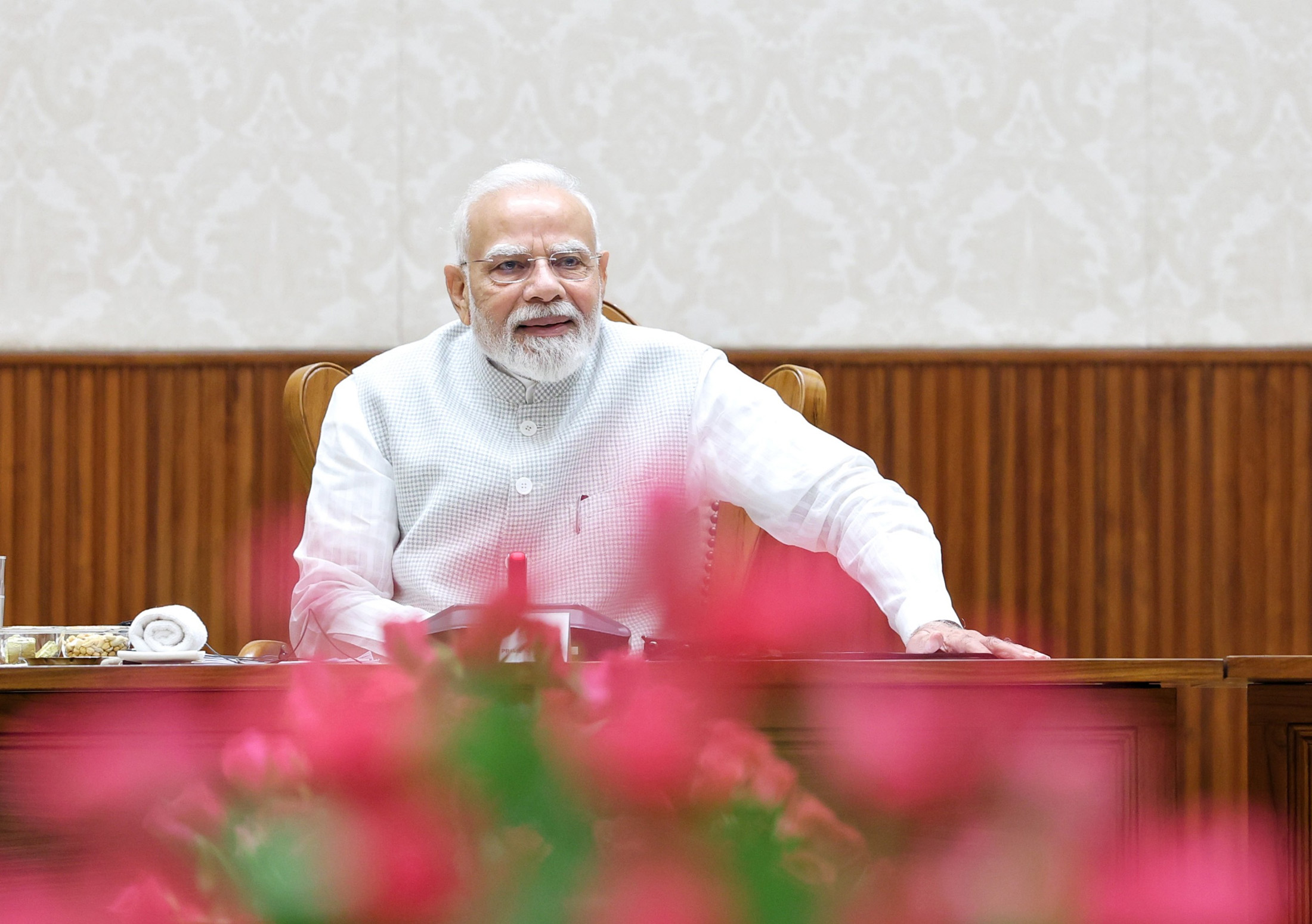
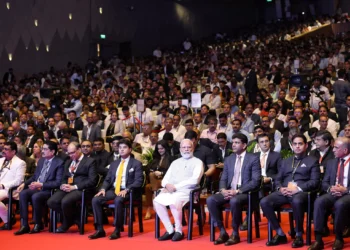
Prime Minister Narendra Modi inaugurated SEMICON India 2026 at Yashobhoomi in New Delhi at around 10 AM, according to the Prime Minister’s Office press release of 16 September 2026. The three-day conference and exhibition runs to 19 September on the theme ‘Silicon to Systems: Building the Ecosystem’.
Who has come
The Prime Minister’s Office puts participation at more than 600 companies, around 50,000 expected visitors, representatives from 52 countries, more than 400 executives and over 150 speakers. Japan, South Korea, Malaysia, the Netherlands, Singapore and Sweden have each taken a country pavilion. Twelve States have booths. There is a Startup Pavilion, an Innovation Showcase, a Student Hackathon and a Workforce Development Pavilion.
Work the figures and the shape of the thing changes. Six hundred companies spread across 52 countries averages 11.5 companies a country — derived here, from two figures the release gives separately and never sets against each other. The six national pavilions represent 11.5% of the countries present — which is to say that most of the world came as companies, and six governments came as governments. Fifty thousand visitors over three days is about 16,667 a day.
From sand to systems
The exhibition is arranged along the value chain rather than by company size. A new ‘Sand to Silicon to Systems’ Value Chain Experience carries the visitor from materials and equipment through chip design, fabrication, advanced packaging, and on to electronics and finished systems. Parallel sessions cover the display industry. Six Country Roundtables are set up to move conversations towards joint ventures, and there is a forum on women’s leadership in the sector.
The choice of arrangement is itself the argument. A country that only assembles wants a hall organised by brand. A country trying to hold a whole chain wants a hall organised by process, so that a student walking it can see where the gaps are.
The evening before
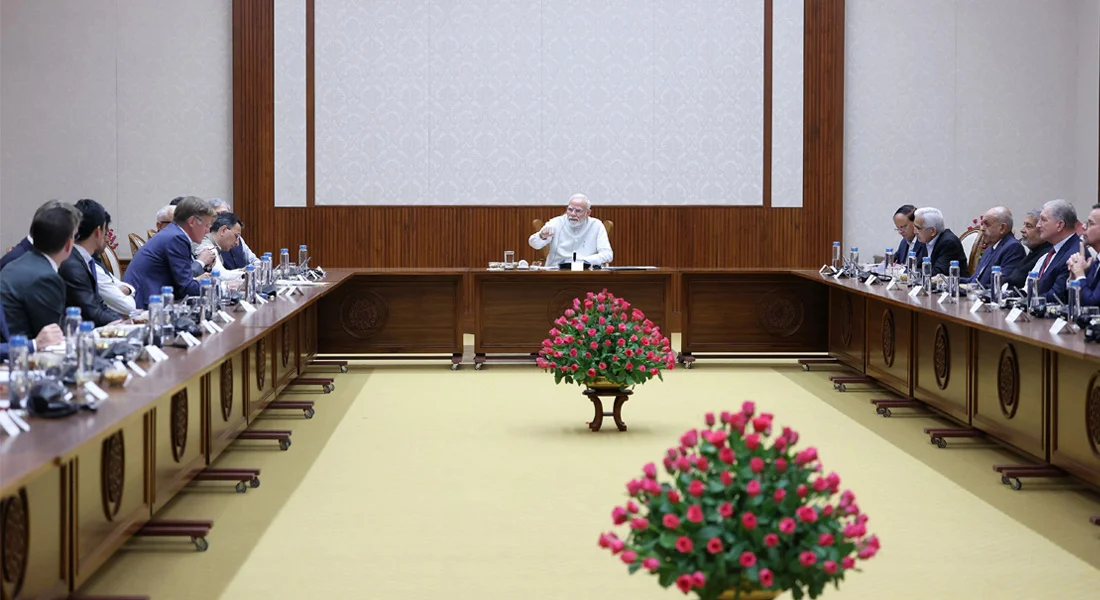
On 16 September, at Seva Teerth, the Prime Minister chaired a semiconductor roundtable with chief executives, according to the Prime Minister’s Office press release of that date, release ID 2311132, timed 7.17 PM. The list in that release is the useful part of it: SEMI, Micron, Infineon, Applied Materials, ASML, Merck, Tokyo Electron, FujiFilm, AMD, Intel, Tata Electronics, Lam Research, Rapidus, NXP, Foxconn, Semiconductor Devices, Advantest, Celesta Capital, CG Power and IBM Research.
Read that list against the value chain in the hall and the pieces line up. ASML and Applied Materials and Lam Research and Tokyo Electron make the tools. Merck and FujiFilm make the materials. Micron, Intel, AMD, NXP, Rapidus and Tata Electronics make or design the chips. Foxconn and CG Power put them into things. The roundtable was the chain in one room, a night before the hall opened.
The Prime Minister said India should aim to be in a leadership role in emerging technologies from the outset, and that the semiconductor ecosystem had moved past its first efforts into a phase of larger scale. He referred to a target of training one crore people in artificial intelligence. He invited the executives to send in suggestions on policy and administrative measures, and said policy would have to change as the technology and the industry’s needs changed.
EPFO cover gets a big boost
NEW DELHI, 17 September The wage ceiling for mandatory coverage under the Employees’ Provident Fund Organisation rises from Rs 15,000 to Rs 25,000 a month. The Union Cabinet approved the Ministry of Labour and Employment’s proposal on 16 September 2026, according to the Prime Minister’s Office press release of that date, and more than 51 lakh additional employees are expected to come within mandatory coverage.
Until now a new employee joining at a wage above Rs 15,000 a month was not automatically covered, and could stay outside provident fund, pension and the linked insurance. The threshold was last moved in September 2014, and had not moved in the decade before that.
The annual government outgo is put at about Rs 11,339 crore against existing annual budgetary support of about Rs 10,250 crore — an extra Rs 1,089 crore a year, or 10.62% above what is already spent — both figures derived here. The five-year estimate of Rs 56,696 crore is exactly five times the annual figure, so no escalation has been built into it. Spread over 51 lakh workers, the annual cost works out at about Rs 22,233 a head. The proposal was recommended by the Expenditure Finance Committee at its meeting of 16 June 2026.
EPFO data in the same release show around 7.98 crore contributing members across about 7.68 lakh establishments — an average of 104 contributing members an establishment — with the Employees’ Pension Scheme paying about 82 lakh pensioners. The 51 lakh newly covered are 6.39% of the existing contributing membership.
Information and Broadcasting Minister Ashwini Vaishnaw, briefing the media after the Cabinet meeting, said the revised ceiling takes effect from Vishwakarma Jayanti, which falls today, as reported by Akashvani News on 17 September 2026.
Kuno’s big cat success story
KUNO, 17 September Thirty-two cubs have been born in India since the cheetah came back. That is the figure inside the status review titled “Four Years of Cheetahs in India”, reported by Akashvani News on 17 September 2026, and it is 61.5% of the present population of 52.
The review covers 17 September 2022 to 17 September 2026. Forty-nine of the 52 are in Kuno National Park — 94.2% of them — and three in Gandhi Sagar Sanctuary. The animals came from Namibia, South Africa and Botswana in what the review describes as the world’s first intercontinental translocation of large wild carnivores.
Of the 12 South African cheetahs introduced on 18 February 2023, eight have survived. With 10 India-born offspring, the South African-origin group and its progeny stand at 18 — a survival rate of 66.7% on the original 12, and the two figures sum as stated. Fifteen of the 18 are at Kuno and three at Gandhi Sagar.
Kuno National Park has said that breeding females establishing themselves, and second-generation cubs surviving four years in, mark a consolidation phase.
PM Vishwakarma powers India’s crafts economy
NEW DELHI, 17 September PM Vishwakarma completes three years today with 30 lakh beneficiaries registered, Akashvani News reported on 17 September 2026. The scheme was launched in 2023 and offers end-to-end support to traditional artisans and craftspeople.
Thirty lakh registrations across three years averages 10 lakh a year — a figure the desk has derived, and one worth holding against the trades the scheme covers, which are family occupations rather than organised employment.
Swachhata drive goes nationwide
NEW DELHI, 17 September The Swachhata Hi Seva campaign for 2026 starts across the country today on the theme ‘Swachhata Mein Sahbhag; Swachh Bharat, Viksit Bharat’, built around five pillars, according to Akashvani News of 17 September 2026.
Jal Shakti Minister C R Patil launched the campaign with Minister of State for Jal Shakti V Somanna and Minister of State for Housing and Urban Affairs Tokhan Sahu, the broadcaster reported on 16 September 2026. The Ministry of Heavy Industries and the Ministry of Housing and Urban Affairs have both announced their own drives under it.
Censor board recast for three years
NEW DELHI, 17 September The Central Board of Film Certification has been reconstituted with immediate effect for three years, with 18 members, the Ministry of Information and Broadcasting said, as reported by Akashvani News on 17 September 2026.
India passes the circular baton
GANDHINAGAR, 17 September The World Circular Economy Forum 2026 has ended in Gandhinagar with a call for faster adoption of inclusive circular economy solutions at scale, according to Press Information Bureau release 2311103 of 16 September 2026. Columbia University in the United States will host the 2027 edition.
India hosting one year and an American university the next is the part that matters for standing: the forum has moved through a country that is still building its recycling capacity, and the ideas travel on from here.
CSIR takes innovation to market
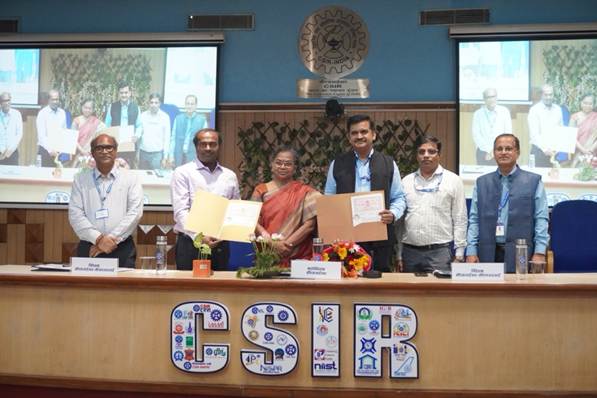
NEW DELHI, 17 September Chromium shavings are the leather industry’s hardest leftover. They do not rot, they hold collagen nobody has been able to use, and tanneries have long paid to keep them out of the way.
CSIR-Central Leather Research Institute, Chennai, has a process that takes chromium-free protein hydrolysate out of those shavings and turns it into acrylic, phenolic and melamine-based syntans, which go back into retanning leather. The Council of Scientific and Industrial Research transferred it to industry at its headquarters on 16 September 2026, according to the Press Information Bureau press release of that date.
Where it stands
The process has been run at a pilot scale of 100 to 200 kg and validated at a commercial scale of 1,500 kg. CSIR-CLRI says adoption can cut total dissolved solids in post-tanning waste water by up to 50%. The technology is patented, industry-validated and ready for commercial licensing — which puts it past the stage where most laboratory work stops.
A second CLRI technology recovers iron and chloride from spent pickling acid, the strongly acidic waste that steel processing throws off, and converts them into pigment-grade iron oxide and ammonium chloride.
Two from the roads laboratory
CSIR-Central Road Research Institute, New Delhi, transferred two. Clarivisor is a glare-reduction device for four-wheelers, sized to fit in place of the original sun visor with no structural change to the vehicle. The other is a two-pack onsite pothole filling mix: two packets mixed at the spot, applied cold, no hot-mix plant and no heating, solvent-free, and the road reopens sooner.
The claim to weigh here is the cold application. A hot-mix repair needs a plant, a truck and a window of dry weather. A two-pack cold mix needs a municipal crew and a road. If it holds in service — and service data is what the release does not give — it changes who can fix a pothole, not just how fast.
Secretary, Department of Scientific and Industrial Research and Director General, CSIR, N. Kalaiselvi addressed the programme and pressed for faster movement of CSIR technologies from laboratory to industry. Directors of both laboratories spoke.
Aviation Ministry’s big clean-up drive
NEW DELHI, 17 September Scrap sold for Rs 41,20,582. Office space freed: 18,308 sq ft. Those two lines, taken together, say the Ministry of Civil Aviation earned about Rs 225 a square foot by clearing out what was standing on it.
The ministry reported its progress under Special Campaign 5.0 for the disposal of pending matters, covering 1 November 2025 to 31 August 2026, in Press Information Bureau release 2311183 of 16 September 2026.
It reviewed 6,803 physical files and 1,316 e-files — 8,119 in all. Of the e-files, 570 were closed, 43.3% of those reviewed. Of the physical files, 1,628 were weeded out, 23.9% of those reviewed. There were 1,166 cleanliness drives.
On grievances the ministry reports more than 7,250 public grievances and 2,100 appeals resolved in the period — 9,350 together — at a redress rate of about 99%. It also settled 41 references from Members of Parliament, 20 from the Prime Minister’s Office, three inter-ministerial and 14 from State governments.
Civil Aviation Minister K Rammohan Naidu led the review, and the release records that a Passenger Assistance Control Room was made operational on 10 December 2025 for real-time monitoring of aviation operations and faster resolution of passenger complaints.
One caution belongs with the 99%. A redress rate counts cases closed against cases received in a window; it is a measure of throughput, and the release does not give the satisfaction outcome behind the closures. That is the figure a reader would want next.