• About us
  • Team
  • Privacy Policy
  • Contact
Wednesday, October 14, 2026
  • Login
No Result
View All Result
World's first weekly chronicle of development news
  • Blitz Highlights
    • Special
    • Spotlight
    • Insight
    • Entertainment
    • Sports
  • Opinion
  • Legal
  • Perspective
  • Nation
    • East
    • West
    • North
    • South
  • Business & Economy
  • World
  • Hindi Edition
  • International Editions
    • Dubai
    • Tanzania
    • United Kingdom
    • USA
  • Blitz India Business
  • Blitz Highlights
    • Special
    • Spotlight
    • Insight
    • Entertainment
    • Sports
  • Opinion
  • Legal
  • Perspective
  • Nation
    • East
    • West
    • North
    • South
  • Business & Economy
  • World
  • Hindi Edition
  • International Editions
    • Dubai
    • Tanzania
    • United Kingdom
    • USA
  • Blitz India Business
No Result
View All Result
World's first weekly chronicle of development news
No Result
View All Result

Three Weeks Inside CETA: What an Indian Family Actually Notices When 99 Per Cent of Tariff Lines Go to Zero

by Blitz India Media
August 4, 2026
in News
0
export

Blitz Bureau

NEW DELHI: The India–United Kingdom Comprehensive Economic and Trade Agreement entered into force on July 15. Most of what has been written about it since concerns exporters. The more useful question for a general reader is narrower and more personal: over the next two years, in which specific parts of an Indian life does this treaty actually show up? Four places, on the text of the agreement itself. In a payslip, if you are sent to Britain by an Indian employer. In the price of a bottle of Scotch. In the price of a British-built car. And, less visibly but most consequentially, in the number of jobs available in a handful of labour-intensive export industries.

The payslip clause is the one that has travelled least far. Alongside CETA, and in force from the same date, is a Double Contribution Convention on social security. Under it, an employee already working for an India-based employer who is seconded to the United Kingdom — and that employer — are exempt from UK National Insurance contributions for three years. The saving is meaningful, in the region of a fifth of the salary cost, and more than 60,000 employees, most of them in information technology, are expected to be covered. Two qualifications matter and are often dropped: someone who moves to Britain and finds a job with a British employer pays National Insurance from day one, and a seconded worker who is exempt builds no entitlement to a UK state pension during those three years, continuing instead to contribute to Indian provident fund.

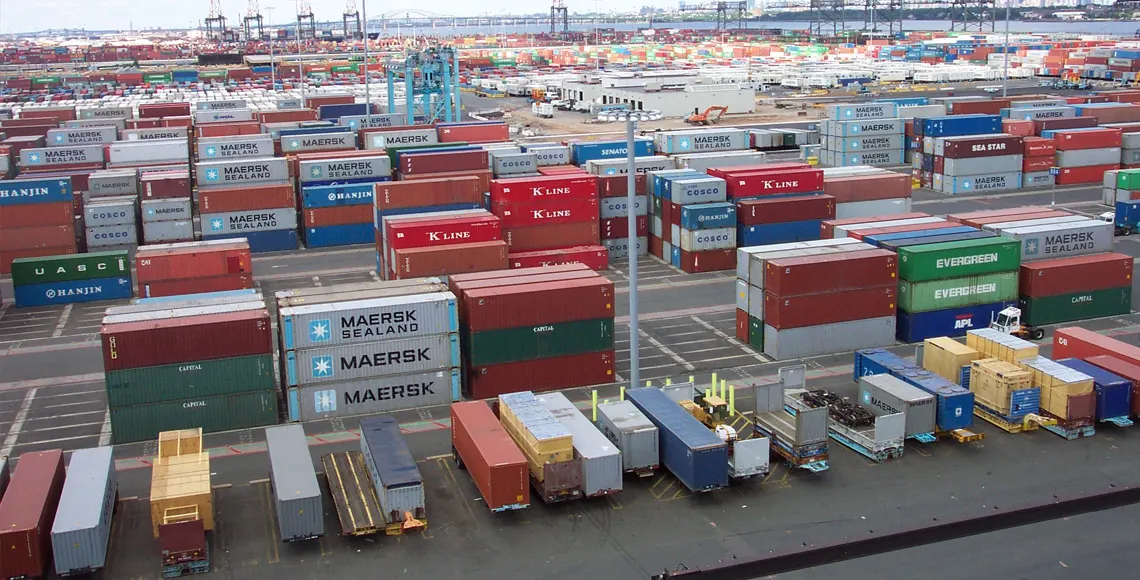
Fifty consignments on day one: more than $140 million of Indian goods shipped to Britain under CETA preferences on July 15 itself — the fastest uptake India has recorded on any trade agreement’s opening day.

A trade agreement is not felt as a trade agreement. It is felt as a payslip, a price tag and, eventually, a job advertisement in Tiruppur.

At a Glance

• In force since: July 15, 2026 — CETA and the Double Contribution Convention together
• UK side: duties removed on 99 per cent of Indian tariff lines — up to 70 per cent on processed foods, 21.5 per cent on marine products, 18 per cent on engineering goods and auto components, 16 per cent on leather and footwear, 12 per cent on textiles and clothing, 8 per cent on chemicals and pharmaceuticals
• India side: tariffs removed, reduced or already at zero on 90 per cent of tariff lines, covering 92 per cent of existing goods imports from Britain
• Whisky and gin: Indian duty falls from 150 per cent to 75 per cent now, and to 40 per cent over a decade
• Day one: more than 50 consignments worth over $140 million dispatched from India under the agreement
• Negotiation: 14 rounds over three years — India’s most comprehensive agreement with a G-7 economy
• Next in the queue: the India–EU agreement, concluded January 27, 2026, now in legal scrub and translation before signature and ratification

The consumer arithmetic is straightforward but frequently overstated. The duty on imported whisky and gin has halved from 150 per cent to 75 per cent, and falls to 40 per cent over ten years. A halved duty is not a halved price: state excise, distribution margins and the sterling exchange rate sit on top of the landed cost, and in most states they account for the larger share of what a bottle costs. The honest expectation is a visible but modest fall at the premium end, felt first in the states with the lightest excise structures. The same logic applies to British-made cars, where the tariff concession is real but the affected volumes are small relative to a market that dispatched more than 4.7 lakh passenger vehicles in July alone.

Where CETA will matter most is in the export lines that employ people rather than the import lines that price them. Duties of up to 12 per cent on textiles and clothing, 16 per cent on leather and footwear and 21.5 per cent on marine products have gone to zero into a market that already buys those goods. Those are the industries in which a percentage point of tariff translates directly into an order won or lost, and in which an order won translates into shifts added in Tiruppur, Kanpur, Agra and coastal Andhra Pradesh. The constructive question for the next two quarters is not whether the tariff has fallen — it has — but whether small exporters can complete rules-of-origin documentation fast enough to claim it. That is an administrative problem with an administrative solution, and it is where trade-facilitation effort will pay for itself several times over. Meanwhile the India–EU agreement, concluded on January 27 after two decades of negotiation, is working through legal review and translation. Britain was the pilot. Europe is the scale.

Related Posts

Rajnath Singh
News

India offers ASEAN joint manufacture of defence systems

October 14, 2026
India Canada diplomatic ties
News

India News: Canada Ties, Ports, Minerals and Stubble Fires

October 14, 2026
Asian Champions Trophy 2026
News

Pathak returns as India names squad for Asian Champions Trophy

October 13, 2026
Electronics production grows seven-fold : MeitY
News

New Delhi, 13 October : India’s fintech sector raised $2.2 billion in the first nine months of 2026 (January 1, 2026–September 30, 2026), up 14 per cent from $1.9 billion in the same period a year earlier, a report said. The report from data intelligence platform Tracxn Technologies Limited said funding rounds dipped from 260 to 153, adding that the funding was concentrated in a smaller number of large late‑stage rounds, with five mega‑rounds of $100 million or more accounting for $1.1 billion or 48 per cent of total capital. The report said in the first nine months of 2026, digital lending and payments topped the category rankings, while Bengaluru accounts for over three-fifths of all capital raised. On the exit side, IPOs saw a 50 per cent uptick while overall acquisitions slowed. As many as 30 companies raised their first funding round, down 49 per cent from 59 in the previous year. Series A and later rounds totalled 77, down 31 per cent from 112. Late-stage funding (Series C+, PE, and pre-IPO) led the mix, rising 95 per cent to $1.5 billion in the first nine months of 2026 — up from $751 million during the same period in the previous year. This capital surge pushed late-stage investments to 67 per cent of total market funding, the report noted. Earlier stages experienced contractions in capital and deal counts. Early-stage funding fell 33 per cent to $668 million across 52 rounds, compared to $1 billion across 82 rounds in nine months of 2025. Seed funding fell 57 per cent to $73.8 million across 76 rounds, down from $173 million across 148 rounds. New unicorns crossed the billion-dollar threshold in an average of 7.1 years after their Series A funding. Moreover, the industry saw 3 IPOs in nine months of 2026, up 50 per cent from 2 in the previous year, alongside 11 acquisitions, down 45 per cent from 20.

October 13, 2026
Indian stock market
News

IBM and MeitY Startup Hub partner to support India’s deep-tech startups with AI, cloud, quantum computing and mentorship.

October 13, 2026
IBM
News

IBM, MeitY sign MoU to boost India’s deep-tech

October 13, 2026
Load More
Next Post
L&T bags metal orders worth Rs 15,000 crore

L&T wins over Rs 15,000 cr offshore order in Middle East

Recent News

Rajnath Singh
News

India offers ASEAN joint manufacture of defence systems

by Blitz India Media
October 14, 2026
0

NEW DELHI, 14 October— India is ready to explore building patrol vessels, radars, air-defence systems, helicopters and drones together with...

Read moreDetails
India Canada diplomatic ties

India News: Canada Ties, Ports, Minerals and Stubble Fires

October 14, 2026
Asian Champions Trophy 2026

Pathak returns as India names squad for Asian Champions Trophy

October 13, 2026
Electronics production grows seven-fold : MeitY

New Delhi, 13 October : India’s fintech sector raised $2.2 billion in the first nine months of 2026 (January 1, 2026–September 30, 2026), up 14 per cent from $1.9 billion in the same period a year earlier, a report said. The report from data intelligence platform Tracxn Technologies Limited said funding rounds dipped from 260 to 153, adding that the funding was concentrated in a smaller number of large late‑stage rounds, with five mega‑rounds of $100 million or more accounting for $1.1 billion or 48 per cent of total capital. The report said in the first nine months of 2026, digital lending and payments topped the category rankings, while Bengaluru accounts for over three-fifths of all capital raised. On the exit side, IPOs saw a 50 per cent uptick while overall acquisitions slowed. As many as 30 companies raised their first funding round, down 49 per cent from 59 in the previous year. Series A and later rounds totalled 77, down 31 per cent from 112. Late-stage funding (Series C+, PE, and pre-IPO) led the mix, rising 95 per cent to $1.5 billion in the first nine months of 2026 — up from $751 million during the same period in the previous year. This capital surge pushed late-stage investments to 67 per cent of total market funding, the report noted. Earlier stages experienced contractions in capital and deal counts. Early-stage funding fell 33 per cent to $668 million across 52 rounds, compared to $1 billion across 82 rounds in nine months of 2025. Seed funding fell 57 per cent to $73.8 million across 76 rounds, down from $173 million across 148 rounds. New unicorns crossed the billion-dollar threshold in an average of 7.1 years after their Series A funding. Moreover, the industry saw 3 IPOs in nine months of 2026, up 50 per cent from 2 in the previous year, alongside 11 acquisitions, down 45 per cent from 20.

October 13, 2026
Indian stock market

IBM and MeitY Startup Hub partner to support India’s deep-tech startups with AI, cloud, quantum computing and mentorship.

October 13, 2026

Blitz Highlights

  • Special
  • Spotlight
  • Insight
  • Entertainment
  • Health

International Editions

  • US (New York)
  • UK (London)
  • Middle East (Dubai)
  • Tanzania (Africa)

Nation

  • East
  • West
  • South
  • North
  • Hindi Edition

E-paper

  • India
  • Hindi E-paper
  • Dubai E-Paper
  • USA E-Paper
  • UK-Epaper
  • Tanzania E-paper

Useful Links

  • About us
  • Team
  • Privacy Policy
  • Contact

©2024 Blitz India Media -Building A New Nation

Welcome Back!

Login to your account below

Forgotten Password?

Retrieve your password

Please enter your username or email address to reset your password.

Log In

    No Result
    View All Result
    • Blitz Highlights
      • Special
      • Spotlight
      • Insight
      • Entertainment
      • Sports
    • Opinion
    • Legal
    • Perspective
    • Nation
      • East
      • West
      • North
      • South
    • Business & Economy
    • World
    • Hindi Edition
    • International Editions
      • Dubai
      • Tanzania
      • United Kingdom
      • USA
    • Blitz India Business

    ©2024 Blitz India Media -Building A New Nation