• About us
  • Team
  • Privacy Policy
  • Contact
Tuesday, September 1, 2026
  • Login
No Result
View All Result
World's first weekly chronicle of development news
  • Blitz Highlights
    • Special
    • Spotlight
    • Insight
    • Entertainment
    • Sports
  • Opinion
  • Legal
  • Perspective
  • Nation
    • East
    • West
    • North
    • South
  • Business & Economy
  • World
  • Hindi Edition
  • International Editions
    • Dubai
    • Tanzania
    • United Kingdom
    • USA
  • Blitz India Business
  • Blitz Highlights
    • Special
    • Spotlight
    • Insight
    • Entertainment
    • Sports
  • Opinion
  • Legal
  • Perspective
  • Nation
    • East
    • West
    • North
    • South
  • Business & Economy
  • World
  • Hindi Edition
  • International Editions
    • Dubai
    • Tanzania
    • United Kingdom
    • USA
  • Blitz India Business
No Result
View All Result
World's first weekly chronicle of development news
No Result
View All Result

35 Lakh Weavers, ₹1,331 Crore of Exports

by Blitz India Media
August 8, 2026
in News
0
Handloom

Blitz Bureau

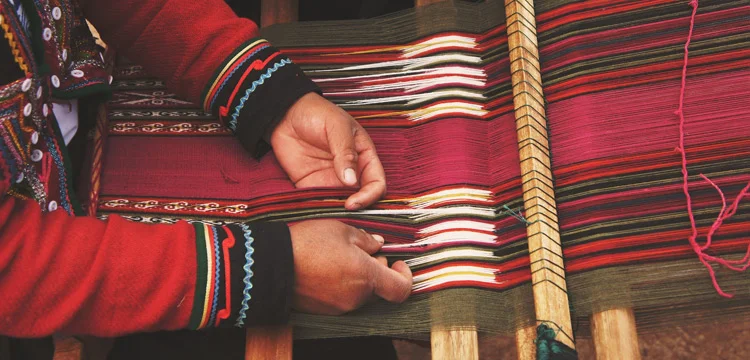
NEW DELHI: India marked the 12th National Handloom Day on August 7 with 22 awards, four commemorative stamps and a great deal of talk about global markets. Set the export figure against the workforce, and the sector tells a different, more useful story about itself.

Handloom exports came to about ₹1,330.96 crore in 2025-26, with the UAE, the United States, France, the United Kingdom and Spain the principal destinations. The Fourth All India Handloom Census counted 35.22 lakh weavers and allied workers across 31.45 lakh handloom households. Divide the first number by the second and the export book works out to under ₹4,000 per worker for the year. No one lives on that, and no one is meant to: the arithmetic is not evidence of failure but of orientation. Indian handloom is overwhelmingly a domestic industry that exports at the margin. The saree bought for a wedding in Varanasi, the gamcha, the Kani shawl, the school uniform woven on a state co-operative’s looms — that is the market, and it is denominated in rupees paid by Indians.

The market is at home: exports of ₹1,331 crore spread across 35.22 lakh weavers and allied workers come to under ₹4,000 a head for the year. The livelihood is domestic; the export order is the bonus.

The most effective handloom policy in India is not a trade mission. It is the law that stops eleven fabrics being made on a powerloom.

At a Glance

• Occasion: 12th National Handloom Day, observed August 7 at the Rashtrapati Bhavan Cultural Centre, New Delhi
• Why that date: it commemorates the launch of the Swadeshi movement in 1905
• Awards: 22 conferred for 2025 — three Sant Kabir Handloom Awards and 19 National Handloom Awards
• Workforce: 35.22 lakh weavers and allied workers in 31.45 lakh handloom households (Fourth All India Handloom Census, 2019-20)
• Exports: about ₹1,330.96 crore in 2025-26; main destinations UAE, United States, France, United Kingdom, Spain
• Legal protection: the Handlooms (Reservation of Articles for Production) Act, 1985 reserves 11 specified textile articles for handloom production
• Also released: four commemorative postage stamps on India’s weaving traditions

Which is why the least discussed instrument in this sector is also the most powerful. The Handlooms (Reservation of Articles for Production) Act of 1985 reserves eleven specified textile articles for production on handlooms, and thereby keeps a defined slice of the domestic market out of reach of powerlooms and mills that could otherwise make the same item faster and cheaper. Trade fairs and export promotion councils are visible; a reservation list is not. But for a weaver in Nadia or Bhagalpur, the reservation is the thing standing between his loom and a machine that never stops. Enforcement of that list — and the honest recognition that enforcement is uneven — is where the sector’s fortunes are decided, well before anything reaches a container.

For a reader who wants to help, the practical implication is simpler than the policy. Handloom is one of the few Indian industries where the consumer is also, effectively, the regulator: a buyer who asks for the Handloom Mark, or checks that a “handloom” saree is not a powerloom copy, transfers money to the household that actually wove it. The constructive agenda for the sector is well understood and slowly advancing — certification that a shopper can verify on a phone, design collaborations that put young designers in front of master weavers, and e-commerce listings that shorten the chain between the loom and the buyer. The awards conferred this week honour individual mastery, and rightly. The larger prize is a market in which mastery reliably commands a price, and that market is mostly in India.


Related Posts

ISRO’s First Geosynchronous Imaging Satellite
News

EOS-05: ISRO’s First Geosynchronous Imaging Satellite

September 1, 2026
Index of Core Industries
News

India Core Industries Index 2026: Iron Ore Added as Ninth Sector

September 1, 2026
India core industries and infrastructure 2026
News

India Core Industries 2026: Iron Ore, BharatNet, GSLV and Rural Connectivity

September 1, 2026
CAG Audit Flags Gaps in India’s Project Imports Scheme
News

BharatNet CAG Report 2026: Infrastructure Built, Service Gap Remains

September 1, 2026
CAG Audit Flags Gaps in India’s Project Imports Scheme
News

The Fund the Laboratories Did Not Spend

August 31, 2026
CSIR Bio-Binder Technology: Turning Rice Straw into a Bitumen Alternative
News

Rice Straw That Holds a Road Together

August 31, 2026
Load More
Next Post
badminton court

Seventeen Years, and the Worlds Return to Delhi

Recent News

ISRO’s First Geosynchronous Imaging Satellite
News

EOS-05: ISRO’s First Geosynchronous Imaging Satellite

by Blitz India Media
September 1, 2026
0

Blitz Bureau NEW DELHI: The Indian Space Research Organisation put up a mission page on 29 August 2026 for GSLV-F17,...

Read moreDetails
Index of Core Industries

India Core Industries Index 2026: Iron Ore Added as Ninth Sector

September 1, 2026
India core industries and infrastructure 2026

India Core Industries 2026: Iron Ore, BharatNet, GSLV and Rural Connectivity

September 1, 2026
CAG Audit Flags Gaps in India’s Project Imports Scheme

BharatNet CAG Report 2026: Infrastructure Built, Service Gap Remains

September 1, 2026
CAG Audit Flags Gaps in India’s Project Imports Scheme

The Fund the Laboratories Did Not Spend

August 31, 2026

Blitz Highlights

  • Special
  • Spotlight
  • Insight
  • Entertainment
  • Health

International Editions

  • US (New York)
  • UK (London)
  • Middle East (Dubai)
  • Tanzania (Africa)

Nation

  • East
  • West
  • South
  • North
  • Hindi Edition

E-paper

  • India
  • Hindi E-paper
  • Dubai E-Paper
  • USA E-Paper
  • UK-Epaper
  • Tanzania E-paper

Useful Links

  • About us
  • Team
  • Privacy Policy
  • Contact

©2024 Blitz India Media -Building A New Nation

Welcome Back!

Login to your account below

Forgotten Password?

Retrieve your password

Please enter your username or email address to reset your password.

Log In

    No Result
    View All Result
    • Blitz Highlights
      • Special
      • Spotlight
      • Insight
      • Entertainment
      • Sports
    • Opinion
    • Legal
    • Perspective
    • Nation
      • East
      • West
      • North
      • South
    • Business & Economy
    • World
    • Hindi Edition
    • International Editions
      • Dubai
      • Tanzania
      • United Kingdom
      • USA
    • Blitz India Business

    ©2024 Blitz India Media -Building A New Nation