Blitz Bureau
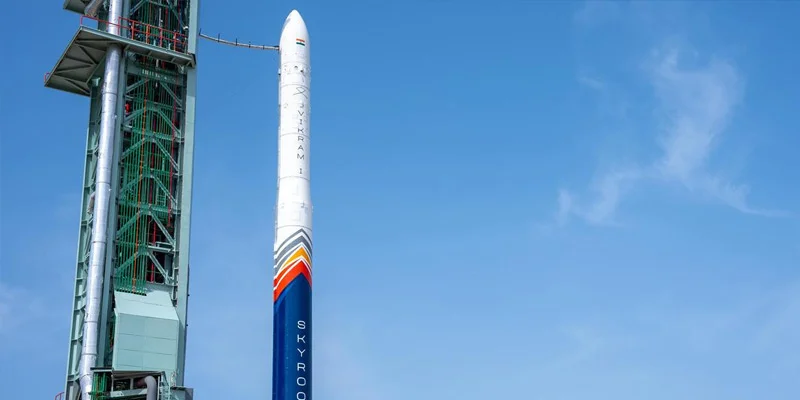
NEW DELHI: India is preparing to fly to space at a pace it has never sustained before. The Indian Space Research Organisation is lining up seven launches in the current financial year, chairman V. Narayanan has said, with the next mission due to lift off within about two months — two satellites already fully built and five or six more in the final stages of integration. After a hard stretch that included two launch setbacks, the message from Sriharikota is one of tempo restored: a crowded manifest, a widened launch capacity, and the country’s first uncrewed human-spaceflight test now moving toward the pad.
The ambition is as much about infrastructure as individual rockets. Within this year ISRO plans to commission a second launch complex at Kulasekarapattinam in Tamil Nadu, designed for the smaller commercial vehicles, and to refurbish its existing pads so that one rocket can be assembled while another waits to fly. That overlap — parallel campaigns rather than one-at-a-time launches — is the quiet engineering change that makes a seven-launch year arithmetically possible, and it is the same discipline the Gaganyaan human programme will demand when crews begin flying.
Tempo restored: ISRO is targeting seven launches this fiscal, with the next due within about two months and a second launch pad at Kulasekarapattinam to be commissioned — the cadence a human-spaceflight programme demands.
A space programme is measured not by a single spectacular launch but by how reliably it can do the next one, and the one after that.
At a Glance
• Target: seven launches in FY27; next mission within ~2 months
• Ready: two satellites fully built, 5–6 in final integration
• New pad: second launch complex at Kulasekarapattinam (Tamil Nadu) to be commissioned this year
• Milestone: first uncrewed Gaganyaan test flight moving toward launch
Why does a launch schedule rank as the evening’s lead? Because cadence is the whole game in space. A country that can fly often and on time can serve its own needs — Earth-observation satellites that watch a cyclone or a flood in near real time, communications and navigation spacecraft, and the heavier missions that carry science and, soon, astronauts — while also selling launch slots to a fast-growing global market. Each reliable flight lowers the cost of the next and builds the confidence that wins commercial customers and international partners alike.
The constructive read is that India is treating its two recent setbacks the way a maturing space power should: as engineering to be understood and fixed, not as reasons to slow down. The way forward is exactly what ISRO has outlined — ready satellites, a second pad, parallel launch campaigns, and a private space industry increasingly building rockets and payloads alongside the agency. Handled with that patience and openness, a seven-launch year is less a boast than a foundation: the steady drumbeat of flights on which a genuine human-spaceflight capability, and a real commercial space economy, are built.