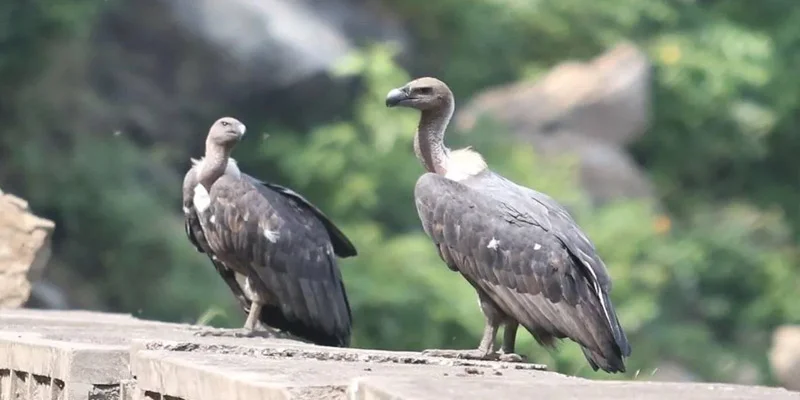
NEW DELHI: India lost more than ninety per cent of three vulture species inside a decade, and the country has spent twenty years trying to put them back. The Bombay Natural History Society now reports a result that changes not the scale of the effort but the choice of address.
Twenty-nine captive-bred vultures were released across the Melghat and Pench tiger reserves in Maharashtra between December 2025 and January 2026. Survival rates of up to 78 per cent were recorded. Applied to the twenty-nine birds released across the two reserves, a rate of 78 per cent is about twenty-three birds — this desk’s arithmetic, and offered as arithmetic on the upper rate rather than as a site-level count, which the Society’s summary does not give.
The Society’s own reading of the result is the part worth carrying. It reads the survival rates as demonstrating the viability of shifting release enclosures into prey-rich and inviolate tiger habitat — that is, into forests already protected, already patrolled, and already carrying the large herbivore populations whose carcasses a vulture needs. The conservation argument, put plainly, is that two decades of tiger protection built exactly the conditions a scavenger requires, and that the cheapest place to release a vulture is inside an estate somebody is already guarding.
What this piece does not say: it does not say the species are recovering. Twenty-nine birds over two months is a trial, and the Society presents it as one. It says that a siting decision worked, and that is a finding a programme can act on.