Blitz Bureau
NEW DELHI:Param Pragya was switched on at IIT Delhi’s Sonipat campus on August 8. The specification everyone has quoted is 250 AI petaflops. The specification that will decide how much science comes out of it is 800 kilowatts.
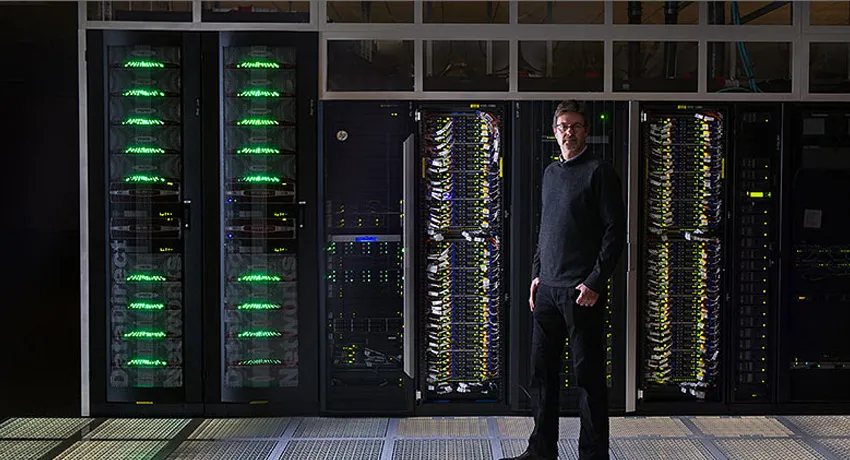
The machine, inaugurated by the Prime Minister alongside the institute’s 57th convocation, is built around 400 NVIDIA A100 GPUs with 80 GB of memory each, backed by 10 petabytes of parallel file system storage, and housed in a purpose-built data centre drawing roughly 800 kilowatts. For a country whose AI research has largely run on borrowed cloud credits and personal negotiation with vendors, a facility of this size inside a public institution changes something practical: a doctoral student can now plan a six-month training run instead of applying for one.
The recurring cost: GPUs are bought once. The power and cooling bill arrives every month for the life of the machine.
A supercomputer is a capital expense pretending to be one. The GPUs are the down payment; the electricity meter is the loan.
At a Glance
• Facility: Param Pragya, IIT Delhi Sonipat campus
• Inaugurated: August 8, 2026, alongside the institute’s 57th convocation
• Compute: 400 NVIDIA A100 80GB GPUs, rated at 250 AI petaflops
• Storage: 10 petabytes of parallel file system
• Power: data centre drawing roughly 800 kilowatts
• Intended use: artificial intelligence, data science, advanced computing and interdisciplinary research
Two honest observations belong in any account of this. The first is that A100 silicon is not the newest generation available, which matters less than it sounds: the constraint on Indian academic AI has rarely been peak performance on a single benchmark run. It has been sustained, predictable, unmetered access — the thing that lets a researcher fail three times before succeeding. Four hundred GPUs available to a university, continuously, is worth more to a PhD cohort than a shorter turn on a faster machine. The second is that 800 kilowatts, running continuously, is a meaningful annual electricity commitment for an academic institution, which is why the design of the data centre and its cooling is as much a part of the achievement as the compute rating.
What would make this compound is access policy. A national research facility earns its return not from the institution that hosts it but from the ones that do not have one — state universities, medical colleges, smaller engineering institutes with good students and no infrastructure. India has built this pattern before under the National Supercomputing Mission, with machines placed at IISc, IIT Madras, IIT Gandhinagar and IIT Guwahati among others, and the lesson from that programme is consistent: utilisation, not installation, is the metric that matters. If Param Pragya’s queue is open to researchers well beyond Sonipat, the 250-petaflop figure will turn into papers, models and trained people. If it is not, it will remain a very good number.