Blitz Bureau
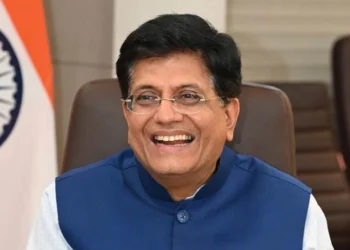
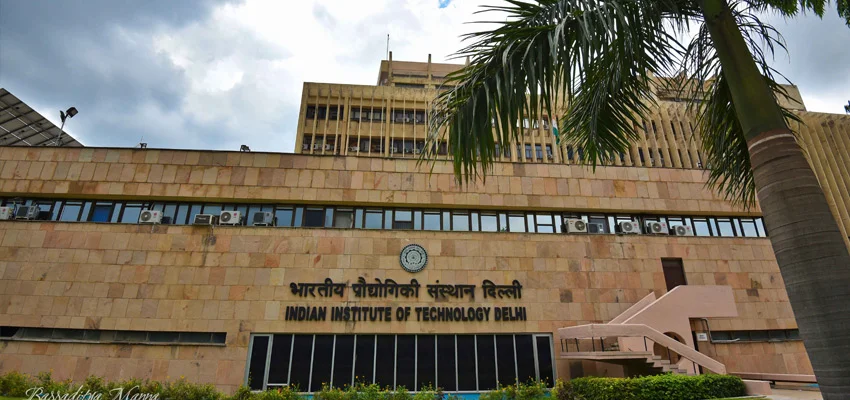
NEW DELHI: The Prime Minister addressed IIT Delhi’s 57th convocation this morning and remotely inaugurated Param Pragya, an AI-focused high-performance computing facility. The detail worth pausing on is not the machine. It is the address on it — Sonipat, not Hauz Khas.
More than three thousand students graduated at the ceremony, of whom 587 were doctoral scholars. That second figure is the one that describes the institution. A single Indian engineering campus now certifies close to six hundred PhDs in one sitting — roughly one doctorate for every five other degrees awarded — and a research population of that size does not run on desktops. It runs on shared computing time, allocated in hours, queued weeks in advance.
Which is why the more consequential half of the morning was the ribbon cut by remote link on Param Pragya, built to carry artificial-intelligence workloads, data science and the kind of simulation that cannot be broken into smaller pieces. India’s National Supercomputing Mission set itself a target of 90 petaflops of installed national capacity; installed capacity crossed 44 petaflops as the programme matured, with PARAM Pravega at IISc Bengaluru rated at 3.3 petaflops, PARAM Shakti commissioned at IIT Madras in January this year at 3.1, and PARAM Ganga at IIT Roorkee at 1.66. Each addition is incremental. The pattern they form is not.
Two campuses, one institute: the parent campus in Hauz Khas is landlocked by the city that grew around it. The new capacity — land, power, cooling, and now computing — is being built forty kilometres up the highway in Haryana.
A supercomputer is mostly a power bill and a cooling plant with a processor attached. That is why the map of India’s research computing is really a map of where land and electricity are still cheap.
At a Glance
• Occasion: 57th convocation of IIT Delhi, addressed by the Prime Minister on August 8, 2026
• Graduating cohort: more than 3,000 students, including 587 doctoral scholars
• Facility: Param Pragya, an AI-powered high-performance computing facility at the institute’s Sonipat campus, inaugurated remotely
• Purpose: artificial intelligence, data science, advanced computing and interdisciplinary research
• National context: the National Supercomputing Mission set a target of 90 petaflops of installed capacity; capacity crossed 44 petaflops during the programme
• Comparable systems: PARAM Pravega, IISc Bengaluru — 3.3 PF; PARAM Shakti, IIT Madras (January 2026) — 3.1 PF; PARAM Ganga, IIT Roorkee — 1.66 PF
• Honours conferred: President’s Gold Medal, Director’s Gold Medal, Shankar Dayal Sharma Gold Medal and Perfect Ten Gold Medals
Put the location and the machine side by side and a quieter policy becomes visible. India’s premier technical institutions were built inside cities that have since surrounded them, and the constraint on the older campuses is no longer talent or funding but square metres, megawatts and the temperature of the air. High-performance computing is unusually sensitive to all three: a facility of this class is, in engineering terms, a power supply and a cooling plant with processors bolted on. Placing it on a satellite campus in Haryana rather than in south Delhi is therefore a design decision, not an administrative one. It also quietly changes who gets to use it. A second campus with real research infrastructure stops being an overflow annexe and starts being a destination — for faculty deciding where to sit, for doctoral students choosing a supervisor, and eventually for the firms that cluster around a machine because computing time is the scarce input in their business.
The honest caveat is that hardware is the easiest part of this to announce and the hardest part to keep useful. A petaflop rating decays in relevance within a few years; what does not decay is the software stack, the systems staff who keep queues moving, and the funding line that pays the electricity bill in year six. The constructive path is the one the National Supercomputing Mission has already sketched and now has to hold: pair every installation with a standing operations budget, publish utilisation so idle capacity is visible and can be reallocated to researchers elsewhere in the country, and keep the allocation window open to scholars outside the host institution. India has done the difficult thing, which is to build. The work now is to keep the machines busy — and on that measure, 587 doctorates walking out of one hall in a single morning is an encouraging supply of demand.