
Blitz Bureau
NEW DELHI: PM-KISAN has been extended to 2030-31 with an outlay of ₹3.15 lakh crore. The payment is unchanged: ₹6,000 a year, in three instalments, into the bank account of an eligible landholding farmer family. Judged as income, it is small. Judged as timing, it is something else entirely.
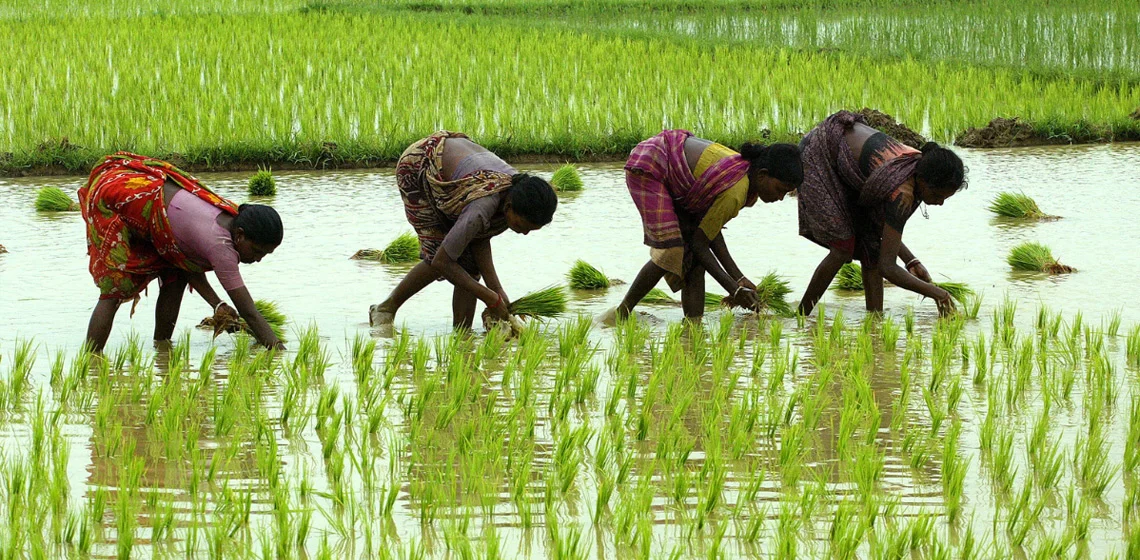
Six thousand rupees a year is about ₹500 a month, and nobody has ever claimed it lifts a household. The design intent is narrower and more interesting. Indian farming runs on a seasonal cash cycle in which expenditure comes weeks before revenue: seed, fertiliser, diesel and labour must be paid for at sowing, and the money for them arrives at harvest. The gap between the two has historically been bridged by informal credit at rates that quietly consume a large share of what the season eventually earns. A predictable transfer arriving in that gap does not replace the crop’s income. It changes who lends the working capital, and at what price.
Twenty-three instalments so far: ₹4.47 lakh crore has been transferred since the scheme began. NITI Aayog’s evaluation office found more than 92 per cent of beneficiaries reported using the money on agricultural activity and investment.
A small sum that arrives on a known date does work that a larger sum arriving unpredictably cannot.
At a Glance
• Extension: 2026-27 to 2030-31, approved by the Union Cabinet on July 31, 2026
• Outlay for the period: ₹3.15 lakh crore
• Payment: ₹6,000 a year in three equal instalments, direct to bank account
• Transferred to date: over ₹4.47 lakh crore across 23 instalments
• To women farmers: more than ₹1.06 lakh crore; nearly one beneficiary in four is a woman
• NITI Aayog (DMEO) evaluation: more than 92 per cent of beneficiaries reported using the money for agricultural activity and investment
The evaluation finding is the one that deserves to survive this news cycle. NITI Aayog’s Development Monitoring and Evaluation Office reported that more than 92 per cent of beneficiaries said the money went into agricultural activity and agricultural investment. Unconditional cash transfers are permanently dogged by the assumption that recipients will spend them on something other than the intended purpose; the evidence here, self-reported but systematically collected, says that in this case they largely did not. That is partly because of when the money lands. A transfer timed to the sowing window arrives at the moment a farmer is already standing in front of a fertiliser dealer, and design of that kind does more than exhortation ever will.
The second finding worth carrying forward is that women have received more than ₹1.06 lakh crore, and are nearly one beneficiary in four. Since eligibility follows the land record, that ratio is a direct readout of how many agricultural landholdings are recorded in a woman’s name — a statistic that is otherwise difficult to observe and slow to change. Where the extension leaves room to build is exactly there: the scheme reaches landholding families, which means tenant farmers and landless agricultural labourers, who carry as much of the seasonal cash-flow problem, sit outside it. The constructive path is not to broaden PM-KISAN into something it was not designed to be, but to give those households an instrument matched to their own cycle — and to keep publishing the DMEO evaluations, because five years of that series will settle arguments about cash transfers that a decade of assertion has not.