Blitz Bureau
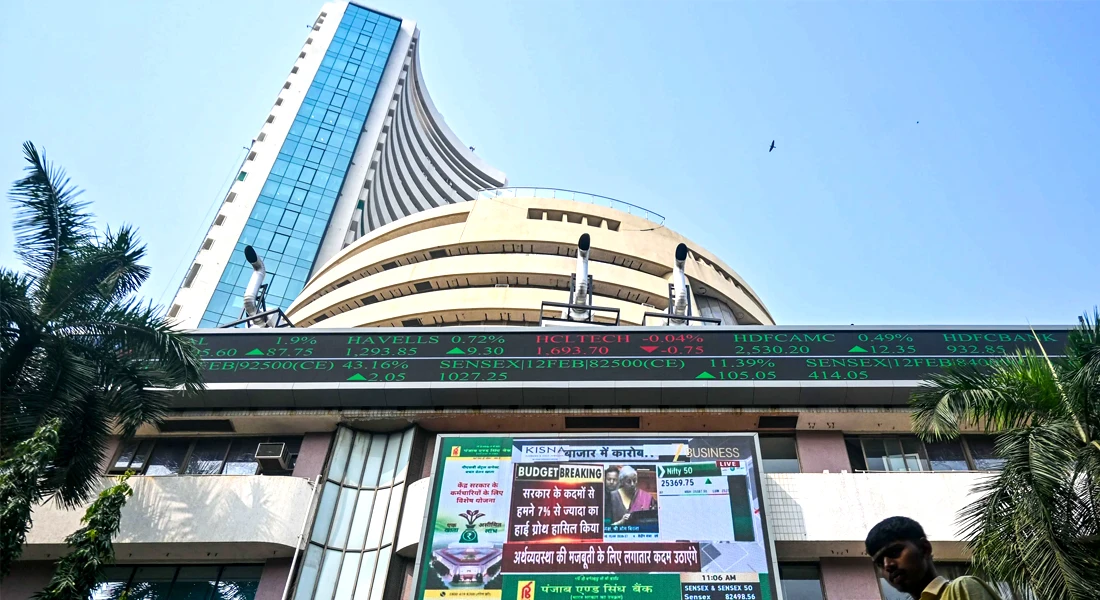
NEW DELHI: India’s benchmark indices ended Wednesday in the red for a third straight session, a measured pullback rather than a scramble for the exits. The Sensex closed at 76,755, down about 715 points (0.92%), and the Nifty 50 settled at 23,996, off roughly 191 points (0.79%), as public-sector banks and property stocks led the drag. Two familiar pressures set the mood: firmer crude oil on renewed West Asia tension, and the ticking clock on a US tariff deadline that falls this Friday.
The backdrop helps explain the caution. Retail inflation edged up to 4.38% in June from 3.93% in May — still within the Reserve Bank’s comfort band, but a reminder that food and fuel prices can turn quickly, especially with oil firming. For a large net importer of crude, a rising oil price feeds straight into the inflation-and-interest-rate calculation that weighs first on banks and other rate-sensitive shares. None of this is a crisis; it is a market re-pricing on real information, cushioned by the steady flow of domestic savings that has repeatedly absorbed foreign selling.
A controlled pullback: The Sensex closed near 76,755 and the Nifty around 23,996 on Wednesday, easing for a third session as firm crude, a June inflation uptick and the July 24 tariff deadline kept sentiment cautious.
A market that steps back on real news — oil, prices, a deadline — is doing its job. The tell is whether it falls in panic or eases with discipline.
At a Glance
• Sensex: closed ~76,755, down ~715 (0.92%) — a third straight session lower
• Nifty 50: closed ~23,996, down ~191 (0.79%)
• Drags: firm crude on West Asia tension; PSU banks and realty
• Backdrop: June CPI at 4.38%; the July 24 US tariff deadline in view
For an ordinary saver watching the headlines, the useful thing is perspective. Index levels move every day; the deeper story of the Indian market this year has been resilience — a broad earnings base, a fast-growing economy, and a deepening pool of domestic investors who now steady the market when global winds blow. A soft patch built around an oil scare and a trade deadline is the sort of weather long-term investors have learned to sit through rather than react to.
The constructive read is that India’s macro fundamentals remain sturdy: growth among the fastest of the major economies, inflation broadly contained, and a diversified set of trade deals reducing reliance on any single partner. The way forward, once this week’s crude scare and tariff clock resolve, is for earnings and guidance — not headlines — to set the market’s direction. Levels rise and fall; the discipline of reading fundamentals over noise is what compounds over time.