Blitz Bureau
NEW DELHI: For decades, reaching orbit from Indian soil was the work of the state alone. That changed this month. A rocket designed and built by a Hyderabad start-up, Skyroot Aerospace, lifted off from Sriharikota and placed its payloads into a 450-kilometre orbit — making India only the third country in the world, after the United States and China, where a private company has carried its own machines to space. The mission, fittingly named Aagaman — “arrival” — did exactly what its name promised: it announced that India’s space story now has more than one author.
The numbers behind the flight are the kind engineers quietly cherish. The four-stage, seven-storey Vikram-1 — a small-satellite launcher capable of carrying roughly 350 kilograms to low-Earth orbit — reached its target altitude in about seventeen minutes, deploying a clutch of customer payloads that included an Indian earth-observation satellite and, tellingly, a robotic arm built to capture orbital debris. Skyroot, founded only in 2018, had earlier this year become the first Indian space company to touch a billion-dollar valuation. The debut turned that promise into a delivered result.
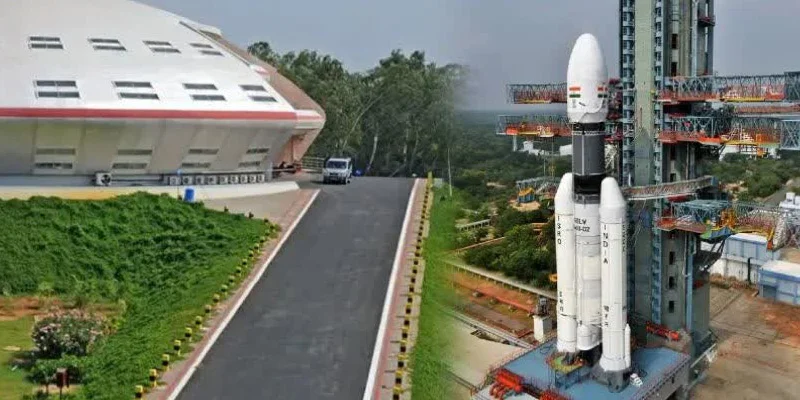
The dawn of a new space era: Skyroot’s four-stage Vikram-1 lifted off from Sriharikota and reached a 450 km orbit on its maiden flight — making India the third country, after the US and China, with a private orbital launch capability.
A state agency proved India could reach space. A private launch proves India can now do it again and again — on a schedule the market can build a business around.
At a Glance
• Milestone: India’s first private orbital rocket, Skyroot’s Vikram-1 (mission “Aagaman”)
• Feat: ~450 km orbit reached in ~17 minutes from Sriharikota
• Rocket: four-stage, seven-storey small-sat launcher; ~350 kg to low-Earth orbit
• Company: founded 2018; first Indian space firm to a $1 bn valuation
Why does a single launch matter beyond the cheer of the moment? Because it signals that India’s 2020 opening of the space sector to private players is bearing real fruit. A working private launcher lowers the cost and shortens the queue for putting small satellites into orbit — the very satellites that map floods, guide farmers, connect remote schools and carry the data economy. It also keeps talented Indian engineers building rockets at home rather than abroad, and it slots the country into a global small-satellite launch market hungry for reliable, affordable rides to space. The debris-capturing arm aboard the flight even nods to the next frontier: cleaning up the crowded orbits humanity now depends on.
The honest account is that one successful flight is a beginning, not a business. Skyroot and its peers must now prove cadence, reliability and price over many launches; the state agency ISRO remains the anchor and enabler, not a rival; and the ecosystem still needs test facilities, patient capital and clear regulation to mature. The constructive way forward is to protect exactly that partnership — a public agency that opens its pads and its know-how, private firms that innovate on cost and speed, and a policy that rewards both. Handled with that care, a start-up’s first orbit becomes the opening line of India’s second space age.