• About us
  • Team
  • Privacy Policy
  • Contact
Monday, August 3, 2026
  • Login
No Result
View All Result
World's first weekly chronicle of development news
  • Blitz Highlights
    • Special
    • Spotlight
    • Insight
    • Entertainment
    • Sports
  • Opinion
  • Legal
  • Perspective
  • Nation
    • East
    • West
    • North
    • South
  • Business & Economy
  • World
  • Hindi Edition
  • International Editions
    • Dubai
    • Tanzania
    • United Kingdom
    • USA
  • Blitz India Business
  • Blitz Highlights
    • Special
    • Spotlight
    • Insight
    • Entertainment
    • Sports
  • Opinion
  • Legal
  • Perspective
  • Nation
    • East
    • West
    • North
    • South
  • Business & Economy
  • World
  • Hindi Edition
  • International Editions
    • Dubai
    • Tanzania
    • United Kingdom
    • USA
  • Blitz India Business
No Result
View All Result
World's first weekly chronicle of development news
No Result
View All Result

Four More Judges in the Supreme Court: What the Bill Passed Today Actually Does

by Blitz India Media
August 3, 2026
in News
0
Supreme Court

Blitz Bureau

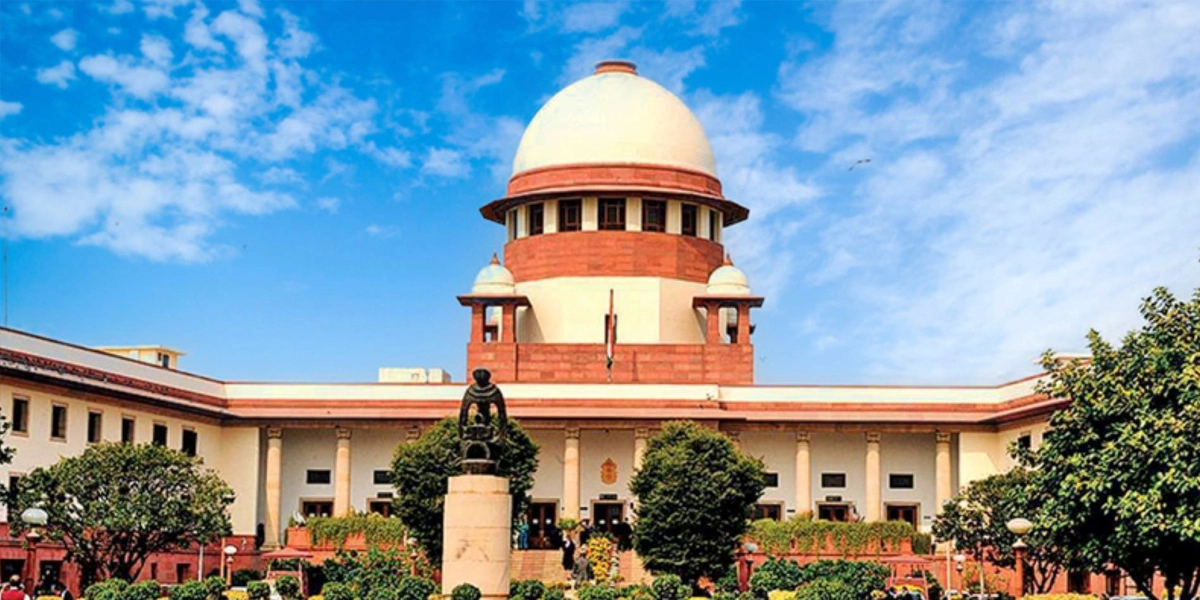
NEW DELHI: A one-clause amendment to a 1956 statute is the kind of legislation that gets a paragraph and no explanation. Here is the explanation, because the number it changes is one of the few in Indian public administration that translates directly into how long a case takes. The Lok Sabha today passed the Supreme Court (Number of Judges) Amendment Bill, 2026 by voice vote, raising the sanctioned strength of judges from 33 to 37 excluding the Chief Justice of India — taking the court’s full complement from 34 to 38.

The mechanics are worth stating plainly, because the arithmetic of the Supreme Court is not intuitive. The court almost never sits as a whole; it sits in benches, usually of two judges and sometimes of three or more. Sanctioned strength therefore determines not how many judges hear a case but how many benches can sit on any given morning. Four additional judges translate, at the ordinary configuration, into roughly two more benches operating in parallel — which is a proportional increase of about twelve per cent in the court’s daily capacity to dispose of matters. The Bill, moved by the Union Law and Justice Minister, amends the Supreme Court (Number of Judges) Act, 1956, and follows an ordinance promulgated in May this year that had already given effect to the increase; today’s passage converts that temporary instrument into statute.

Benches, not judges: because the court sits in benches of two or three, four extra judges add roughly two more courtrooms working in parallel on any given day.

Sanctioned strength does not decide how many judges hear your case. It decides how many mornings there are in a week when someone can.

At a Glance

• Bill: The Supreme Court (Number of Judges) Amendment Bill, 2026
• Passed: Lok Sabha, by voice vote, on August 3, 2026
• Change: sanctioned strength from 33 to 37 judges, excluding the Chief Justice of India
• Full complement: from 34 to 38, including the Chief Justice
• Amends: the Supreme Court (Number of Judges) Act, 1956
• Moved by: the Union Minister of Law and Justice
• Precursor: an ordinance promulgated by the President in May 2026

What it means for a litigant is more modest than the headline suggests, and being honest about that is the more useful service. The Supreme Court is the apex of a pyramid whose base is the district judiciary, and the overwhelming majority of pending cases in India sit at that base rather than at the top. Expanding the apex speeds up the disposal of the matters that reach it — appeals, constitutional questions, transfer petitions — and it shortens the wait for a hearing date in a court where listing delays have real consequences for bail, property and commercial disputes. It does not, by itself, move the district-court queue.

The constructive way forward is therefore to treat today’s Bill as one component of a sequence rather than a solution. Capacity at the top works best when matched by three things below it: filling existing vacancies in the High Courts, where sanctioned posts have historically run well ahead of appointments; continuing the digitisation of case records so that a new bench is not slowed by a paper file travelling between registries; and expanding subject-specialist benches so that similar matters are heard together and precedent settles faster. India has been building all three for several years, and the machinery exists. Adding four judges to the Supreme Court is a real improvement on its own terms, and a better one still if the next four appointments below it arrive as quickly.


Related Posts

Water triumph
News

A Dry Monsoon Is a Weather Story. What Sits Under Punjab and Haryana Is the Permanent One

August 3, 2026
A missile system displayed at a defence exhibition
News

India Sold ₹38,424 Crore of Defence Equipment Abroad Last Year. The Interesting Change Is What It Sold

August 3, 2026
Oil-&-Gas
News

₹84,084 Crore Goes Offshore: Inside the Approval Everyone Reported and Few Read

August 3, 2026
export-cargo-container
News

Three Weeks Inside the UK Trade Deal: What Actually Changed on July 15, and for Whom

August 3, 2026
athletics stadium
News

India Won 39 Medals in Glasgow and, in the Same Week, Multiplied Its Sports Budget Roughly Eightfold. The Second Number Is the One That Decides the Next Games

August 3, 2026
cyber security
News

India records over 265 million cyberattack attempts

August 3, 2026
Load More

Recent News

Supreme Court
News

Four More Judges in the Supreme Court: What the Bill Passed Today Actually Does

by Blitz India Media
August 3, 2026
0

Blitz Bureau NEW DELHI: A one-clause amendment to a 1956 statute is the kind of legislation that gets a paragraph...

Read moreDetails
Water triumph

A Dry Monsoon Is a Weather Story. What Sits Under Punjab and Haryana Is the Permanent One

August 3, 2026
A missile system displayed at a defence exhibition

India Sold ₹38,424 Crore of Defence Equipment Abroad Last Year. The Interesting Change Is What It Sold

August 3, 2026
Oil-&-Gas

₹84,084 Crore Goes Offshore: Inside the Approval Everyone Reported and Few Read

August 3, 2026
export-cargo-container

Three Weeks Inside the UK Trade Deal: What Actually Changed on July 15, and for Whom

August 3, 2026

Blitz Highlights

  • Special
  • Spotlight
  • Insight
  • Entertainment
  • Health

International Editions

  • US (New York)
  • UK (London)
  • Middle East (Dubai)
  • Tanzania (Africa)

Nation

  • East
  • West
  • South
  • North
  • Hindi Edition

E-paper

  • India
  • Hindi E-paper
  • Dubai E-Paper
  • USA E-Paper
  • UK-Epaper
  • Tanzania E-paper

Useful Links

  • About us
  • Team
  • Privacy Policy
  • Contact

©2024 Blitz India Media -Building A New Nation

Welcome Back!

Login to your account below

Forgotten Password?

Retrieve your password

Please enter your username or email address to reset your password.

Log In

    No Result
    View All Result
    • Blitz Highlights
      • Special
      • Spotlight
      • Insight
      • Entertainment
      • Sports
    • Opinion
    • Legal
    • Perspective
    • Nation
      • East
      • West
      • North
      • South
    • Business & Economy
    • World
    • Hindi Edition
    • International Editions
      • Dubai
      • Tanzania
      • United Kingdom
      • USA
    • Blitz India Business

    ©2024 Blitz India Media -Building A New Nation