Saji Chacko
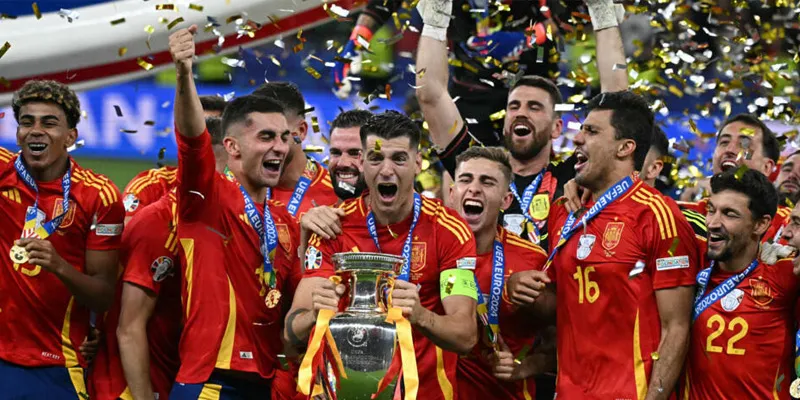
NEW DELHI: Spain reclaimed football’s greatest prize by producing a tactical and technical masterclass, defeating defending champions Argentina 1-0 after extra time in the 2026 FIFA World Cup final. While the scoreline suggested a closely fought contest, the game itself underlined why Spain emerged as worthy champions.
Their superiority lay not in physical dominance or moments of individual brilliance but in the quality of their football—precise passing, intelligent movement, positional discipline and relentless control of possession.
For the records, Feran Torres scored the match winner for Spain in the 106th minute of extra time.
For much of the final, Argentina were forced to chase shadows. Spain dictated the rhythm from the opening whistle, patiently circulating the ball across the pitch and denying Lionel Messi’s side the opportunity to settle into their preferred attacking game. Every Spanish player appeared comfortable in possession, seamlessly interchanging positions and creating passing triangles that left Argentina struggling to regain control.
It was a triumph of Spain’s footballing philosophy—a style refined over decades and once associated with the legendary sides that won Euro 2008, the 2010 FIFA World Cup and Euro 2012. Against Argentina, Spain once again demonstrated that technical excellence remains one of the most effective weapons in modern football.
The midfield became the defining battleground. Spain’s players consistently found pockets of space, controlled possession under pressure and ensured that Argentina spent long periods defending deep inside their own half.
Messi, seeking to end another remarkable World Cup campaign on the highest note, was closely marked whenever he received possession. Spain’s defensive structure left little room for him to orchestrate attacks. Every attempted move was quickly closed down by disciplined pressing, forcing Argentina into hurried passes and speculative long balls.
Eventually, the breakthrough arrived in extra time when Ferran Torres capitalised on Spain’s sustained pressure to score the decisive goal. It was a fitting reward for a team that had dominated the contest both territorially and technically.
The victory crowned an outstanding tournament for Spain. They had overcome a series of formidable opponents in the knockout stages, displaying consistency rather than spectacular individual performances.
For Argentina, defeat marked a disappointing end to an otherwise memorable campaign. They once again demonstrated resilience by reaching the final, but on the biggest stage they encountered a side operating at a different technical level. Despite their determination, they were unable to impose their style or create enough meaningful opportunities to.
In the end, Spain did far more than defeat Argentina—they reaffirmed that beautiful football, when executed with precision and patience, remains the ultimate route to World Cup glory.