
Blitz Bureau
Following the historic bifurcation in 2014, Andhra Pradesh faced a daunting economic reset. Stripped of the primary revenue engine of Hyderabad, the state inherited a predominantly agrarian economy, limited capital infrastructure, and the massive undertaking of building a green-field administrative capital. Over the past decade, however, the state has leveraged its strategic maritime geography, extensive river basins, and progressive industrial policies to script a resilient sub-national growth story.
Economic trajectory
Between 2014-15 and 2024-25, the state demonstrated a compound real gross state domestic product (GSDP) expansion trajectory that frequently outpaced the national average. The state’s nominal GSDP expanded to reach Rs 16.06 lakh crore in 2024-25, bolstered by a steady double-digit nominal growth rate.
A central driver of this sustained expansion has been Andhra Pradesh’s per capita income. Standing at Rs 2,68,653, Andhra Pradesh’s per capita remains nearly 34 per cent higher than the national benchmark of Rs 2,00,162. This surplus stems largely from high agricultural productivity, robust aquaculture yields, and targeted rural social welfare structures that sustain household purchasing power through economic transitions.
On Niti Aayog’s SDG India Index framework, Andhra Pradesh maintains a consistent position in the ‘Front Runner’ category with an overall composite score of 74. The state scores exceptionally high on:
SDG 6 (Clean Water & Sanitation) and SDG 7 (Affordable & Clean Energy), driven by widespread electrification, rural drinking water grids, and major renewable additions across solar and wind power.
SDG 1 (No Poverty) and SDG 3 (Good Health & Well-being), backed by a comprehensive network of primary healthcare centres, institutional delivery mandates, and targeted welfare distribution.
However, literacy metrics reveal a crucial developmental duality. While the state excels in technical education, engineering hubs, and healthcare infrastructure, its general adult literacy rate of 67.35 per cent continues to lag behind the national average of 72.98 per cent. Closing this gap through foundational literacy drives and school retention campaigns remains a core structural priority for policymakers.
Industrial transformation
The defining economic shift over the past decade has been Andhra Pradesh’s transition towards maritime-led industrialisation. Anchored by its 974-km coastline, the state has positioned itself as the gateway to South-East Asia under India’s Act East Policy.
Port-led infrastructure: The state has aggressively expanded port capacity across Visakhapatnam, Krishnapatnam, Kakinada, and newly developed deep-water non-major ports like Ramayapatnam, Bhavanapadu, and Machilipatnam.
Industrial corridors: Andhra Pradesh is the only Indian state intersecting two major economic corridors – the Visakhapatnam-Chennai Industrial Corridor and the Chennai-Bangalore Industrial Corridor. These corridors have attracted significant manufacturing hubs in automotive assembly, bulk drugs, electronics manufacturing services, and textile clusters.
Food processing and aqua hubs: Agriculture and allied activities contribute over 35 per cent to the state’s Gross Value Added (GVA). Andhra Pradesh ranks as India’s undisputed leader in aquaculture and horticulture exports, earning the moniker ‘Rice Bowl and Aqua Capital of India’.
Challenges, road ahead
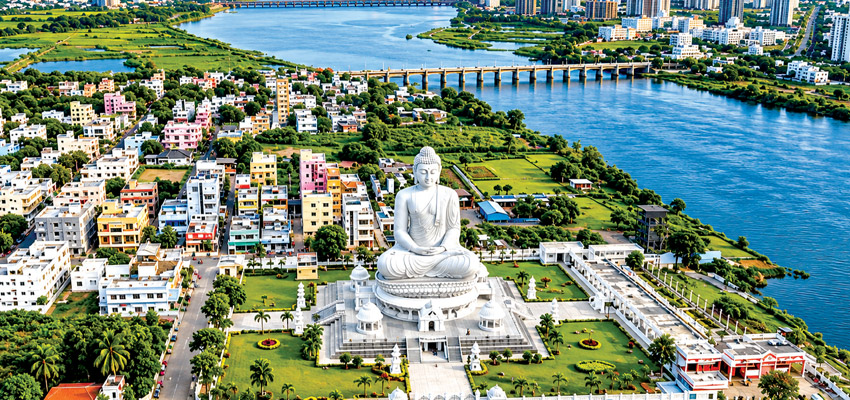
Despite strong macroeconomic indicators, the state faces fiscal pressure from public debt servicing, a high revenue-deficit ratio, and the imperative to accelerate private capital investments. The political and institutional commitment to build a world-class administrative city at Amaravati, combined with Visakhapatnam’s elevation as a premier commercial and tech hub, provides a dual-engine urban strategy.
As Andhra Pradesh enters its second post-bifurcation decade, its developmental playbook offers a clear model: turning geographical advantages into long-term industrial assets while maintaining a baseline of human development.
On Niti Aayog’s SDG India Index framework, Andhra Pradesh maintains a consistent position in the ‘Front Runner’ category with an overall composite score of 74. The state scores exceptionally high on four SDGs
| Indicator | Andhra Pradesh Value | National / Benchmark Comparison |
|---|---|---|
| NITI Aayog SDG Index Rank / Tier | Rank 10 (Front Runner Tier, Score: 74/100) | National Average Score: 71 |
| Gross State Domestic Product (GSDP) | ₹16.06 lakh crore (2024-25 FAE, current prices) | Growth Rate: 12.94 % YoY |
| Per Capita Income (PCI) | ₹2,68,653 (current prices) | All-India PCI: ₹2,00,162 |
| Literacy Rate | 67.35% (Census baseline) | National Average: 72.98 % |
| Sectoral GVA Share | Agriculture: 35.29 % | Industry: 23.18 % | Services: 41.53 % | Strong agricultural & maritime base |
| Coastline & Port Infrastructure | 974 km (3rd longest in India) | 6 active commercial non-major ports + 1 major port |
Top 5 companies
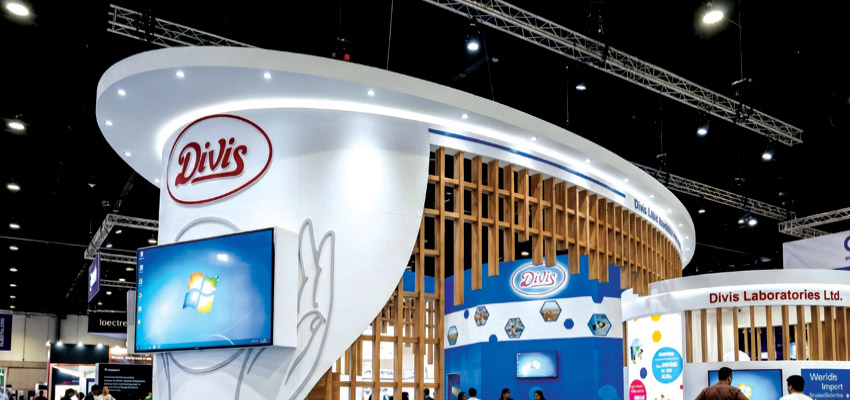
Divi’s Laboratories: Headquartered in Visakhapatnam, Divi’s is a global pharma giant and leading exporter of Active Pharmaceutical Ingredients (APIs). It specialises in custom synthesis and generic APIs, operating massive manufacturing facilities in Vizag and Kakinada that supply over 100 countries.
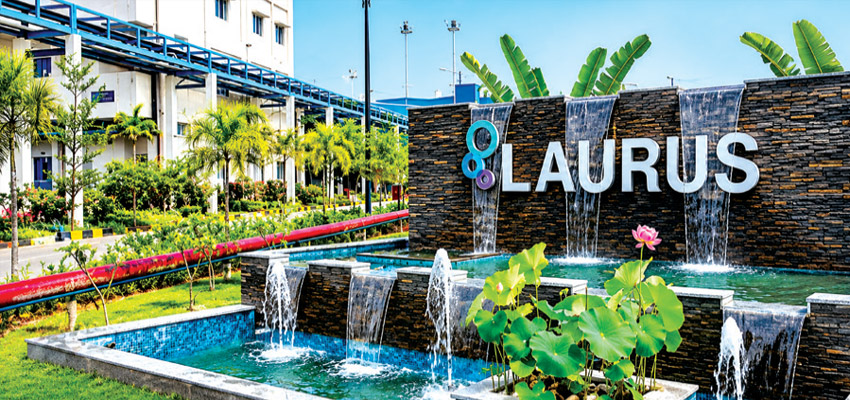
Laurus Labs: Based in Visakhapatnam, Laurus Labs is a fast-growing pharmaceutical and biotech company. It holds a market-leading position in anti-retroviral drugs, active pharmaceutical ingredients, and formulation research, serving major global health organisations and global drug majors.
Rashtriya Ispat Nigam Limited (Vizag Steel): A public sector steel manufacturing titan, RINL operates India’s first shore-based integrated steel plant at Visakhapatnam. It produces high-grade long steel products catering to major infrastructure, railway, and construction projects across the nation.
Avanti Feeds: Headquartered in Andhra Pradesh’s coastal belt, Avanti Feeds is the country’s leading manufacturer of shrimp feed and a dominant seafood exporter. It plays a pivotal role in sustaining state’s status as the aquaculture and shrimp export capital of India.
Rain Industries: Operating major industrial facilities near Visakhapatnam, Rain Industries is one of the world’s largest producers of Calcined Petroleum Coke (CPC) and coal tar pitch. It supports energy, aluminium, and chemical supply chains globally.
Top 5 academic institutions
Andhra University: Established in 1926, AU is a historic, top-ranked public university known for its pioneering research in marine sciences, engineering, law, and humanities. It serves as the primary academic flagship of the state.
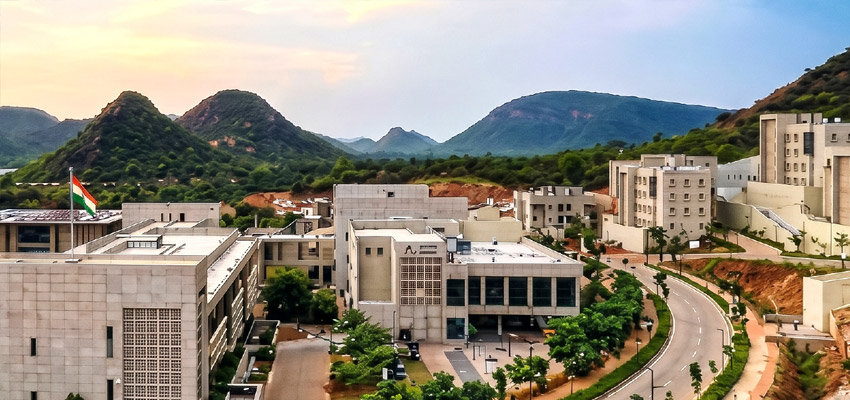
IIT Tirupati: Established as an Institute of National Importance under the 2014 AP Reorganisation Act, IIT Tirupati has emerged as a premier technology institute specialising in cutting-edge engineering disciplines, smart infrastructure, and advanced research.
IIM Visakhapatnam: A leading management institute established in 2015, IIM Vizag offers top-tier executive and post-graduate programmes. It actively fosters entrepreneurship and public policy research tailored to regional and national growth corridors.
Jawaharlal Nehru Technological University: A historic technical institution established in 1946, JNTUK governs and shapes engineering education across coastal Andhra Pradesh, producing vast technical talent for manufacturing, software, and industrial sectors.
Sri Venkateswara University: Founded in 1954, SVU is a premier public university with high NAAC ratings. It is internationally recognised for its research programmes in life sciences, physical sciences, and social engineering.