
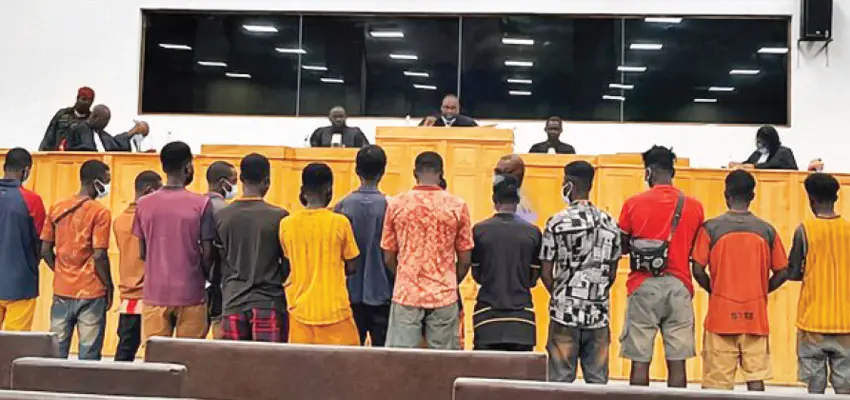
The trial of more than 1,200 people charged with illegal gold mining opened in Conakry on November 11 amid a recent crackdown on the practice. The defendants were arrested in Guinea’s northeastern gold-producing region of Siguiri.
A number of local officials have also been struck off, accused of promoting and facilitating illegal mining. Guinea’s clandestine mines drew people from across West Africa looking for work.
When the ban took effect on November 2, tens of thousands were deported. Neighboring Mali is warning of a humanitarian catastrophe. Burkina Faso said on November 13 that it had repatriated 45,406 of its citizens, who were forced to leave Guinea as a result of the ban. It has complained its citizens were subjected to inhumane treatment. The miners’ lawyer Abou Camara says they’re not the ones who should be on trial.
“The real culprits are elsewhere, not my clients. We must not use my clients as scapegoats. They are not the ones responsible. They are far from being connected to these acts of illicit enrichment.”
Artisanal and small-scale gold mining supports the livelihoods of more than 300,000 people in Guinea, according to the UN Environment Programme. Guinea is rich in mineral resources, particularly gold and bauxite. Authorities are trying to curb environmental challenges resulting from artisanal gold mining, including land degradation and the pollution of waterways.