

Blitz Bureau
BRUSSELS: The United Kingdom and the European Union agreed on October 2 to strengthen their relationship after the damage caused by Brexit and to hold a series of meetings, including at the highest level, on issues like economic growth, energy, security and migration.
Unique relationship
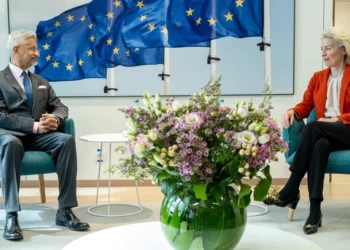
In a statement issued after talks in Brussels, U.K. Prime Minister Keir Starmer and European Commission President Ursula von der Leyen agreed on “the importance of the unique relationship” they share and vowed to “ambitiously” strengthen their cooperation.
The leaders both recommitted to the Withdrawal Agreement and other pacts reached on the terms of Brexit as Britain left the world’s biggest trade bloc four years ago, the first country to do so, creating a deep rift between them.
They also reaffirmed their commitment to uphold international law and to the European Convention on Human Rights. Hard-line Brexiteers want the U.K. to leave the convention so that asylum-seekers can be deported without the intervention of rights courts.
Britons voted to leave the EU during the 2016 Brexit referendum, when a key promise of the campaign to exit was that it would give the U.K. more control over its borders. But immigration figures have gone up, not down, since then.
Von der Leyen and Starmer underlined the shared challenges that they face, notably because of Russia’s full-fledged invasion of Ukraine, and they both “reiterated their unwavering support for Ukraine’s sovereignty.”
They said that “a stable, positive and forward-looking relationship was in their mutual interests and provided the basis for long term cooperation.” An agenda for their cooperation will be established in the coming months. It would start by “defining together the areas in which strengthened cooperation would be mutually beneficial, such as the economy, energy, security and resilience, in full respect of their internal procedures and institutional prerogatives.”
Shared challenges
Earlier, standing alongside von der Leyen, Starmer told reporters that he believes “the British public want to return to pragmatic, sensible leadership when it comes to dealing with our closest neighbours, to make Brexit work and to deliver in their interests, to find ways to boost economic growth, strengthen our security and tackle shared challenges like irregular migration and climate change.”