 Donald Trump did not wait for the Johannesburg G20 to conclude before unilaterally delivering what may be remembered as the most decisive blow to multilateralism. His announcement that South Africa wouldn’t be invited to the next G20 in Miami was not phrased as a diplomatic concern, procedural adjustment, or even a strategic reservation.
Trump, with his Trumpian bravado, exposed how hollow the architecture of global governance has become. It was a blunt reminder that the power dynamics underlying multilateral forums are not principles but prerogatives, and those privileges now lie firmly in the hands of nationalist leaders who have no patience for institutional theatrics.
Trump’s announcement was not merely an insult to Pretoria. It was an indictment of the G20 itself. It reminded the world that membership of these global forums is not governed by international law or shared values.
These are dictated by the political aureole of the most powerful national leaders. And if the US decides that South Africa no longer fits within its own definition of acceptable global partners, then the elaborate façade of multilateral equality collapses.
In that moment, the G20 was unmasked – not as a council of equals, but as a convenience, one whose guest list can be modified at will. This, more than anything else that happened in Johannesburg, captures the state of multilateralism today: fragile, performative, and entirely susceptible to unilateral sabotage.
Nations today no longer believe in the sanctity of global structures. They believe in the primacy of national interest. The multilateral age, already weakened by decades of empty summits, bureaucratic bloat, and ceremonial posturing, is now being buried under the weight of resurgent nationalism.
Johannesburg was supposed to be a triumph for the Global South, the first G20 held on African soil. It was a symbolic moment of recognition for a continent demanding a greater voice in shaping global economics and politics.
South Africa had planned a tight, purposeful agenda: climate justice, debt restructuring for poorer nations, global financial reform, energy transition, and economic equity. Yet, the entire summit unfolded under the shadow of Washington’s boycott and the even larger shadow of Trump’s Miami disinvitation.
To be fair, those who attended, including Prime Minster Narendra Modi, played their expected roles. They condemned inequality, pledged unity, expressed concern over global instability, and reaffirmed commitments to climate goals. But it all felt like rehearsal rather than action.
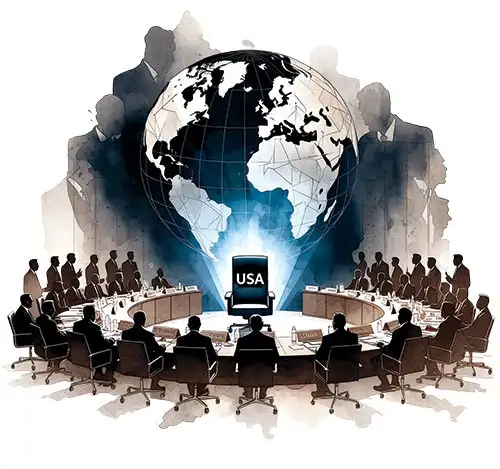
They knew, as everyone did, that without the US, the G20’s most influential member, the summit could only generate declarations, not decisions. The absence of the American President was not just an empty seat – it was a visible void of authority.
Political festivals
Johannesburg also revealed a truth too often brushed aside. Global summits today are more ceremonial than consequential. They operate like political festivals, a mixture of speeches, cultural showcases, bilateral flirtations, and performative commitments.
Leaders arrive, pose, speak, dine, and leave. The communiqués produced at the end contain lofty phrases accumulated through sleepless negotiations, but almost nothing that would qualify as binding policy. These congregations have devolved into diplomatic theatre performed for domestic media and global optics.
Yet, while the Johannesburg G20 was the latest symbol of multilateral erosion, the decay runs much deeper across the global architecture. Consider the 60-odd multilateral bodies that dominate the international landscape.
The United Nations, with its sprawling system of agencies, Unesco, World Trade Organisation, International Labour Organisation, International Human Rights Council, World Health Organisation, UN Development Programme, UN High Commissioner for Refugees, International Monetary Fund, World Bank, and dozens more that have mushroomed across the decades.
UN most troubled
These institutions have been collectively sired and nourished by a cabal of retired civil servants, diplomats, defeated or unseated political leaders, academics and others to grab lucrative assignments and offices and get lifelong tax-free incomes and pensions. They deliver painfully little when measured against the crises that now define global priorities.
The UN is the most troubling example. Envisioned as the guardian of global peace, it has failed to prevent or resolve nearly every major conflict of the past half-century. The Security Council is paralysed, trapped in a Cold War-era structure that gives absolute veto power to nations whose interests often collide. Other agencies fare no better.
The WTO, once hailed as the engine of global trade integration, is now an institution with no functioning dispute settlement mechanism. The ILO produces admirable conventions on workers’ rights that disappear into the ether of non-enforcement. Unesco passes resolutions and heritage declarations while cultural destruction continues unchecked.
The IHRC debates human rights, but is routinely chaired by governments with appalling records. The WHO has more committees than solutions, more missions than medicines, and more paperwork than preparedness.
Dominant ideology
These organisations endure not because they solve problems, but because they have become institutional landmarks, monuments of bureaucracy – self-perpetuating, structurally insulated, and politically unaccountable. These institutions are at their weakest.
Into this vacuum steps nationalism, not as a fringe force but as the dominant political ideology of the times. Leaders across the world are elected on promises to prioritise national interest above global responsibility.
They pledge to close borders, protect industries, secure supply chains, and assert sovereignty against international constraints. Whether it’s America First, Britain First, Italy First, India First, or variations across the Global South, the message is the same: multilateralism may offer ideals, but nationalism guarantees power. Domestic voters do not reward leaders for global generosity. Seen in this light, Trump’s treatment of the G20 is not an aberration.
Yet, Trump is hardly alone in his reasoning. Other leaders may speak politely about multilateralism, but their policies reveal similar instincts. Nations negotiate trade through bilateral deals because they offer better leverage.
Symbolic tombstone
Security alliances are increasingly regional or issue-specific rather than global. Johannesburg, therefore, must be understood not as another summit but as a symbolic tombstone marking the end of the multilateral era.
The world is now entering a decisive new phase. Either new, leaner, purpose-driven institutions will emerge to manage cooperation where it is still possible, or nations will increasingly rely on direct negotiation and bilateralism as the primary mode of diplomacy.
The age of sprawling global bureaucracies is coming to an end. They have lost credibility, capacity, and consent. What remains is the residue of old ideals preserved in buildings, budgets, and slogans.
If the global system is to be rebuilt, it must be rebuilt from the ground up with institutions that have authority, agility, and teeth. The world’s crises now demand clarity, urgency, and accountability.
Instead, the grand multilateral institutions offer only ritualised paralysis. Nationalism has taken the front seat. Multilateralism is almost dead. And in Miami, when the next summit gathers without South Africa, the world will finally see the truth Johannesburg exposed. Globalism has become a costume. Nationalism is the only libretto leaders are willing to perform.