Deepak Dwivedi
The rapid rise of Artificial Intelligence (AI) is bringing about a sea change in economies across the world in ways comparable to the disruptions unleashed by the Industrial Revolution. Intelligent systems are capable of analysing vast amounts of datasets, draft reports, write software code and assist in complex decision-making. For India, the debate around AI carries particular urgency. The issue is no longer whether it will reshape the workplace, but whether it will create widespread opportunities or deepen existing economic inequalities.
India’s position in this technological transition is uniquely complex. The country has built a strong reputation as a global hub for information technology services and digital innovation. At the same time, a large portion of the workforce remains employed in agriculture, small enterprises and the informal economy. This imbalance means that while highly skilled professionals may benefit from AI-led innovation, large sections of workers could face disruption without adequate opportunities to adapt.
Technological progress has historically been both a creator and a destroyer of jobs. New inventions boost productivity and open fresh economic possibilities, yet they also render certain skills obsolete. AI is likely to accelerate this pattern because it affects not only repetitive manual labour but also routine cognitive tasks. Software systems can now review legal documents, analyse financial records, optimise supply chains and assist doctors in diagnosing diseases. As these technologies improve, many middle-skill occupations that have supported the expansion of India’s services economy may face pressure.
One major concern is the widening gap between high-skilled and low-skilled workers. AIdriven sectors reward specialised knowledge in areas such as data science, machine learning and advanced analytics. Workers equipped with these skills are likely to enjoy higher wages and better employment prospects. Those lacking access to such training may find themselves pushed into lower-paying service roles. In a country where educational quality and vocational training remain uneven, the risk of widening income disparities cannot be ignored.
Another challenge arises from concentration of technological power. Developing advanced AI systems requires massive computing infrastructure, access to large datasets and substantial financial resources. Much of this capacity currently lies with a small number of global technology firms. If the AI ecosystem revolves around dominant platforms, the benefits of innovation may accrue disproportionately to large corporations and highly skilled professionals, leaving smaller businesses at a disadvantage.
The structure of employment is also changing. Digital platforms and algorithm-driven management are transforming sectors such as transportation, logistics and delivery services. The growth of gig work offers flexibility and new income opportunities, but it also raises concerns about job security, social protection and stable earnings. Without updated labour regulations and stronger safety nets, workers in the emerging AI-enabled economy may face greater uncertainty.
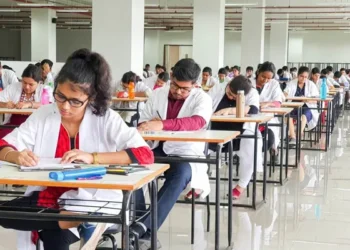
Education and skills development, therefore, become central to managing this transition. Although India has expanded access to schooling and higher education, concerns about learning quality persist. Many institutions still emphasise rote learning rather than critical thinking, creativity and digital literacy – the abilities required in an AI-driven workplace.
For India, where a youthful population seeks opportunity, the stakes are high. If AI-driven productivity gains fail to generate broad employment, growth could coexist with rising inequality. The challenge, therefore, is not to resist technological change but to shape it through policies that promote skills, innovation and inclusive growth.