Deepak Dwivedi
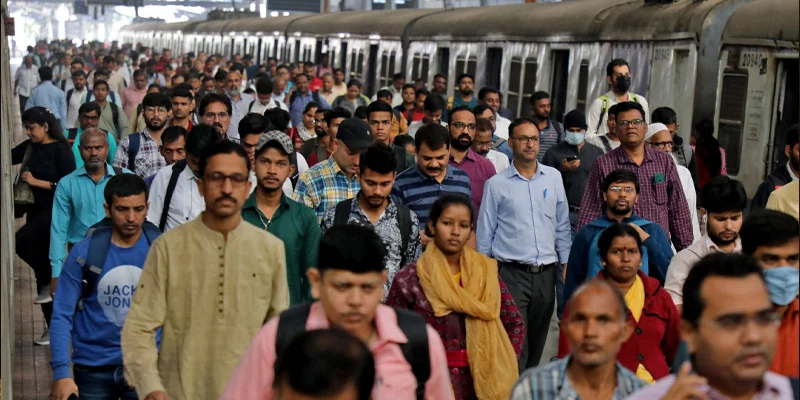
NEW DELHI: Middle class is the most visible face of aspirational India, the loudest participant in public discourse, the backbone of the tax system and a decisive force in elections. Yet, despite its political importance and economic contribution, it feels squeezed, anxious and under-represented in policymaking. For long, the middle class symbolised the success of economic reforms. Rising salaries, expanding job opportunities, home-ownership, better education and consumer choices created a belief that each generation would live more comfortably than the previous one. That confidence is now weakening.
The problem is not outright poverty; it is the slow erosion of financial security. Inflation in essentials such as food, healthcare, education and housing has steadily outpaced income growth for many families. Rents and property prices have become unaffordably high in many cities. School fees rival annual incomes for some households, while healthcare costs can wipe out years of savings overnight. The salaried class finds itself trapped between stagnant purchasing power and rising aspirations. It lives under constant financial pressure – of EMIs, insurance premiums, tuition fees and fuel expenses.
Yet this economic stress rarely translates into sustained policy attention. Politically, the middle class remains influential but fragmented. Unlike farmers, caste groups or organised labour, it lacks a unified pressure mechanism. It lacks a collective bargaining power. Its frustrations are only expressed on social media or television debates. As a result, policymakers frequently treat the middle class as a dependable and silent taxpayer rather than a constituency requiring active support. Welfare politics is understandably focused on poverty alleviation and social protection for the poor. Big business and investors are courted to sustain growth and employment. The middle class lies awkwardly in between.
This sense of exclusion is deepening because the middle class also carries the psychological burden of aspiration. It is expected to consume, invest, educate its children competitively and maintain a lifestyle associated with a Rising India. Social expectations have risen sharply even as economic certainty has weakened. The result is a society that appears outwardly prosperous but inwardly anxious.
The irony is that the middle class remains central to India’s economic ambitions. It drives consumption, fuels housing demand, supports the services sector and supplies much of the skilled workforce.
Its confidence directly affects economic momentum. A financially stressed middle class eventually weakens consumption and undermines long-term growth. Policymakers must recognise that middle-class concerns are not merely about tax rebates or cheaper loans. They reflect a broader demand for economic predictability, affordable urban living, quality public healthcare, reliable education and secure employment opportunities.
A nation aspiring to become a developed economy cannot afford a middle class that feels perpetually insecure. When the very class that once embodied optimism begins to lose confidence, it signals a deeper challenge.