Blitz Bureau
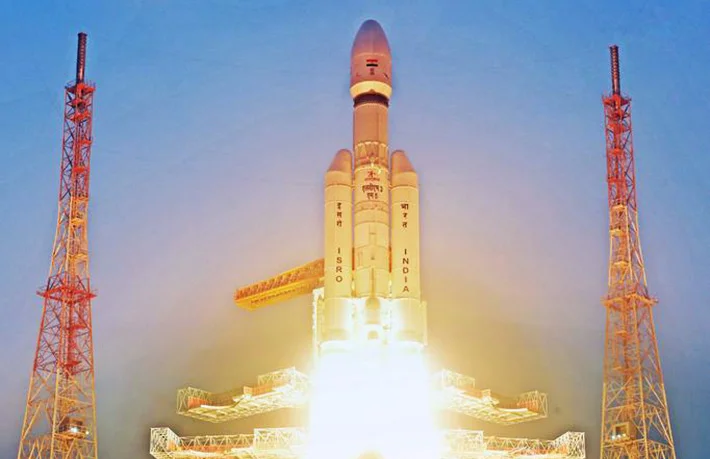
NEW DELHI: India’s ambition to launch its own astronauts moved from blueprint toward hardware this week. The Indian Space Research Organisation announced it has successfully completed three major qualification tests on the Gaganyaan crew module — the pressurised capsule that will one day carry Indian crew — clearing another milestone on the road to the country’s first indigenous human spaceflight.
The trials targeted the unglamorous systems that decide whether a crew comes home safely. Engineers qualified the primary flotation unit that rights the capsule after it splashes down at sea, the mechanism that cleanly disconnects the umbilical links between the crew and service modules, and the capsule’s ability to withstand the loads generated when the parachute cover separates during descent. Each is a small, exacting piece of the chain that must work perfectly, every time.
Step by step: Splashdown flotation, umbilical release and parachute-cover loads — the safety systems that a crewed mission cannot do without — have now been qualified.
A human spaceflight programme is not won on launch day. It is won in the hundreds of quiet tests that make launch day survivable.
At a Glance
• Milestone: three Gaganyaan crew-module qualification tests completed
• Tested: splashdown flotation; umbilical disconnect; parachute-cover load
• Next: uncrewed G1 flight, carrying the half-humanoid robot Vyommitra, targeted later in 2026
• Prize: India would become the 4th nation to launch its own crewed mission
The sequencing is deliberate and mature. Before any astronaut flies, ISRO plans an uncrewed test mission, G1, carrying a half-humanoid robot named Vyommitra in the crew seat to check life-support and safety systems end to end. Success across that campaign would put India in a club of only four nations — after the United States, Russia and China — able to send humans to orbit on their own rocket and spacecraft.
The constructive read is that India is refusing to rush the one programme where haste is unforgivable. A firm launch date matters less than a safe one, and the way forward is exactly what the agency is doing: test relentlessly, qualify each subsystem, and let the schedule follow the hardware. The capability being built — in materials, avionics and human-rating — will outlast any single mission and seed a generation of Indian engineers.