Blitz Bureau
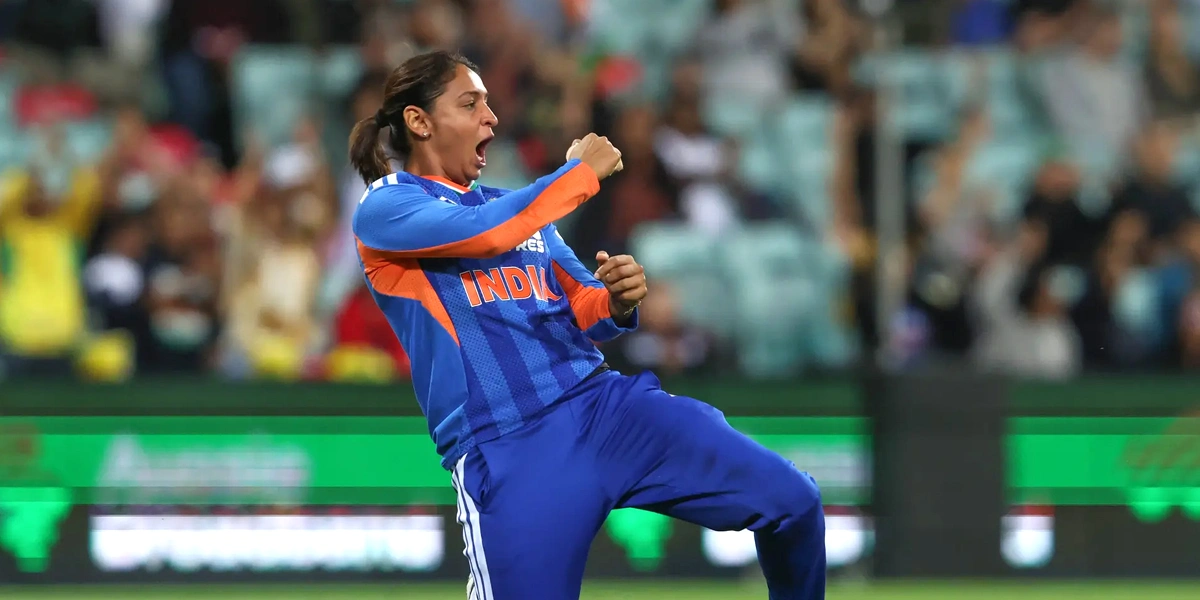
NEW DELHI: India’s women cricketers have a marquee target on the horizon. Cricket returns to the Asian Games at Aichi–Nagoya in Japan this September, and the Board of Control for Cricket in India has named a 15-strong Twenty20 squad led by Harmanpreet Kaur, with Smriti Mandhana as her deputy and a line-up that blends seasoned match-winners with rising talent. The women’s competition runs September 17–22 as part of the wider Games, an eight-team T20 event that puts a continental medal — and real prestige — on the line.
The squad reads like a snapshot of Indian women’s cricket at full strength: Shafali Verma and Jemimah Rodrigues in the top order, the all-round craft of Deepti Sharma, wicketkeeping options in Richa Ghosh and the young G.
Kamalini, and a varied bowling group from Renuka Singh Thakur to the spin of Sree Charani and Radha Yadav. It is the kind of depth that did not exist a decade ago, and it reflects how far the women’s game has travelled on the back of a professional domestic league and sustained investment.
Depth on show: BCCI’s 15-member squad for the Aichi–Nagoya Asian Games, led by Harmanpreet Kaur with Smriti Mandhana as deputy, reflects how far India’s women’s game has come.
A generation of Indian girls now grows up able to name a national women’s XI. That, as much as any medal, is the real gain.
At a Glance
• Event: cricket at the Aichi–Nagoya Asian Games, Japan
• Women’s dates: September 17–22; eight-team T20 format
• Captain: Harmanpreet Kaur; vice-captain: Smriti Mandhana
• Backdrop: a home mega-sport year — India also hosts marquee 2026 events
The Asian Games sit within a landmark sporting year for the country, which is hosting or featuring in a run of major events across cricket, badminton, chess and hockey. For the women’s team specifically, a continental tournament is both a chance at a medal and a stage — the kind of high-visibility fixture that turns promising players into household names and pulls the next cohort of girls toward the game in towns far from the big academies.
The constructive read is that Indian women’s cricket has reached the stage where success is built on structure, not chance. The way forward is to keep widening the base — more matches, stronger domestic pathways and facilities that reach beyond the metros — so that depth keeps deepening. Whatever the result in Japan, the direction is clear: a sport that is steadily becoming one of the country’s most powerful engines of aspiration for young women.