Blitz Bureau
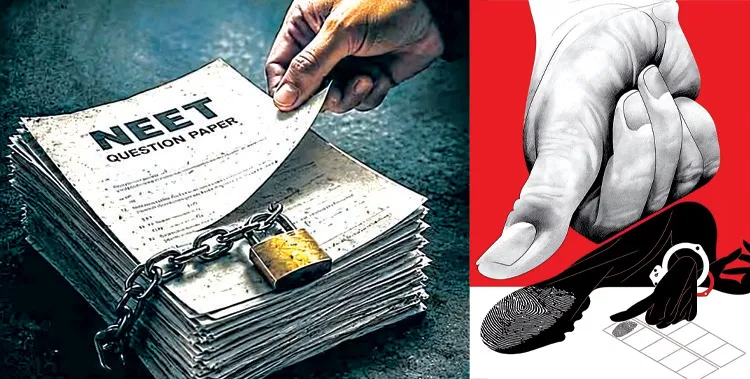
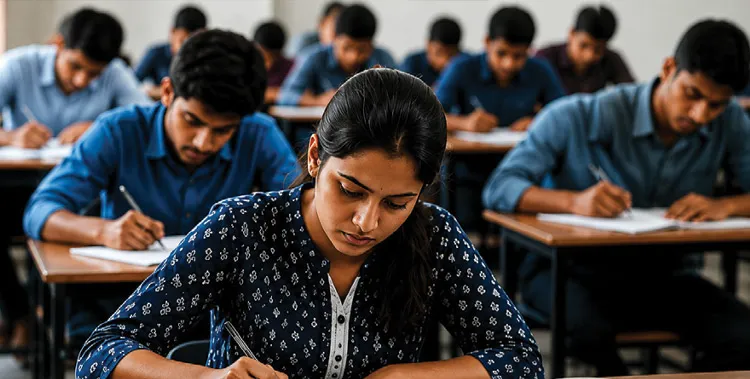
NEW DELHI: Every year in the country, lakhs of youth sit for Government exams hoping for a fair chance at a better future. When a question paper leaks or a racket manipulates results, it is not just a rule that is broken. It is the hard work and trust of an honest student that is broken.
To protect that trust, Parliament had passed the Public Examinations (Prevention of Unfair Means) Act, 2024, India’s first dedicated law against exam cheating, paper leaks and organised exam fraud. Now, the Government has amended the Act and made it even stronger. The new legislation increases punishments, speeds up investigation and trial, and gives victims a clear path to justice.
Need for amendment
The 2024 Act gave the country a strong foundation. But recent years have still seen cases of question paper leaks and exam malpractice, which hurt the fairness and credibility of the public examination system. The amended Act responds to this directly. It sharpens the punishments so they act as a real deterrent, and it builds a faster, time-bound system of investigation and trial, so that guilty persons are punished quickly and students get closure sooner.
Tougher punishment: The clearest change is the quantum of punishment. Sentences and fines for exam fraud have been raised sharply across the board, for individuals, service providers, and those who run organised rackets.
Faster investigation: Under the 2024 Act, cases were investigated by a police officer of at least Deputy Superintendent rank, and the Central Government could also hand a case to a Central Investigating Agency. The new law adds one more option: the Central Government can now set up a dedicated Special Task Force to investigate exam fraud cases. Once a Special Task Force is set up for a case, it alone will investigate that case, so responsibility stays clear and focused.
The amendment also puts a clock on investigation for the first time. Whoever is investigating, whether a police officer, a Central Investigating Agency, or a Special Task Force, must finish the investigation within two months. The two-month clock starts from the day the police officially record the case, or from the day the case is referred to a Central Investigating Agency, or from the day a Special Task Force is notified, whichever applies.
New fast track courts
Designating a Court of Session, to be a Special Fast Track Court is one of the biggest additions. Every state and Union Territory will now have to designate a Court of Session as a Special Fast Track Court, in consultation with the Chief Justice of the concerned High Court, to try exam fraud cases.
— These courts must hear cases day-to-day, without unnecessary breaks.
— A trial must be completed within three months of the chargesheet being filed.
— Cases already pending in other courts on the date this amendment comes into force will be transferred to these new Special Fast Track Courts, and must be completed within three months of transfer.
— Every state and Union Territory will also appoint Special Public Prosecutors dedicated to arguing these cases.
If an accused also faces other connected charges under the Bharatiya Nyaya Sanhita or any other law, the Special Fast Track Court will try those charges together in the same trial, instead of sending the case to multiple courts.
Together, this means an exam fraud case will no longer languish for years. It moves through a dedicated, deadline-bound system from investigation to trial.
Right to appeal
The Act also lays down, for the first time, how an appeal against a Special Fast Track Court’s decision works.
— An appeal against any judgment, sentence or order (other than routine interim orders) will go to the High Court.
— It will be heard by a Bench of two judges, and the High Court must try to dispose of the appeal within three months of it being admitted.
— Even an order granting or refusing bail can be appealed directly to the High Court.
— An appeal must normally be filed within 30 days. The High Court may allow a delay for good reason, but no appeal can be filed after 90 days.
Apart from this High Court route, no other appeal or revision against a Special Fast Track Court’s order can be filed in any other court, keeping the process quick and final. This gives both the accused and the prosecution a fair, but time-bound, path to a higher court, so justice is not delayed indefinitely at any stage
Meaning for students
Put together, these changes send one message: exam fraud will now cost offenders far more, and it will be caught, tried and punished far faster. A student preparing honestly for a Government exam can have greater confidence that paper leaks and cheating rackets will be dealt with severely, and that justice, when needed, will not take years to arrive.
The Public Examinations (Prevention of Unfair Means) Amendment Bill, 2026 builds on the foundation of the 2024 Act to make India’s public examination system more transparent, more secure, and more trustworthy for the youth, who depend on it for their future.
The 2024 Act gave the country a strong foundation. But recent years have still seen cases of question paper leaks and exam malpractice, which hurt the fairness and credibility of the public examination system
Designating a Court of Session, to be a Special Fast Track Court is one of the biggest additions. Every state and Union Territory will now have to designate a Court of Session as a Special Fast Track Court

A decade of leaks
Following are some of the major examination paper leak cases in India over the last ten years (2016–2026). It covers the most significant incidents that led to cancellations, re-examinations, or major investigations
| Year | Exam / Recruitment | Status / Action Taken |
|---|---|---|
| 2016 | Bihar Class 10 Board Exam | Rescheduled |
| 2017 | SSC Combined Graduate Level (CGL) | CBI probe ordered |
| 2018 | CBSE Class 12 Economics & Class 10 Mathematics | Economics exams re-conducted |
| 2021 | UP Teacher Eligibility Test (UPTET) | Cancelled, re-exam held |
| 2021 | Rajasthan Eligibility Exam for Teacher (REET) | Cancelled |
| 2022 | Bihar Public Service Commission | Cancelled and re-held |
| 2022 | Rajasthan Police Constable Recruitment | Cancelled |
| 2022 | RPSC Senior Teacher Recruitment | Fresh examination |
| 2023 | Assam HSLC (Science & English) | Cancelled, re-conducted |
| 2023 | Telangana Assistant Engineer Recruitment | Cancelled |
| 2024 | UGC-NET | Cancelled, CBI investigation |
| 2024 | NEET-UG | Nationwide protests, CBI probe |
| 2024 | UPPSC RO/ARO | Cancelled |
| 2026 | NEET-UG National | Investigations and reforms |
KEY TRNEDS
• Rajasthan, Uttar Pradesh, Bihar, and Telangana have witnessed repeated recruitment exam leaks
• National-level exams such as NEET, UGC-NET, CBSE, and SSC CGL have affected millions of students.
• Following repeated incidents, Parliament enacted a stringent anti-paper leak law to strengthen punishment and improve exam security.