
Blitz Bureau
Every month, when the Ministry of Commerce & Industry releases its foreign trade ledger, the narrative script follows a predictable routine. Financial headlines focus on macro numbers: the widening trade deficit, the multi-billion-dollar spikes in crude oil shipments, the heavy inflows of raw electronic components, or the massive bulk imports of gold and machinery. These macro-indicators provide a high-level temperature check of the national economy.
Yet, tucked beneath these monolithic line items lies a far more intricate, human, and surprising story. A granular dive into the sub-codes of the System on Monthly Foreign Trade Statistics reveals a thriving universe of hyper-specific imports. These are not the industrial backbones of energy or steel, but the niche commodities that feed changing urban lifestyles, keep specialised regional manufacturing clusters spinning, and bridge sudden gaps in domestic supply chains. In an economy processing over $70 billion in imported goods in a single month, even the smallest fraction of a percentage point represents a multi-million-dollar industry.
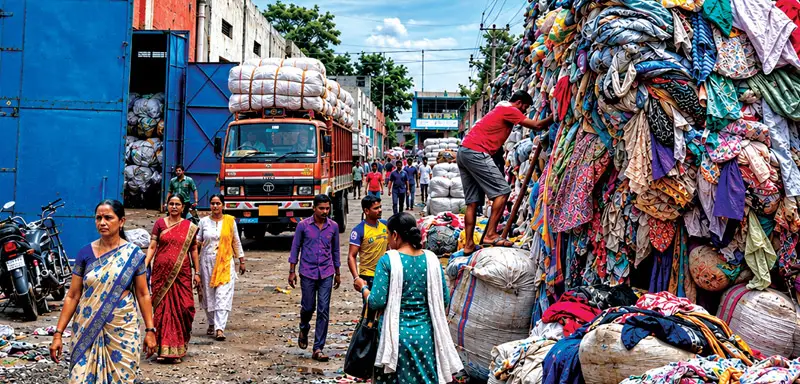
Consider the journey of second-hand textiles. While India is world-renowned as a textile manufacturing powerhouse, the country simultaneously imports thousands of metric tonnes of worn clothing and cast-off rags under tightly regulated Special Economic Zone (SEZ) licences.
Ships carrying tightly compressed bales of discarded garments clear customs at Kandla and move straight to industrial reprocessing hubs like Panipat. Known informally as the recycling capital of the world, this ecosystem shreds, cleans, and re-spins millions of dollars worth of global textile waste into fresh yarn, heavy winter blankets, and industrial insulation — a quintessential example of circular commerce operating silently behind the scenes.
Similarly, shifting consumer habits across India’s urban hubs are quietly altering the composition of agricultural and food import ledgers. Beyond standard bulk imports like palm or soybean oil, trade data reflects a surge in high-value, highly specific inputs. Specialty hops from Western Europe are feeding the rise of domestic craft breweries; gourmet cocoa paste and cocoa butter from West Africa are fuelling a booming artisan chocolate sector; and tens of millions of dollars are allocated to specialised pet nutrition, veterinary supplements, and high-end animal feeds to serve an expanding domestic pet-care market.
Industrial supply chains tell a similar tale of micro-dependency. A domestic factory producing high-end flexible packaging might operate entirely on Indian polymers, yet remain completely reliant on a few tonnes of a highly specialised imported synthetic resin to cure its adhesives. A northern floriculture farm exporting cut roses to Europe depends on seasonal container shipments of live plant bulbs and rootstock harvested in the Netherlands.
These micro-imports demonstrate that global commerce is not merely a game of raw bulk commodities. It is a dense, interconnected web where niche needs dictate shipping manifests. When we unpack the monthly trade bill line by line, we aren’t just looking at trade balances — we are examining an evolving blueprint of how India lives, builds, and consumes.
From trash to yarn
Among the most intriguing commodity lines in India’s import database is HS Code 6309: Worn clothing and other worn articles. To the uninitiated, it seems paradoxical that one of the planet’s largest exporters of apparel would spend millions importing second-hand clothes from Europe and North America.
The explanation lies in a specialised industrial corridor in Haryana.
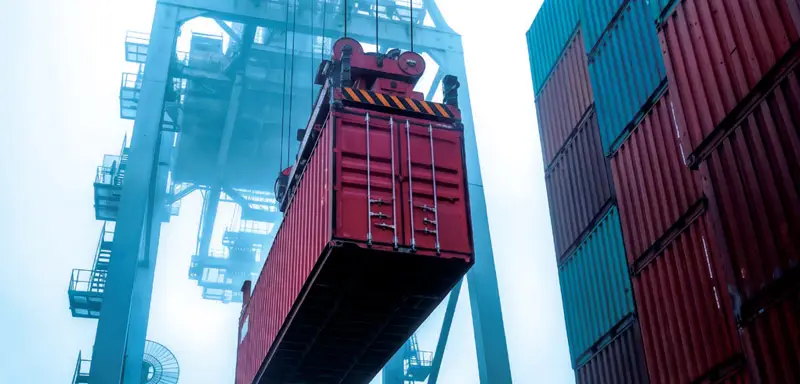
Every week, shipping containers arrive at designated port zones carrying heavily compressed 500-kilogram bales of post-consumer garments. Under strict trade regulations, these items cannot be sold directly into the domestic retail market to protect local garment producers. Instead, they enter licensed processing zones before being moved inland to Panipat.
Here, an army of skilled sorters categorises the garments by colour and fabric composition — acrylic, wool, cotton blends, and synthetic fleece. Zippers and buttons are stripped away, and the fabric is fed into massive rag-tearing machines that mechanically break down the weaves back into basic fibers.
The resulting regenerated fiber requires no synthetic dyeing, saving millions of litres of industrial water. It is blended, carded, and re-spun into durable, low-cost yarn used to weave relief blankets, heavy floor rugs, and sound-dampening felt for the automotive sector. Far from being simple waste, these imported rags represent the fuel for a multi-thousand-crore circular economy that turns global textile discarded goods into essential industrial inputs.
Quaint commodities
While macro headlines focus on crude oil and microchips, these four hyper-specific import categories reflect the changing tastes and niche industrial demands of the Indian market.
Specialty hops & malts (HS Code 1210 / 1107)
Destination: Regional microbreweries and craft beverage brands.
Story: As urban consumers shift toward artisanal beers, domestic craft breweries require specific aroma-heavy hop varieties — like Citra, Mosaic, and Saaz — that do not grow natively in tropical climates. This has driven a steady, high-value import stream from the Pacific Northwest of the US and Central Europe.
Live flower bulbs & rootstock (HS Code 0601)
Destination: Floriculture hubs in Himachal Pradesh, Uttarakhand, and Tamil Nadu.
Story: To meet peak festival and wedding season demand for premium cut flowers like tulips, lilies, and hyacinths, Indian horticulture firms import millions of dormantly chilled plant bulbs directly from specialised nurseries in the Netherlands.
Unrefined natural gums & resins (HS Code 1301)
Destination: Domestic food processing, pharmaceutical, and cosmetic manufacturers.
Story: Specific natural binders — such as Arabic gum sourced from the Sahel region of Africa or specialised plant resins — are imported in raw form to serve as essential stabilising agents in everything from local beverage bottling to pill coatings and eco-friendly cosmetics.
Premium cocoa mass & butter (HS Code 1803 / 1804)
Destination: Boutique chocolatiers and commercial confectioners.
Story: While South Indian cocoa farming continues to expand, the explosive growth of home-grown bean-to-bar chocolate brands has created a sharp appetite for single-origin cocoa pastes and high-purity cocoa butter imported from West Africa and South America.
The anatomy of a recycled bale
Inflow: Compressed 500-kg bales arrive at Kandla port via ocean freight
Sort: Manual grading by fiber type (acrylic, wool, blended cotton)
Strip: Buttons, zippers, and linings removed for scrap metal / plastic
Shred: Mechanical rag-tearing machines convert fabric back to raw lint
Spin: Regenerated fiber spun into low-cost yarn for blankets & rugs