
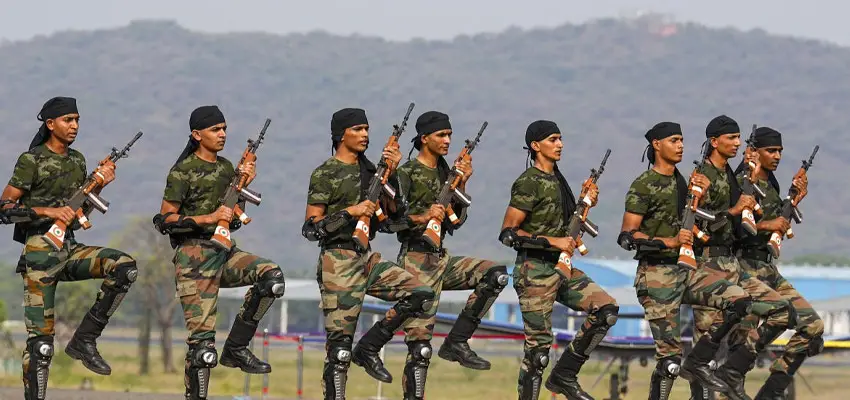
The Centre’s decision to grant an additional two-year service tenure to 75 per cent of Agniveers, who are not selected for regular enrolment after their initial four-year engagement, marks a significant recalibration of the Agnipath scheme.
More than a routine administrative adjustment, the move addresses one of the most contentious aspects of the military recruitment policy introduced in June 2022 – the uncertainty surrounding the future of the majority of young recruits after four years in uniform.
Under the revised arrangement, the existing provision of absorbing 25 per cent of Agniveers into the regular armed forces on merit after four years remains unchanged. The remaining 75 per cent will now be offered a second engagement of two years, subject to their willingness. At the end of this six-year period, they too will have an opportunity to join the regular forces.
Course correction
The decision, announced following a Cabinet approval on November 4, comes as the first batch of approximately 18,300 Agniveers approaches the end of its initial tenure.
The most important aspect of the decision is that it substantially changes the career proposition offered to Agniveers. Under the original framework, three out of every four recruits were required to leave the armed forces after four years, with a Seva Nidhi package but no assured pathway to a military career. The revised arrangement gives them two additional years of service, greater financial security and another opportunity to qualify for permanent enrolment.
The extended tenure also comes with higher remuneration, an enhanced Seva Nidhi package and seniority-related benefits. For thousands of young men and women, this translates into more than additional earnings. It means two more years of professional experience, military training, financial stability and the possibility of building a long-term career in the armed forces.
From the military’s perspective, the benefits could be equally substantial. Retaining trained personnel for six years rather than four will help preserve institutional knowledge, operational familiarity and technical skills.
Pending questions
Despite its merits, the revised arrangement does not entirely eliminate the concerns surrounding the Agnipath scheme. The biggest question is whether a six-year wait for permanent enrolment offers sufficient career certainty to young recruits. Even after the extension, regular absorption is not automatic; it remains contingent on willingness and prescribed selection standards.
There is also the larger question of whether a six-year engagement is adequate to develop the depth of experience, leadership and regimental bonding traditionally associated with a long military career.
Critics may also argue that extending the tenure postpones rather than resolves the employment concerns of those who eventually leave. The Government will, therefore, have to strengthen avenues for their rehabilitation, reskilling and absorption into civilian jobs.
The extended tenure also comes with higher remuneration, an enhanced Seva Nidhi package and seniority-related benefits. For thousands of young men and women, this translates into more than additional earnings