
NEW DELHI: India has built highways, dams, digital platforms and satellites. As it moves towards the goal of Viksit Bharat, it must now build another vital form of infrastructure – a credible system for documenting, examining and communicating its development journey.
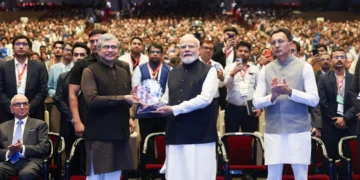
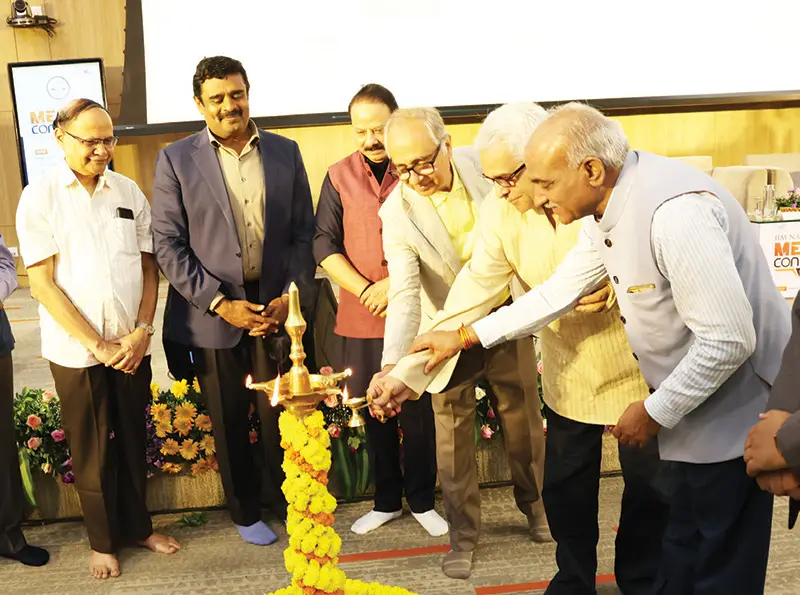
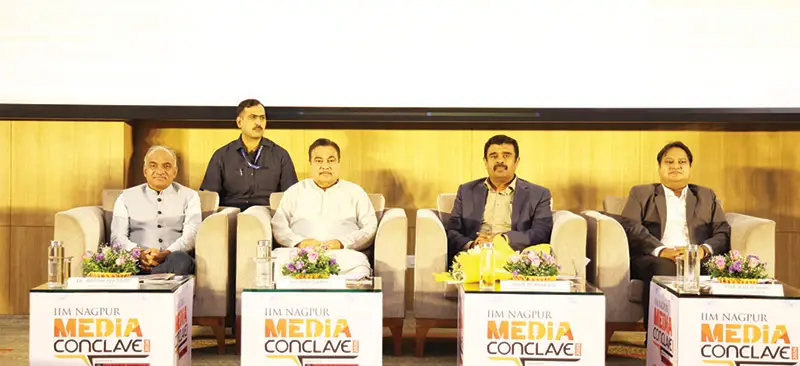
This idea was at the heart of the Indian Institute of Management Nagpur’s flagship national media conclave, ‘Media Leaders and the New World Order’.
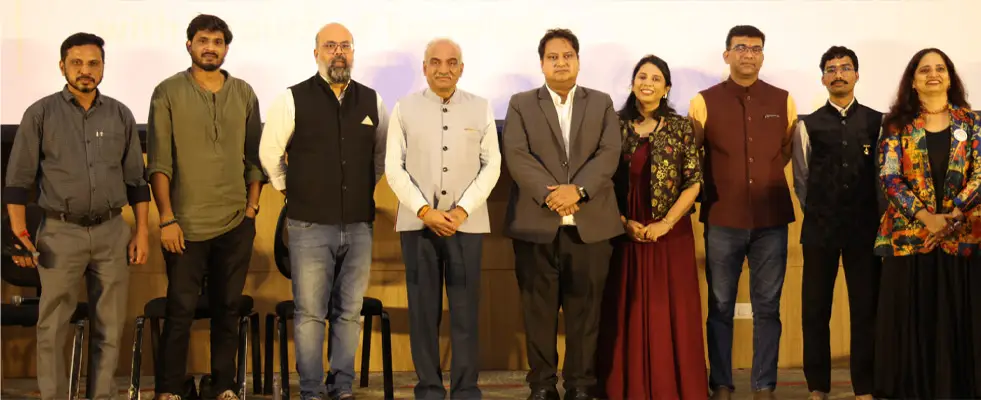
Bringing together policymakers, media leaders, industry experts, academics, Padma awardees, professors and students, the forum examined the changing role of media leadership and public communication. It culminated in the IIM Nagpur Media Leadership Vision Document 2026, an agenda for strengthening India’s media and communication ecosystem.
The conclave’s clearest message was also the most urgent: Viksit Bharat needs credible writing – communication rooted in research, experience, sound judgment and critical reading of data. Journalists and public officials must learn to distinguish announcements from achievements, expenditure from outcomes, and isolated figures from meaningful trends.
Credibility greatest asset
Union Minister Nitin Gadkari stressed the need for credible, thoughtful media to accelerate India’s development journey. Warning that an absence of ideas can be dangerous, he placed independent thought and constructive debate at the centre of responsible communication.
Vijay Joshi, Chief Editor of Press Trust of India, described credibility as the media’s most powerful weapon. AK Bhattacharya, Editorial Director of Business Standard, explained how understanding development data can help young professionals, institutions and industries make better decisions.
Deepak Dwivedi, Chairman & Editor-in-Chief of Blitz India, invited students of IIM Nagpur to write development-centric stories for his newspapers. He said Blitz India’s multilingual publications will provide an open platform to research-oriented reports on policy, business, social and cultural issues. Dwivedi also advocated that IIM Nagpur should consider setting up a Centre of Excellence for development journalism.
Development journalism cannot be reduced to praise, publicity or official handouts. It must examine evidence, verify claims, identify bottlenecks and measure outcomes. It asks not only what went wrong, but why – and what can realistically be done next. Its purpose is to present the complete picture with independence, context and proof.
B Prabhakaran, Managing Director of Lloyds Metals and Energy Limited, argued that industrial enterprises must make local youth stakeholders in their success if Viksit Bharat is to produce enduring results.
Local participation can generate employment, build trust and create the cooperation businesses need in remote regions. Prabhakaran’s experience in Maharashtra’s Gadchiroli district illustrates this model. By connecting industrial development with local aspirations, it has expanded opportunity and fostered greater confidence, security and prosperity.
Prof Bhimaraya Metri, Director of IIM Nagpur, said stronger institutions and new capabilities were essential to improve India’s social and economic condition. He indicated that the institute would consider a specialised programme in development communication for Government, industry and the media.
Such a programme would address a serious gap. India trains administrators to implement schemes and managers to run enterprises, but offers little structured training to those explaining development.
Centre of Excellence
The conclave provided the foundation for a more ambitious institutional initiative: a Centre of Excellence for Development Communication at IIM Nagpur.
The proposed centre could rest on five pillars: professional courses; a verified repository of district-level indicators; case studies documenting successes and failures; fellowships for in-depth district reporting; and a robust code of ethics separating development journalism from propaganda.
Its performance should be measured through professionals trained, verified reports published, policy improvements influenced and credible Indian sources cited internationally.
A district that reduces malnutrition, a women’s collective securing its first export order, a laboratory filing a significant patent, or an MSME transforming local employment – all are part of India’s development record. Their wider value is realised only when they are verified, explained and connected to people’s lives.
Telling the whole story
The call for development journalism is not a call to soften scrutiny. On the contrary, its credibility depends upon the freedom to investigate shortcomings and question official claims. The moment it becomes promotional, it loses public trust and, therefore, its purpose.
As India approaches 2047, economists and policymakers will assess whether it has achieved the material benchmarks of a developed nation. But how Indians understand that transformation – and how the world perceives it – will depend greatly on journalists, institutions and public communicators.
A confident nation must be able to tell its story truthfully – progress alongside shortfalls, ambition alongside evidence, and achievement alongside unfinished work.
The IIM Nagpur conclave has given that principle institutional direction. The next step is to turn it into a national movement for informed, independent and credible development communication.
Development journalism cannot be reduced to praise, publicity or official handouts. It must examine evidence, verify claims, identify bottlenecks and measure outcomes