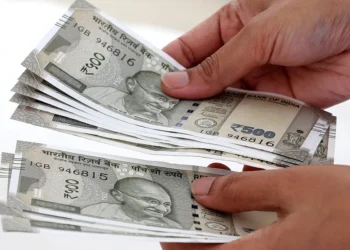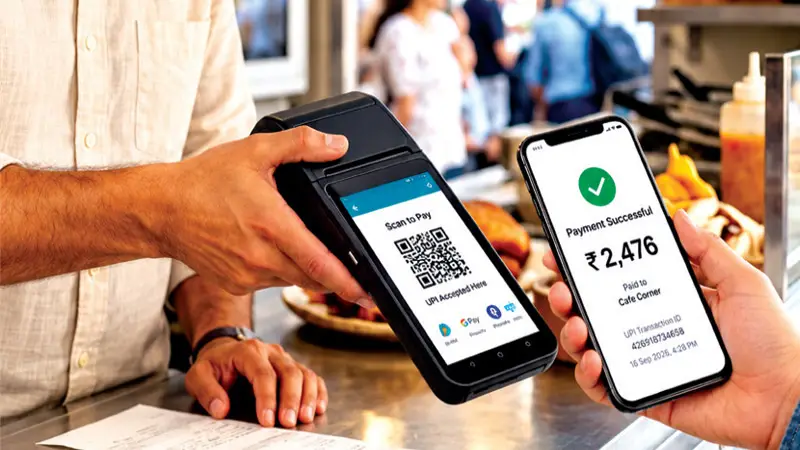
October 15 could mark a new chapter for India’s digital payments ecosystem, with the proposed introduction of a Merchant Discount Rate (MDR) on speci¿ed high-value UPI transactions. The move has caused concern in some quarters, as for millions of Indians, UPI has made payments almost invisible in everyday life – scan, pay and move on; without thinking about the cost. The prospect of charges, therefore, has naturally caused some unease, among consumers and a section of merchants alike.
The Government, however, has sought to allay such fears, maintaining that ordinary consumers will not be charged directly. Person-to-person (P2P) transfers, transactions below Rs 2,000 and eligible small merchants will remain outside the proposed levy. The proposed MDR of 0.4 per cent, capped at Rs 300, would apply only to specified merchant transactions above the prescribed threshold.
Simple and convenient
These assurances are important because the strength of the UPI lies not merely in its technology but in the perception that digital payments are simple, convenient and free. Any fear that users may eventually have to pay for making digital transactions could weaken con¿dence in a system that has become embedded in everyday commerce.
The Government’s broader argument is that an ecosystem handling enormous transaction volumes cannot remain costless for every participant indefinitely. Behind every ‘free’ UPI payment is a complex infrastructure involving banks, payment service providers and technology companies, besides substantial expenditure on servers, cybersecurity, fraud prevention and customer support.
Behind every ‘free’ UPI payment is a complex infrastructure involving banks, payment service providers and technology companies, besides substantial expenditure on servers, cybersecurity, fraud prevention and customer support
A sustainable revenue model is, therefore, essential to support the system as transaction volumes continue to grow.
The users, however, may remain concerned – about the possibility of indirect costs. While the Government has said that consumers will not bear the MDR, merchants facing an additional transaction cost could seek to absorb it through reduced margins or, in some cases, higher prices.
Striking a balance
This is particularly relevant for small businesses operating on thin margins. Eႇective monitoring will, therefore, be necessary to ensure that the assurance of no direct consumer charge is not undermined by indirect costs.
The challenge is to reconcile these two realities: users want the assurance that the convenience and aႇordability of UPI will not be compromised, while the payment ecosystem needs adequate resources to remain ¿nancially sustainable.
The Government’s assurances that ordinary users and small merchants will remain protected are, therefore, central to maintaining public con¿dence.
What is required is striking a balance between aႇordability for users and ¿nancial sustainability for the payment ecosystem. The success of the new framework will also depend largely on how eႇectively the Government’s assurances are reÀected in practice.