NEW DELHI: Organic waste across several parts of the country is being converted into clean fuel, electricity and organic manure as waste-to-energy initiatives gain momentum under the Swachh Bharat Mission.
Launched in October 2014, the Swachh Bharat Mission has focused on scientific management of municipal solid waste. With the evolution of the mission, organic waste is increasingly being treated as a resource for generating clean energy.
Under Swachh Bharat Mission-Urban 2.0, different cities and institutions are adopting waste-to-energy solutions based on locally available waste and community requirements. Initiatives in Gandhinagar, Prayagraj, Gwalior and Hyderabad demonstrate how organic waste can be processed into biogas, compressed biogas, electricity and bio-manure.
At the Shrimati Manekba Vinay Vihar Educational Complex near Adalaj in Gandhinagar, Gujarat, a biogas-based cooking system is meeting the entire cooking-fuel requirement of a campus serving more than 500 people every day.
In Prayagraj, a bio-CNG facility is processing multiple forms of organic waste, including wet waste, paddy straw, cattle dung and poultry litter.
The plant has the capacity to process 343 tonnes of organic waste daily and produce around 21 tonnes of bio-CNG. Operating under a public-private partnership model, the facility receives organic waste from hotels, restaurants and apartment complexes.
Daily wet-waste collection has increased from around 7-8 tonnes initially to nearly 125 tonnes. The bio-CNG is sold under the Compressed Bio-Gas-City Gas Distribution Synchronisation Scheme and is currently being used for city transport.
The facility also produces around 28 tonnes of compost every day for local farmers.
At Adarsh Gaushala in Laltipara, Gwalior, a 100-tonnes-per-day Compressed Bio-Gas plant is converting cattle dung into clean fuel and bio-manure.
The facility, inaugurated in October 2024, is spread over five acres and was developed in collaboration with Indian Oil Corporation at a cost of ₹31 crore. It processes around 100 tonnes of cattle dung daily to produce two tonnes of compressed biogas.
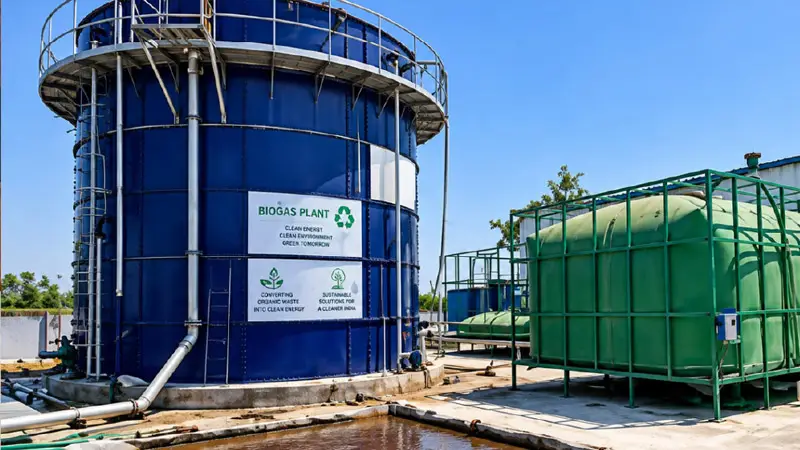
At Hyderabad’s Bowenpally Vegetable Market, around 10 tonnes of vegetable and fruit waste are collected every day. Instead of being sent to landfills, the waste is processed at an on-site biogas plant.
The facility generates around 400-500 units of electricity and 30 kilograms of biofuel daily.
The Bowenpally plant has also created employment opportunities for women, who are involved in waste segregation, machinery operations and administrative work.
These initiatives reflect a broader shift in waste management from collection and disposal towards resource recovery, energy generation and productive use of by-products.