
Blitz Bureau
The Centre’s decision to cap ethanol production from surplus Food Corporation of India (FCI) rice and damaged foodgrain, after excluding most sugarcane-based feedstock from procurement, is likely to push more demand towards maize in the 2026-27 supply year, intensifying competition with poultry, dairy and starch industries for the grain.
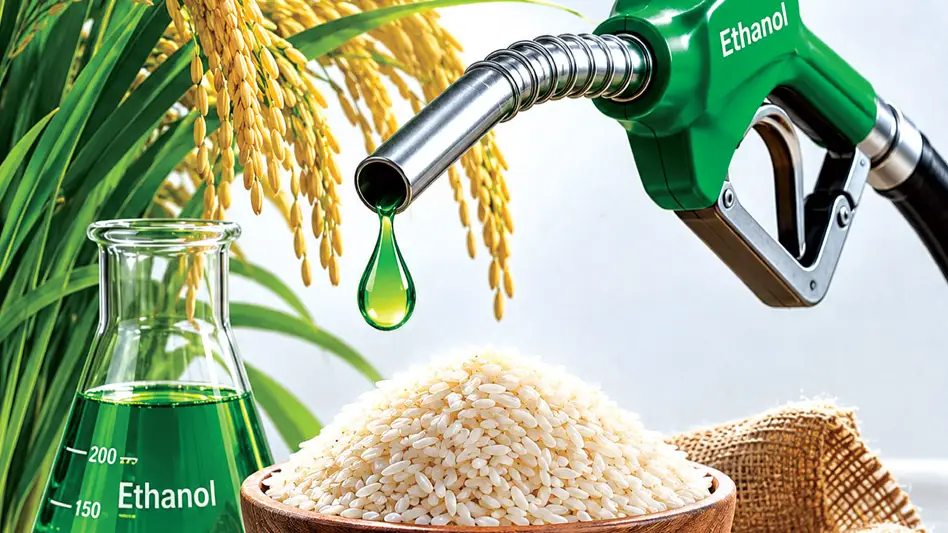
Under revised tender conditions issued on November 3, the Government has capped ethanol made from surplus FCI rice at 3.24 billion litres over the first three quarters and imposed a separate annual ceiling of 1.6 billion litres on ethanol from damaged foodgrain. Together, the two sources can account for a maximum of 4.84 billion litres, or about 44 per cent of the 11 billion-litre ethanol tender floated by oil marketing companies (OMCs) for supplying blended fuel.
The restrictions leave a substantial part of the ethanol requirement to be met through other feedstock, particularly maize, at a time when supplies are already under pressure from competing industrial and feed users.
The damaged foodgrain ceiling is equivalent to 1.6 billion litres of ethanol, or 14.5 per cent of the total tender volume. OMCs will limit allocations from this source to 400 million litres in each quarter of the ethanol supply year (November-October).
The revised tender also restricts ethanol made from surplus FCI rice to nearly 30 per cent of an individual producer’s total quarterly offer. Aggregate allocation from this source cannot exceed 1.08 billion litres in each of the first three quarters. If offers exceed this limit, OMCs will proportionately reduce the eligible quantities of all bidders.
The three-quarter ceiling of 3.24 billion litres corresponds to 7.2 million tonnes of surplus rice allocated by the Government for the Ethanol Blended Petrol (EBP) programme. The allocation is valid until June 30, 2027, according to the revised tender.
The restrictions come against the backdrop of the Government’s decision to stop diversion of sugar for ethanol production in 2026-27 supply year, which runs from November 2026 to October 2027.
The ethanol programme, when started, had relied heavily on sugarcane-based feedstock. These routes allowed sugar mills to divert part of their sugarcane output towards ethanol, providing an additional revenue stream and helping them clear cane dues.
But as output fell, the Government on October 16 this year, issued the next procurement tender with directions to reduce sugar diversion for ethanol to zero.
The restriction did not cover C-heavy molasses, a by-product left after recoverable sugar has been extracted from sugarcane. Its production is expected to rise because mills will no longer divert cane juice or B-heavy molasses for ethanol. Of the total production of ethanol from C-heavy molasses, as per estimates only about 500 million litres can be diverted to OMCs as it is the cheapest ethanol and is likely to face competition from alcohol and other industries.
This will leave maize to shoulder a larger share of the requirement. Industry estimates suggest ethanol production could require around 16 million tonne of maize in 2026-27, against roughly 13 million tonne in the current supply year, an increase of about 22 per cent.
At a conversion rate of 380 litres of ethanol per tonne of maize, producing 16 million tonne would yield about 6.1 billion litres of ethanol. The demand comes on top of the grain industry’s existing requirements for poultry feed, dairy feed, starch and other industrial uses.
Maize is a key feedstock for the poultry, dairy feed-demand, for starch industry and the tussle that is likely to be witnessed next year is already being reflected in its prices. Prices of the commodity in key mandis have touched a high of ₹30-31 per kg, against a minimum support price of ₹24.1 per kg.
Overall maize demand, including ethanol, feed, starch and other industrial uses, could rise to around 55.7 million tonnes in 2027 from an estimated 49-50 million tonnes in 2026, industry projections suggest. This also comes at a time when concerns about the impact of El Nino and weak soil moisture weigh on maize production. Estimates cited by industry point to a possible decline of around 15 per cent in maize availability this year.
Industry estimates also suggest that the existing 11-billion-litre tender may not be sufficient to meet the requirement for maintaining 20 per cent blending through the entire supply year. OMCs are therefore likely to float an additional tender for around 1 billion litres, taking total procurement requirements to about 12 billion litres. This would add to the pressure on maize and other eligible feedstock.