
Blitz Bureau
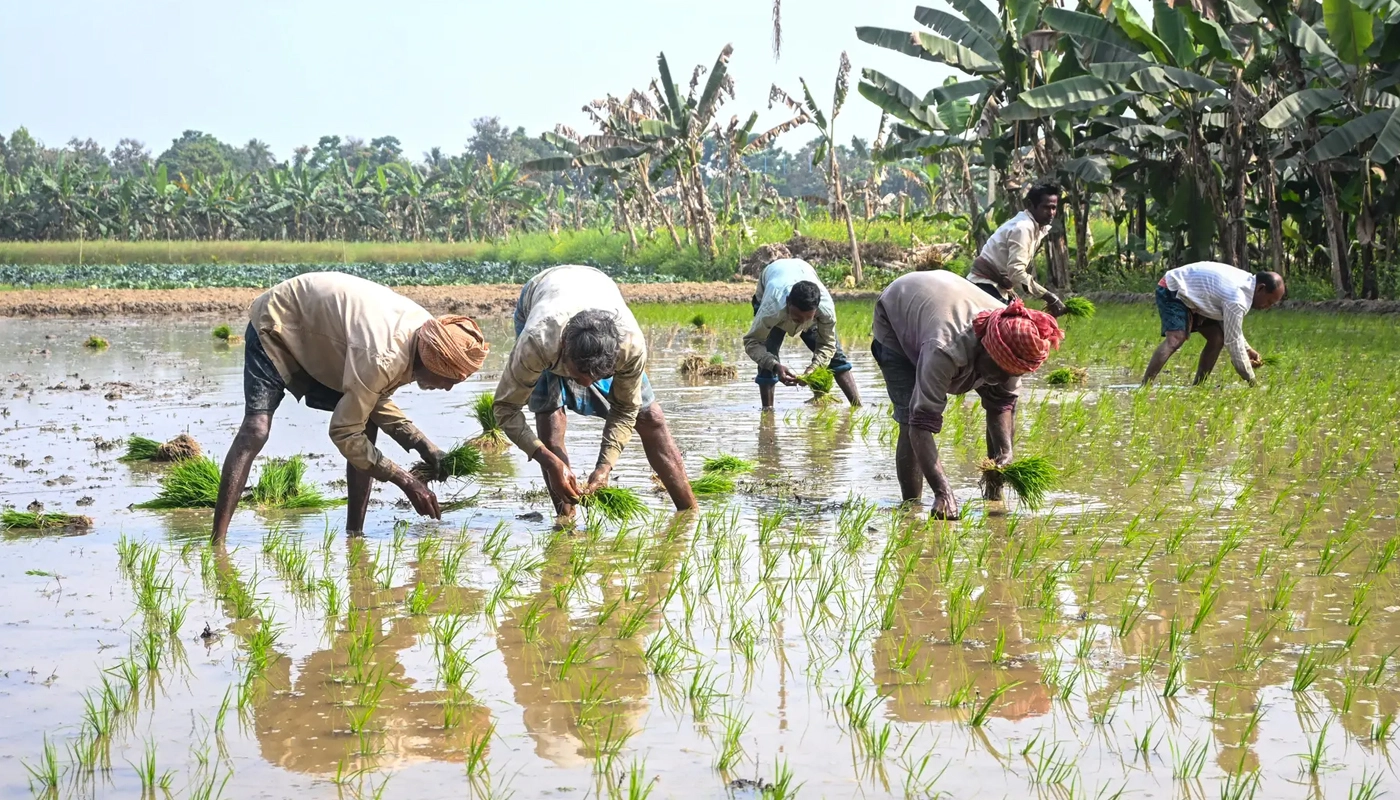
NEW DELHI: India’s farm season began this year with worry and is turning, week by week, toward relief. A late and patchy start to the monsoon had left summer sowing badly behind — kharif planting was down more than a fifth in early July as rain-fed states waited on the skies. But the rains have since strengthened, and the fields have begun to catch up: by July 17 farmers had sown about 65.8 million hectares, and the gap to last year had narrowed to around 6% — roughly 60% of the full season’s normal area already under the plough.
The recovery is real but uneven, and honesty about the mix matters. Rice, pulses and coarse cereals saw the sharpest early declines, while sugarcane and jute held up better. Oilseeds have taken the hardest hit — down by nearly two-fifths at one point, with soybean accounting for most of the shortfall — a reminder that a delayed monsoon does not fall evenly across crops or regions. Where the rain arrived late, the planting window is tighter; where it has now returned, the pace of sowing has picked up smartly.
Catching up with the clouds: After a slow, late-monsoon start, kharif sowing had reached about 65.8 million hectares by July 17 — roughly 60% of the season’s normal area, with the year-on-year gap narrowed to around 6% as rains recovered.
The monsoon writes the first draft of India’s rural year. When the rain comes back, so does the confidence that carries a village from sowing to harvest.
At a Glance
• Sown by July 17: ~65.8 million hectares — about 60% of the normal ~110 mn ha
• Gap: narrowed to ~6% below last year, after a >20% shortfall in early July
• Laggards: oilseeds (soybean-led) and pulses; sugarcane and jute steadier
• Driver: a strengthening monsoon after a late, deficient start
Why does a sowing chart matter beyond the farm gate? Because the kharif crop shapes the food on India’s plates and the mood of its rural economy for months to come. A healthy planting season supports the harvest that keeps food prices steady, lifts the rural incomes that drive demand for everything from motorcycles to soap, and eases one of the risks the RBI itself flagged when it kept policy cautious in June. A good monsoon, in short, is quietly one of the most powerful economic stimulants India has.
The constructive way forward is to help the catch-up hold. That means keeping seeds, fertiliser and short-term credit flowing to the districts that sowed late, steering farmers toward crops still suited to the shortened window, and using the season’s unevenness as a case for the longer investments that make farming less hostage to the sky — efficient irrigation, better water storage and timely, trusted weather advice. The rain has done its part by returning; the task now is to make the most of every week it stays.