• About us
  • Team
  • Privacy Policy
  • Contact
Tuesday, October 13, 2026
  • Login
No Result
View All Result
World's first weekly chronicle of development news
  • Blitz Highlights
    • Special
    • Spotlight
    • Insight
    • Entertainment
    • Sports
  • Opinion
  • Legal
  • Perspective
  • Nation
    • East
    • West
    • North
    • South
  • Business & Economy
  • World
  • Hindi Edition
  • International Editions
    • Dubai
    • Tanzania
    • United Kingdom
    • USA
  • Blitz India Business
  • Blitz Highlights
    • Special
    • Spotlight
    • Insight
    • Entertainment
    • Sports
  • Opinion
  • Legal
  • Perspective
  • Nation
    • East
    • West
    • North
    • South
  • Business & Economy
  • World
  • Hindi Edition
  • International Editions
    • Dubai
    • Tanzania
    • United Kingdom
    • USA
  • Blitz India Business
No Result
View All Result
World's first weekly chronicle of development news
No Result
View All Result

AI may take away work from homes

Google DeepMind Co-Founder Shane Legg predicts the future of jobs

by Blitz India Media
January 3, 2026
in Corporate
0
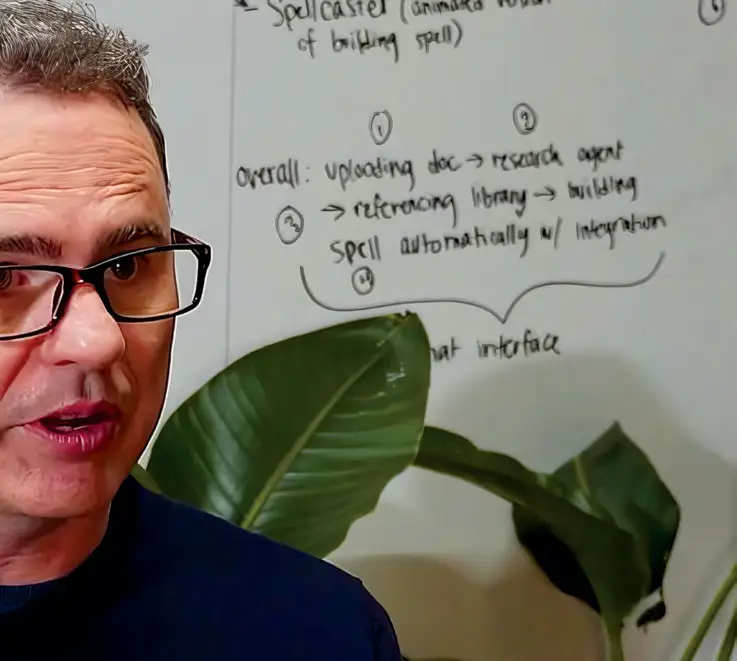
Shane
Blitz Bureau

NEW DELHI: Those grown accustomed to working from home need to read this. In a stark warning about the future of work, Shane Legg, Co-founder and Chief AGI Scientist at Google DeepMind, has predicted that advancing artificial intelligence will effectively end remote jobs and work-from-home arrangements as we know them, according to an FE TechBytes report.

Legg, speaking in a recent interview with Professor Hannah Fry, argued that AI’s rapid progress toward human-level intelligence will disproportionately impact jobs that can be performed entirely online using cognitive skills.

AI to end remote work
“Jobs that are purely cognitive and done remotely via a computer are particularly vulnerable,” Legg explained. He highlighted that companies will likely reduce distributed teams as AI tools allow smaller groups to achieve the same — or better — results. For instance, in software engineering, Legg suggested that teams of 100 engineers could shrink to just 20 with the aid of advanced AI, leading to fewer roles overall, especially entry-level and remote positions.

According to Legg, the disruption will be uneven across industries. Digital-heavy roles — those relying on language, knowledge, coding, mathematics, and complex problem-solving — are set to be hit first.
AI systems are already surpassing humans in areas like language processing and general knowledge, with significant improvements expected soon in reasoning, visual understanding, and continual learning. In contrast, physical jobs requiring hands-on work, such as plumbing or construction, may remain protected longer due to the challenges of automating real-world tasks.

Legg warned that AI could fundamentally alter the economy by outperforming humans in cognitive labour, making it cheaper and more efficient for machines to handle such work. This shift risks invalidating the current system where people exchange mental effort for income, potentially leaving many without traditional employment. He compared ignoring these trends to dismissing early warnings about global challenges, urging society to prepare now.
Despite the grim outlook for certain jobs, Legg remained optimistic about AI’s overall potential. He described the technology as ushering in a “golden age” of productivity, scientific breakthroughs, and economic growth. The key challenge, he noted, lies in distributing the resulting wealth equitably to ensure people retain purpose and stability during the transition. Legg emphasized that these changes won’t occur overnight but will accelerate as AI reaches professional-level capabilities in knowledge work.


Related Posts

Reliance
Corporate

Past Three Lakh Crore: Reliance Posts Record Revenue as All Three Engines Fire

July 18, 2026
Mumbai business district representing India's consumer economy
Corporate

The Titan Playbook: How an Indian Major Is Building a Homegrown Lifestyle Empire

July 5, 2026
OpenAI shuts AI video making app
Corporate

OpenAI shuts AI video making app

March 31, 2026
Sarvam
Corporate

Sarvam in talks to raise funds

March 31, 2026
Mexico slaps fine on Meta
Corporate

Mexico slaps fine on Meta

March 31, 2026
Bosch Tata Autocomp joint venture India EV
Corporate

Bosch, Tata AutoC to form JV for EVs

March 24, 2026
Load More
Next Post
Defining-Aravalli-Hills

Defining Aravalli Hills

Recent News

Asian Champions Trophy 2026
News

Pathak returns as India names squad for Asian Champions Trophy

by Blitz India Media
October 13, 2026
0

New Delhi, 13 October: Hockey India on Tuesday announced the Indian men’s squad for the Asian Champions Trophy Punjab 2026,...

Read moreDetails
Electronics production grows seven-fold : MeitY

New Delhi, 13 October : India’s fintech sector raised $2.2 billion in the first nine months of 2026 (January 1, 2026–September 30, 2026), up 14 per cent from $1.9 billion in the same period a year earlier, a report said. The report from data intelligence platform Tracxn Technologies Limited said funding rounds dipped from 260 to 153, adding that the funding was concentrated in a smaller number of large late‑stage rounds, with five mega‑rounds of $100 million or more accounting for $1.1 billion or 48 per cent of total capital. The report said in the first nine months of 2026, digital lending and payments topped the category rankings, while Bengaluru accounts for over three-fifths of all capital raised. On the exit side, IPOs saw a 50 per cent uptick while overall acquisitions slowed. As many as 30 companies raised their first funding round, down 49 per cent from 59 in the previous year. Series A and later rounds totalled 77, down 31 per cent from 112. Late-stage funding (Series C+, PE, and pre-IPO) led the mix, rising 95 per cent to $1.5 billion in the first nine months of 2026 — up from $751 million during the same period in the previous year. This capital surge pushed late-stage investments to 67 per cent of total market funding, the report noted. Earlier stages experienced contractions in capital and deal counts. Early-stage funding fell 33 per cent to $668 million across 52 rounds, compared to $1 billion across 82 rounds in nine months of 2025. Seed funding fell 57 per cent to $73.8 million across 76 rounds, down from $173 million across 148 rounds. New unicorns crossed the billion-dollar threshold in an average of 7.1 years after their Series A funding. Moreover, the industry saw 3 IPOs in nine months of 2026, up 50 per cent from 2 in the previous year, alongside 11 acquisitions, down 45 per cent from 20.

October 13, 2026
Indian stock market

IBM and MeitY Startup Hub partner to support India’s deep-tech startups with AI, cloud, quantum computing and mentorship.

October 13, 2026
IBM

IBM, MeitY sign MoU to boost India’s deep-tech

October 13, 2026
Solar panels supplying power in Africa

India Growth Story: Start-ups, Trade, Data and Khadi

October 13, 2026

Blitz Highlights

  • Special
  • Spotlight
  • Insight
  • Entertainment
  • Health

International Editions

  • US (New York)
  • UK (London)
  • Middle East (Dubai)
  • Tanzania (Africa)

Nation

  • East
  • West
  • South
  • North
  • Hindi Edition

E-paper

  • India
  • Hindi E-paper
  • Dubai E-Paper
  • USA E-Paper
  • UK-Epaper
  • Tanzania E-paper

Useful Links

  • About us
  • Team
  • Privacy Policy
  • Contact

©2024 Blitz India Media -Building A New Nation

Welcome Back!

Login to your account below

Forgotten Password?

Retrieve your password

Please enter your username or email address to reset your password.

Log In

    No Result
    View All Result
    • Blitz Highlights
      • Special
      • Spotlight
      • Insight
      • Entertainment
      • Sports
    • Opinion
    • Legal
    • Perspective
    • Nation
      • East
      • West
      • North
      • South
    • Business & Economy
    • World
    • Hindi Edition
    • International Editions
      • Dubai
      • Tanzania
      • United Kingdom
      • USA
    • Blitz India Business

    ©2024 Blitz India Media -Building A New Nation