Blitz Bureau
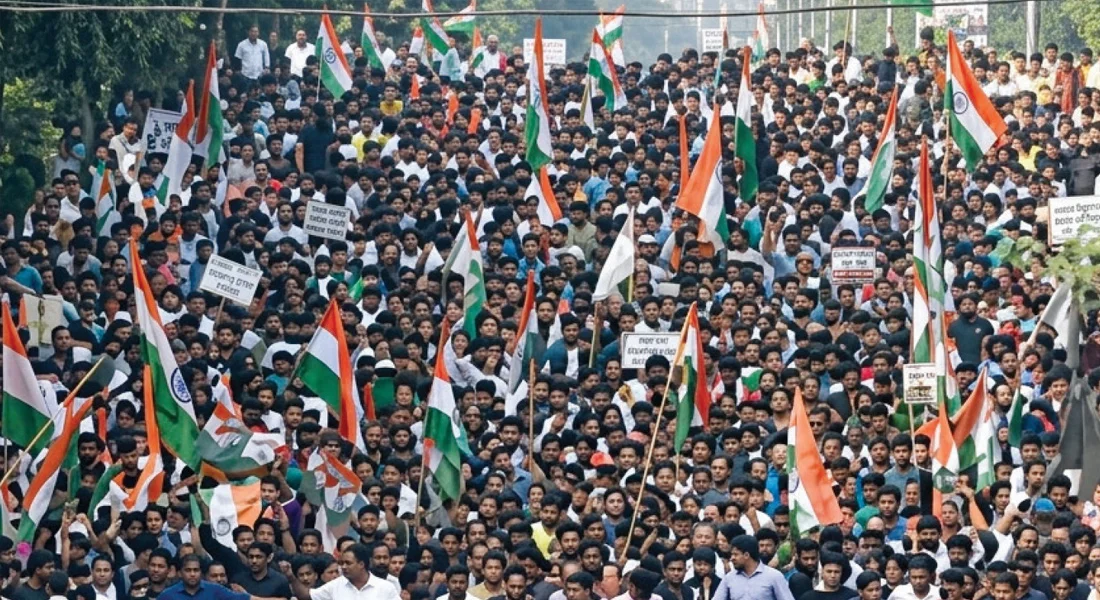
NEW DELHI: The political landscape of West Bengal is currently a high-voltage arena as the state approaches its 2026 Assembly elections. Scheduled for two phases on April 23 and April 29, with results expected on May 4, this election is being viewed as a defining moment for the “Ma, Mati, Manush” legacy of Chief Minister Mamata Banerjee and the burgeoning saffron surge of the Bharatiya Janata Party (BJP).
At the heart of the contest is a clash of polar-opposite visions. The ruling Trinamool Congress (TMC) is doubling down on its “Bengal Model” of governance. Strategically centering its campaign on welfare schemes like Lakshmir Bhandar and Kanyashree, the TMC aims to consolidate its bedrock of rural and women voters. Mamata’s recent prediction of winning over 226 seats reflects a party projecting absolute confidence, even as it navigates the turbulence of anti-incumbency and administrative scrutiny.
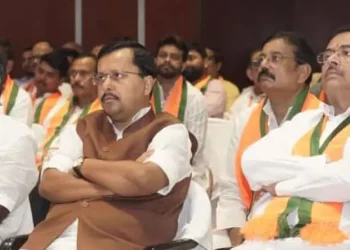
In contrast, the BJP is framing the election as a crusade for “Asmita” (identity) and security. By highlighting issues of illegal infiltration and corruption, the BJP is attempting to breach the TMC’s southern bastions. The saffron party is particularly focused on Jungle Mahal and North Bengal—regions where they showed significant strength in 2021—hoping to turn these 40 decisive seats into a gateway for the state secretariat, Nabanna.
A significant subplot in 2026 is the breakdown of the once-steady alliance between the Left Front and the Congress. In a bold move, the Congress has decided to contest all 294 seats independently, fielding heavyweights like Adhir Ranjan Chowdhury. This “go-it-alone” strategy could lead to a fragmented opposition vote, potentially benefiting the TMC in close triangular contests. Meanwhile, the Left Front is attempting a generational shift, fielding a mix of veterans and fresh youth faces to reclaim the urban and industrial belts they once dominated.
FLASHPOINTS
The lead-up to the polls has been defined by three major friction points:
- Voter List Revision: The “Special Intensive Revision” (SIR) debate has seen the TMC and the Election Commission at loggerheads over the alleged deletion of millions of names.
- Central Oversight: The TMC has criticized the “arbitrary removal” of senior officials by the ECI, labeling it political interference.
- Governance vs. Polarisation: While the BJP pushes a narrative of “change and national integration,” the TMC relies on its record of restoring stability in historically violent regions.