Blitz Bureau
NEW DELHI: A policy that changes nothing is easy to skip. This one moved two forecasts in opposite directions, and both of them land in the household budget.
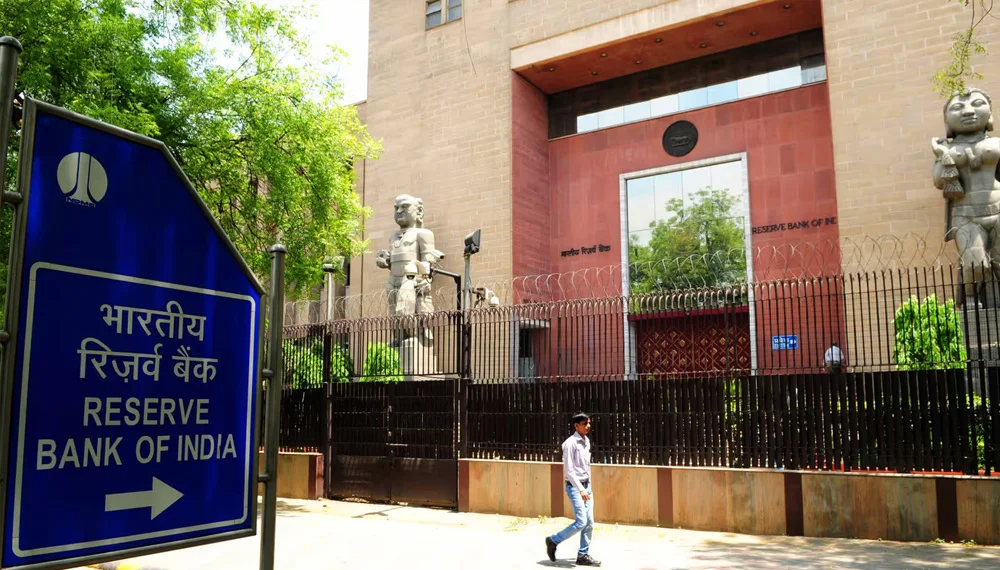
The Reserve Bank’s Monetary Policy Committee left the repo rate at 5.25 per cent on 5 August 2026, holding for a fourth consecutive meeting and retaining a neutral stance. Governor Sanjay Malhotra described the posture as “neither dovish nor hawkish”, saying the committee wanted greater clarity on the path and composition of inflation before acting further.
Underneath the unchanged headline, two numbers moved. The Reserve Bank raised its FY27 real GDP growth forecast to 6.7 per cent, and lowered its full-year CPI inflation projection to 5.0 per cent — while flagging that inflation will rise in the near term and peak at 5.9 per cent in the October-December quarter before easing to 5.5 per cent in the fourth quarter. Headline CPI had already risen to 4.4 per cent in June 2026, crossing the 4 per cent target after sixteen consecutive months below it.
Four holds in a row. The repo rate has stood at 5.25 per cent since February 2026. The Reserve Bank expects inflation to peak in the October-December quarter of FY27 and moderate thereafter.
Growth revised up, inflation revised down, and a peak still to come. The three fit together only if the peak is temporary — which is exactly the judgement being made.
At a Glance
• Repo rate: 5.25 per cent, unchanged — fourth consecutive hold
• Stance: neutral; “neither dovish nor hawkish”
• Decision date: 5 August 2026
• FY27 GDP forecast: raised to 6.7 per cent
• FY27 CPI forecast: 5.0 per cent, with Q3 peaking at 5.9 per cent and Q4 at 5.5 per cent
• June 2026 CPI: 4.4 per cent — first reading above target in seventeen months
• Drivers named: food and fuel prices
For a borrower, the practical consequence of a hold is that an externally benchmarked floating-rate loan does not reprice. Most retail home loans in India are now linked to the repo rate, so an unchanged repo means an unchanged EMI until the next revision. For a saver, the same stability applies to deposit rates — and with inflation forecast to run at 5.0 per cent for the year and touch 5.9 per cent in the December quarter, a deposit paying less than that is losing purchasing power even while the balance grows. That arithmetic, rather than the headline rate, is the number a household should be checking.
The wider reading is constructive. A central bank that raises its growth forecast while holding rates is signalling confidence that the expansion does not require cheaper money to continue; one that lowers its full-year inflation forecast while warning of a near-term peak is signalling that the pressure it sees is in food and fuel rather than in demand. Those are the components that respond to supply management — buffer releases, import windows, duty adjustments — rather than to interest rates. The forward work therefore lies less with the Reserve Bank than with the departments that manage the food and fuel calendar over the next four months. Getting that sequencing right is what will decide whether the 5.9 per cent peak is a quarter that passes or a level that settles.