
Blitz Bureau
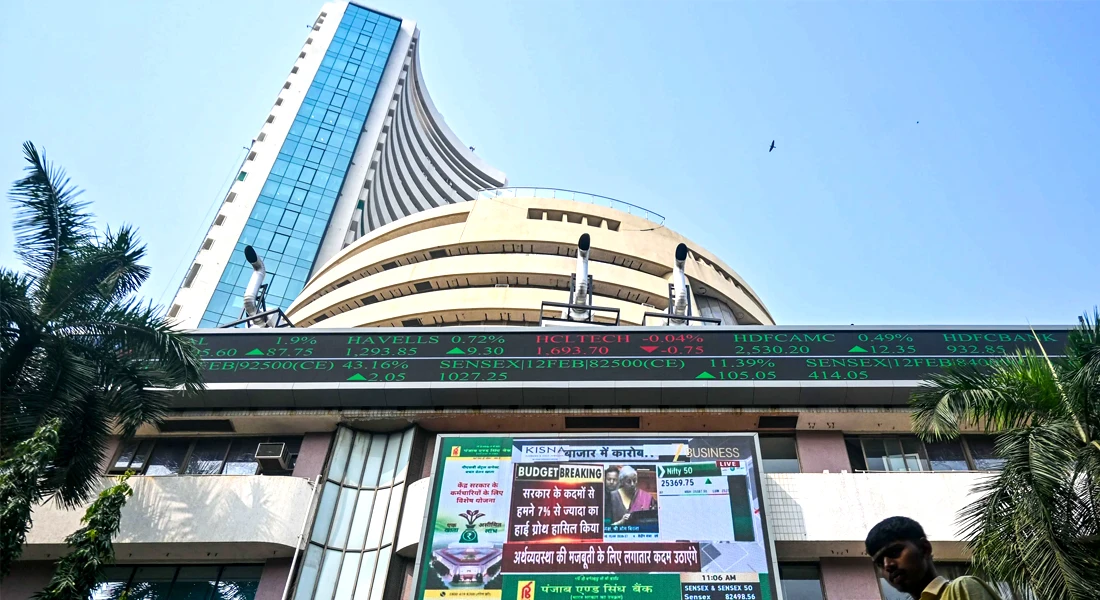
A flare-up far from India’s shores rattled its markets on Wednesday. The Sensex fell 1,677 points, or 2.15%, to 76,503.60 and the Nifty 50 shed 517 points, or 2.12%, to 23,882.05 — the sharpest single-session drop in more than three months — as renewed tension between the United States and Iran and fresh incidents near the Strait of Hormuz unsettled global risk appetite. The volatility gauge, India VIX, jumped nearly 25%.
The move was a risk-off reaction to an external shock, not a verdict on India’s economy. Selling was broad but orderly, with banking and financial names leading the retreat while pharma and select energy stocks proved more resilient. For a market fresh off a strong run, the pullback looked like caution ahead of clarity rather than a change in the underlying trend.
The tape reacted to a headline from the Gulf, not a fault line in India — and ample reserves and deep domestic flows are exactly what turn a shock into a dip.
At a Glance
- Sensex: 76,503.60 (−1,677 pts, −2.15%), worst day in 3+ months
- Nifty 50: 23,882.05 (−517 pts, −2.12%)
- India VIX: up ~25% as caution spikes
- Ballast: Ample forex reserves; steady domestic SIP flows
India’s shock absorbers have grown steadily. A large stock of foreign-exchange reserves cushions the currency, crude is now sourced from a far wider set of suppliers than a decade ago, and a deep base of domestic investors — households putting monthly savings into equities — keeps buying the dips that once belonged to foreign funds alone. Each layer softens the market’s sensitivity to a single Gulf headline.
The constructive read is that volatility of this kind is a passing weather system, not a change of climate. With growth firm and the policy setting supportive, the priority is to stay anchored to fundamentals — and to keep building the reserves, supplier diversity and investor depth that let India ride out an external squall and come through steady.