Blitz Bureau
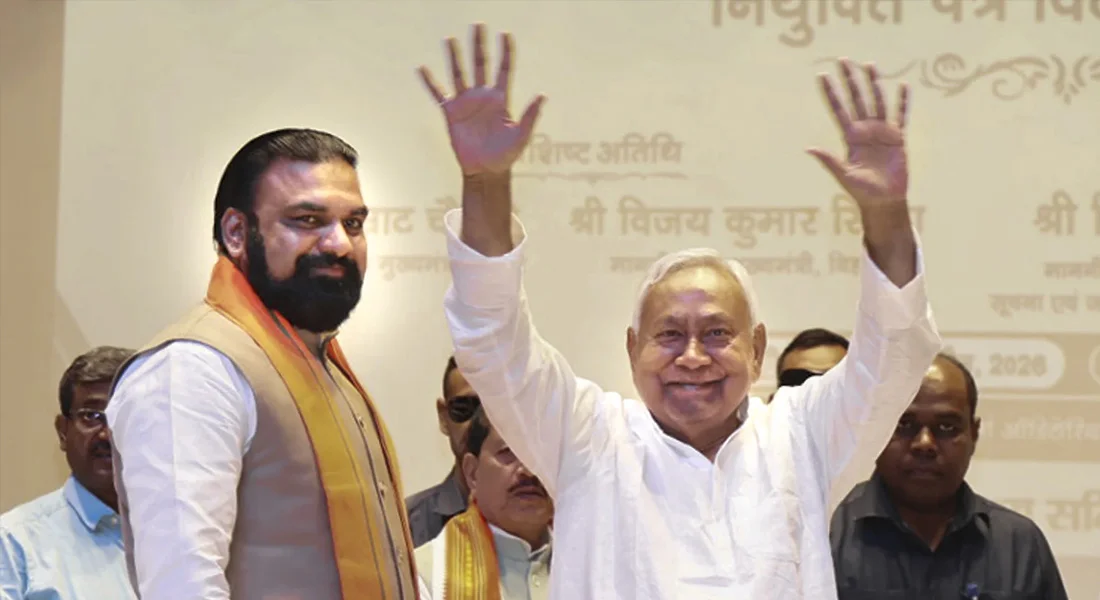
NEW DELHI: It was a historic moment for the Bharatiya Janata Party as for the first time it led the Government in Bihar with Samrat Choudhary taking oath as the 24th Chief Minister on April 15.
The swearing-in ceremony was held at Lok Bhawan, where Governor Syed Ata Hasnain administered the oath of office and secrecy to Choudhary.
Senior JD(U) leaders Vijay Kumar Chaudhary and Vijendra Prasad Yadav were also sworn in as Deputy Chief Ministers under the alliance arrangement.
After he was named legislative leader on April 14, Choudhary met the Governor to stake claim to form a new government in Bihar.
Choudhary expressed gratitude to the party leadership in a post on X, calling the role a “sacred opportunity” to serve the people of Bihar.
Before taking the oath, Choudhary visited a Hanuman temple in Rajvanshi Nagar, seeking blessings ahead of assuming office.
This transition follows the resignation of former Chief Minister Nitish Kumar, who moved to the Rajya Sabha, paving the way for a BJP-led leadership in the state.
Choudhary entered active politics in 1990 and went on to become the Agriculture Minister in Bihar in 1999. He contested from the Parbatta Assembly constituency in 2000 and 2010, winning both elections.
In 2010, he was appointed Chief Whip of the opposition in the Bihar Legislative Assembly. Since 2018, he has emerged as a key BJP leader.
In 2019, under the leadership of Nityanand Rai, he was appointed BJP State Vice- President, steadily rising to become one of the party’s most influential faces in Bihar.
Choudhary gained significant prominence when Nitish Kumar broke ties with the BJP to form a Mahagathbandhan Government.
In 2023, Choudhary was appointed BJP State President, further solidifying his leadership role.
When Nitish later returned to the NDA fold, Choudhary became Deputy Chief Minister — also taking charge of the Home Department, a first for him.
With Choudhary at the helm and experienced leaders like Vijay Kumar Chaudhary and Vijendra Prasad Yadav as his deputies, the new government faces the crucial task of sustaining development momentum while navigating the expectations that come with this unprecedented shift in leadership.