Blitz Bureau
NEW DELHI:India came home from Glasgow with 39 medals and fourth place. The line in the tally that deserves the most attention is not the gold count. It is that there were more silvers than golds.
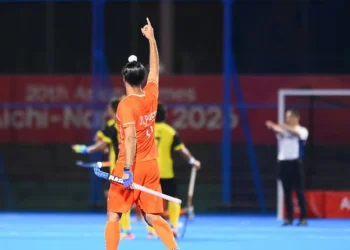
The final numbers were 13 gold, 17 silver and nine bronze. The Prime Minister met the contingent over the weekend, and the celebration is earned — particularly in the boxing hall, where India took ten medals including seven golds, the most any nation has won in the sport at a single Commonwealth Games. Set that against the rest of the table and the shape of the campaign becomes visible: one discipline delivered a majority of the golds, and across several others Indian athletes reached the final and lost it. Seventeen times.
The exception that explains the rule: boxing produced ten medals and seven golds — the one discipline where Indian athletes routinely fight elite opponents before the final.
Reaching a final is a training problem. Winning one is an experience problem. India has solved the first at scale.
At a Glance
• Final tally: 39 medals — 13 gold, 17 silver, nine bronze
• Position: fourth on the Glasgow 2026 medal table
• Boxing: ten medals including seven golds — a record for any nation in the sport at a single Games
• Silver-to-gold ratio: 17 to 13 — more finals lost than won
• Support framework: the expanded Khelo India scheme for 2026-31, cleared on August 4 with an outlay of ₹36,441 crore
• Next up: the Games move to Ahmedabad
A silver-heavy tally has a specific and fixable cause. Athletes who train well and compete rarely arrive at finals technically prepared and tactically underexposed — they have not spent enough hours across the net, the mat or the ring from opponents of that standard. Boxing is the counter-example that proves it: Indian boxers compete internationally with a frequency few other Indian disciplines match, and they converted. The gap is not talent and it is not facilities, both of which the last decade has substantially addressed. It is competition calendar — the number of genuinely hard contests an athlete has behind them before the one that counts.
That is what makes the timing of the expanded Khelo India programme worth watching. Cleared on August 4 for 2026-31 with an outlay of ₹36,441 crore, it widens the athlete pool substantially and adds new institutional tiers, with the Games returning to Ahmedabad. The most valuable thing it could buy is not another stadium. It is a dense domestic competition calendar and consistent foreign exposure — the unglamorous line items that turn a finalist into a champion. India has built the pipeline that produces seventeen silvers. Converting them is a narrower and more solvable problem than the one the country started with.