Blitz Bureau
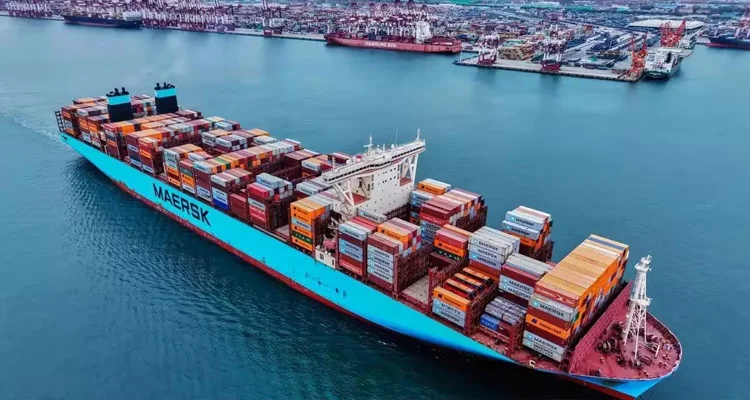
NEW DELHI: Two-way trade between India and Africa reached $93.69 billion in 2025-26, a rise of 14.39 per cent. The direction is the part usually left out: India’s exports to the continent were $45.42 billion, and its imports from it were $48.27 billion.
India is a net buyer from Africa, by about $2.85 billion. That is unusual enough to be worth stating plainly, because most public discussion of this relationship is framed as an Indian export push into a growing market. The trade data describes something closer to interdependence. Africa supplies India with crude oil, gas, gold, pulses, phosphates and metals — the inputs to Indian refining, jewellery manufacture, fertiliser and food processing. India sends back refined petroleum products, pharmaceuticals, vehicles and machinery. A deficit in that structure is not a weakness; it is what a manufacturing economy’s trade with a resource-rich partner looks like.
$93.69 billion, both ways: Africa is now a larger trading partner for India than several individual G7 economies. The stated objective, set out by the commerce ministry, is to double the total by 2030.
For an Indian pharmacist, a Nigerian refinery worker and a Kenyan customs officer, this is one relationship. It is only in the statistics that it becomes two columns.
At a Glance
• Total trade, 2025-26: $93.69 billion, up 14.39 per cent
• India’s exports to Africa: $45.42 billion
• India’s imports from Africa: $48.27 billion
• Net position: India runs a deficit of about $2.85 billion
• Stated target: double bilateral trade by 2030
• Priority areas named by the commerce ministry: value addition, technology-driven farming, renewable energy, healthcare
• Facilitation agenda: aligning standards, customs procedures and business practices
Doubling this by 2030 would require compound growth of roughly 16 per cent a year — a little above the 14.39 per cent just recorded, so demanding but not fanciful. What is striking is where the commerce ministry has said the effort will go. Not, in the first instance, into tariff concessions, but into aligning standards, customs procedures and business practices. That is a diagnosis as much as a plan: it says the friction in this corridor is administrative rather than fiscal. A consignment of Indian generic medicine held at a port because its certification is not recognised is not stopped by a tariff. It is stopped by paperwork, and paperwork is cheaper to fix.
For the ordinary Indian reader the relationship shows up in three places, none of them obvious. It is in the price of pulses, a significant share of which arrives from East Africa in the months before the domestic harvest. It is in employment at Indian pharmaceutical plants, for which Africa is among the largest volume markets in the world. And it is in the roughly three million people of Indian origin living across the continent, whose remittances, business ties and travel make the corridor a human one before it is a commercial one. The named priorities — value addition, technology-driven farming, renewable energy and healthcare — are precisely the sectors in which Indian capability and African demand line up. The work now is procedural, and procedural work is the kind that gets done when someone measures it.