Blitz Bureau
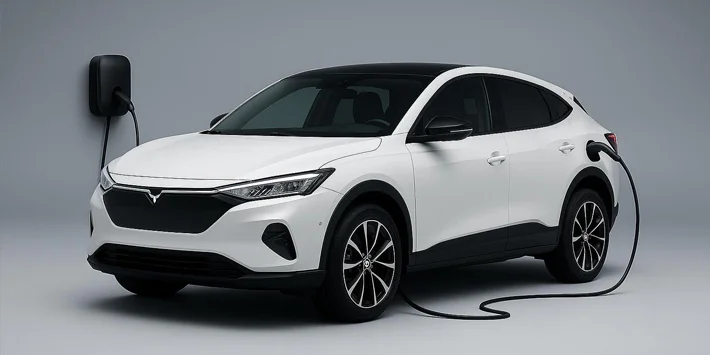
NEW DELHI: India retailed 32,609 electric passenger vehicles in July, up 83 per cent on a year earlier and above 30,000 for a second consecutive month. Tata Motors had its best month ever, at 13,578. The more consequential number is the one behind it.
Mahindra registered 7,710 electric passenger vehicles in July, up 125.7 per cent year on year — growth roughly half again as fast as the leader’s, from a base large enough that the comparison means something. For most of the past decade India’s electric car market was, in practice, one manufacturer and a rounding error. It is now a market with a genuine second position being contested, and with newer entrants finding room: VinFast recorded its highest-ever Indian month at 1,478 units, and BYD sold 742, up 47 per cent.
Two months above 30,000: July’s 32,609 electric passenger vehicle retails followed June’s, the first time the segment has held that level across consecutive months.
A market with one dominant seller sets its own pace. A market with two sets it by argument — and the argument is usually settled on price and range.
At a Glance
• Electric passenger vehicle retails, July 2026: 32,609, up 83 per cent year on year
• Second consecutive month above 30,000 units
• Tata Motors: 13,578 — best month on record, up 102 per cent on July 2025 and 6 per cent on June 2026
• Mahindra: 7,710, up 125.7 per cent year on year — second place
• VinFast: 1,478, its highest-ever Indian month, fifth overall
• BYD: 742, up 47 per cent
Why competition matters more than volume at this stage is straightforward. A single dominant manufacturer can grow a segment, but it has limited reason to compress prices or accelerate model cycles. Two credible manufacturers, plus entrants with something to prove, produce the things buyers actually respond to: shorter waiting periods, better warranties on the battery, faster charging as a competitive feature rather than a specification, and residual values that finally become predictable enough for banks to lend against confidently. Every one of those lowers the real cost of ownership faster than a subsidy does, and none requires public money.
The constructive caution is that retail registrations are a monthly series and monthly series are noisy — festive timing, model launches and dispatch cycles can move any single month. Two consecutive months above 30,000 units is a trend forming, not a trend established. What would confirm it is charging infrastructure keeping pace outside the eight largest cities, because that, and not sticker price, is what still decides the purchase for a buyer in a district town. India has the manufacturing side of this transition working. The next phase is unglamorous civil and electrical work at highway intervals, and it is measurable: chargers per hundred kilometres of national highway is the statistic that will explain next year’s sales figures better than any launch will.