Blitz Bureau
NEW DELHI:India is now Africa’s fourth-largest trading partner, with two-way trade near $100 billion. The headline is the total. The argument currently being had in Accra is about something much smaller and much more consequential — where a cashew nut gets its shell removed.
The scale is no longer in doubt. Bilateral trade stood at about $103 billion in FY25 and is projected to reach roughly $120 billion this year; India exported goods worth around $38 billion to African countries in FY24. Behind the flow sits a development architecture built over two decades — roughly $12 billion in concessional lines of credit extended across more than forty countries, about $700 million in grants, and cumulative investment commitments of some $75 billion that place India among Africa’s top five investors. What India sends is unmistakable in any African pharmacy: generic medicines, at a price point that has made Indian manufacturers a pillar of Nigeria’s health system rather than merely a supplier to it.
Volume is settled, composition is not: the negotiation now running with Ghana is about processing — who adds the value, and in which country.
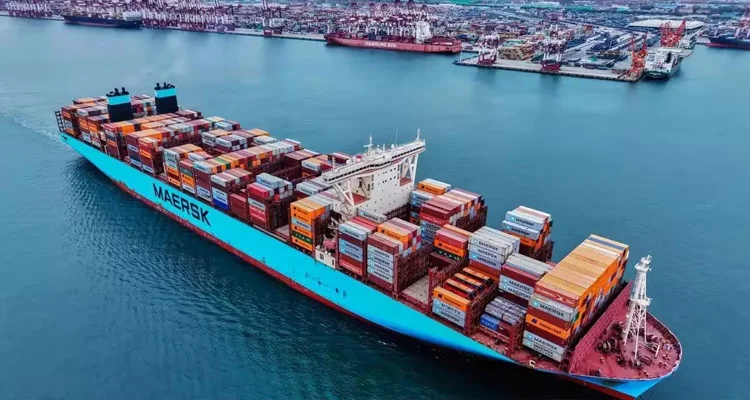
Raw cashew crosses an ocean, gets shelled, and crosses back as a snack. Every argument about India–Africa trade is a version of that sentence.
At a Glance
• India’s rank: fourth-largest trading partner of Africa
• Two-way trade: about $103 billion in FY25; projected near $120 billion this year
• India’s exports to Africa: around $38 billion in FY24
• Concessional credit: roughly $12 billion across 40-plus countries
• Grants: about $700 million
• Investment: some $75 billion in cumulative commitments; India among the top five investors
• Ghana talks: a $6 billion trade ambition, with tariff relief sought on cocoa, cashew and pharmaceuticals
• Nigeria: Indian generics a principal source of the country’s medicines
Ghana and India have set themselves a $6 billion trade target and opened negotiations on tariffs covering cocoa, cashew nuts and pharmaceuticals, alongside simpler business registration and a joint business forum aimed at smaller firms. Read plainly, that agenda is about the processing step. Cocoa beans and raw cashew leave West Africa cheap and return as chocolate and packaged kernels dear; whichever country performs the shelling, roasting and packing captures most of the margin and most of the jobs. India has a large cashew-processing industry that has historically imported African raw nuts. African governments would like more of that work done at home. The interesting thing is that this is not a zero-sum quarrel — it is a negotiation over which parts of the chain sit where, and Indian firms are as likely to build the processing plants in Ghana as to lose the trade.
For an Indian reader the corridor matters in three ordinary ways. It is a market for the pharmaceutical, automotive and engineering companies that employ people in Gujarat, Telangana and Tamil Nadu. It is where a rising share of Indian project work and diaspora employment now sits, from Tanzania to Ghana. And it is a hedge: as tariff conditions elsewhere shift, an export base spread across fifty-four countries is worth more than a bigger one concentrated in two. The constructive path is the one already visible in the Ghana talks — trade the tariff line for the factory, and let India’s advantage move from selling finished goods into Africa to building the capacity that makes them there.