
India backs battery storage, critical mineral processing with Rs 17,314 crore
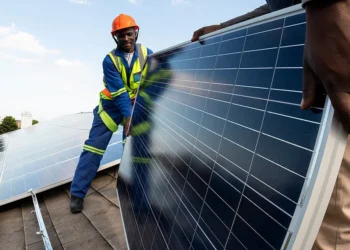
NEW DELHI, 6 November: India has learned to make solar power. It has not yet learned to keep it. On 4 November the Union Cabinet put money behind the second half of the problem, and the two decisions it took that afternoon read best as one.
The first is ₹14,500 crore of Viability Gap Funding for 92 GWh of grid-scale energy storage, to be spent from 2026-27 to 2030-31. The second is ₹2,814 crore of capital support for lithium and nickel processing plants. One builds the reservoirs of the clean grid. The other begins to make, at home, the metals that grid batteries are made of.
AT A GLANCE
● Storage VGF: ₹14,500 crore, 2026-27 to 2030-31 (Union Cabinet, 4 November)
● Capacity: 92 GWh — 60 GWh pumped storage, 30 GWh battery storage, 2 GWh other technologies
● Estimated investment drawn in: ₹97,600 crore
● Domestic content floor for battery projects: 40%
● India’s grid-scale storage need by 2031-32: 411 GWh (Cabinet release)
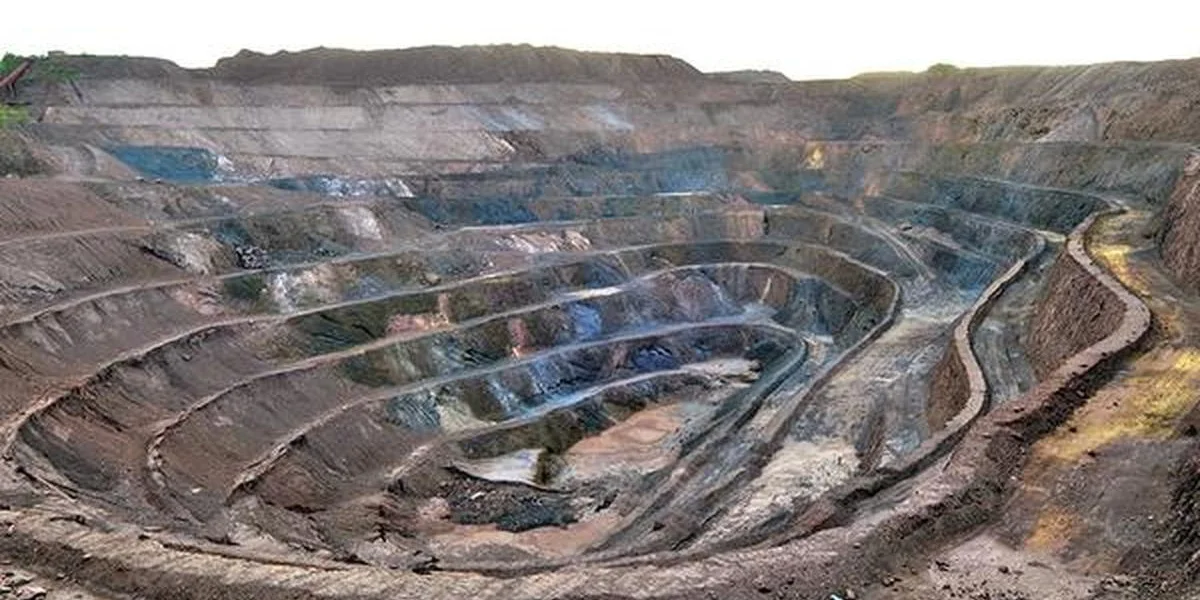
● Critical mineral processing: ₹2,814 crore, 30% capital subsidy, two lithium plants of at least 30 kt and two nickel plants of at least 50 kt a year
WHAT INDIA GAINS
Is the solar power that is generated at noon can be sold at night, which raises the value of every panel already installed. A guaranteed home market for battery systems with a domestic content floor gives Indian cell and pack makers the order book they need to scale..
Blitz View
Publish the bidding calendar for both schemes in one place, so that storage developers and mineral processors can plan against the same dates. Link the processing plants’ milestone tranches to an assured ore or concentrate supply, since a refinery without feedstock is the most expensive kind of idle capacity.
DRDO successfully flight tests Pralay missile
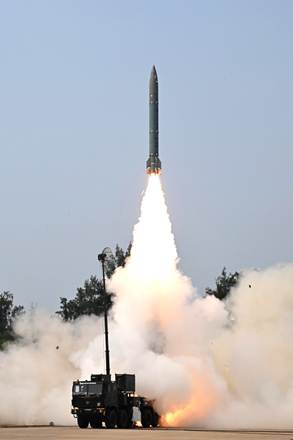
ODISHA, 6 November: The Defence Research and Development Organisation (DRDO) flight-tested the Pralay missile on 5 November from Dr APJ Abdul Kalam Island off the Odisha coast. Tracking data from the Integrated Test Range at Chandipur confirmed the flight.
Pralay is a semi-ballistic missile developed by DRDO’s Hyderabad laboratories and produced by Bharat Dynamics Limited, a defence public sector undertaking. A user trial is the Army’s own test of a weapon it intends to field, and the ministry said the successful flight clears the way for the system’s induction.

Navy gets indigenous boost with deliver of Amini
KOLKATA, 6 November: Garden Reach Shipbuilders and Engineers, Kolkata, delivered Amini, an anti-submarine warfare shallow water craft, to the Indian Navy on 5 November, the Ministry of Defence said. The ship carries over 80% indigenous content.
Built to Indian Register of Shipping rules, the class is among the largest Indian naval warships propelled by waterjets, and is armed with lightweight torpedoes, indigenous rocket launchers and sonars for hunting submarines in coastal waters. The name revives INS Amini, a corvette decommissioned in 2002.
Delivery is the shipyard’s handover; commissioning into the fleet follows. The release did not state the ship’s place in the series or the contract value.
India extends $500 million credit line to Guyana
ST JOHNS. 6 November: India will extend a line of credit of $500 million (about ₹4,700 crore) to Guyana for roads, health and defence projects, External Affairs Minister S. Jaishankar announced after meeting President Irfaan Ali. He was speaking on the sidelines of the Commonwealth Heads of Government Meeting in St John’s, Antigua and Barbuda.
Three agreements were signed alongside: on digital public infrastructure, including a payments system modelled on India’s UPI; on grants for quick impact projects; and on supplying manufacturing units for micro and small enterprises.
The terms, tenor and project list were not disclosed, and a line of credit is a loan to be repaid. Its significance lies in what travels with it. An Indian-designed payments rail inside oil-producing Guyana carries India’s digital model into the Caribbean. Jaishankar framed the package as delivering on commitments made during the Prime Minister’s 2024 visit.
Rabi sowing lags 46pc as deficient monsoon hits winter crops
NEW DELHI, 6 November: Farmers had sown rabi crops on 37.56 lakh hectares by 30 October, against 69.02 lakh hectares on the same date last year, a fall of 45.6%, according to Agriculture Ministry data reported by PTI on 3 November. The June–September monsoon ended 13% deficient, leaving less moisture in the soil for winter crops.
Oilseeds and pulses carry the shortfall. Rapeseed and mustard covered 20.50 lakh hectares against 38.07 lakh; pulses 9.45 lakh against 19.56 lakh, a fall of 51.7%; gram 5.90 lakh against 14.35 lakh. Wheat stood at 19,000 hectares against 3.34 lakh.
BLITZ VIEW
Pre-position certified mustard and gram seed of short-duration varieties in the drought-declared districts now, while the sowing window is still open, and publish the weekly sowing table district-wise so that the gap can be met where it sits.
Drug makers face immediate license suspension for quality failures
NEW DELHI, 6 November: A manufacturer whose medicine fails a government test on a critical parameter could have its licence suspended at once, under draft amendments to the Drugs Rules, 1945, notified by the Ministry of Health and Family Welfare.
Under the present rules, a show-cause notice comes first. The draft lets the licensing authority suspend manufacture immediately when a Government Analyst declares a drug Not of Standard Quality on assay, dissolution, related substances, impurities or sterility — the tests that decide whether a medicine works and whether it is safe. Production resumes only after the firm completes a root cause analysis and corrective and preventive action, and the authority verifies it.
A separate draft, reported by All India Radio on 4 November, aligns microbial monitoring in sterile manufacturing areas with World Health Organization good manufacturing practice.
Centre extends fast track courts with Rs 3,788 cr outlay
NEW DELHI, 6 November: The Union Cabinet has approved continuing the centrally sponsored scheme for Fast Track Special Courts, including exclusive courts under the Protection of Children from Sexual Offences (POCSO) Act. This carries an outlay of over ₹3,788 crore.
The scheme provides for 850 such courts, which try rape and POCSO cases on a dedicated docket. The central share is drawn from the Nirbhaya Fund.
Averaged over five years, the outlay is about ₹757 crore a year. The decision secures the courts’ funding rather than adding new ones; the Cabinet decision as reported did not give the number of cases disposed or pending.
BLITZ VIEW
Publish court-wise disposal and pendency on a single public dashboard each quarter, so that the courts that need more judges or staff are visible to the states that appoint them.