Blitz Bureau
NEW DELHI: Two of Asia’s largest oil importers have decided that the sensible response to a volatile energy market is to face it together. Following the Japan–India Summit on July 2 between Prime Minister Narendra Modi and Prime Minister Sanae Takaichi, India’s Ministry of Petroleum and Natural Gas and Japan’s Ministry of Economy, Trade and Industry issued a joint statement on energy resilience under a new framework called the Partnership on Wide Energy and Resource Resilience Asia — POWERR Asia. Its subject matter is the least glamorous and most consequential part of energy security: stockpiles, shipping and market information.
The core of the agreement is strategic petroleum reserves. Both sides committed to sharing knowledge and experience on stockpiling systems and reserve mechanisms for crude oil and petroleum products, and to promoting concrete cooperation where appropriate. Japan has run one of the world’s most developed national stockpiling regimes for half a century, built after the shocks of the 1970s; India’s strategic reserve programme is younger and smaller relative to its consumption. The asymmetry is the point — this is a partnership in which one side has an unusual amount of institutional memory to transfer, and the other has an unusual amount of growth still to plan for.
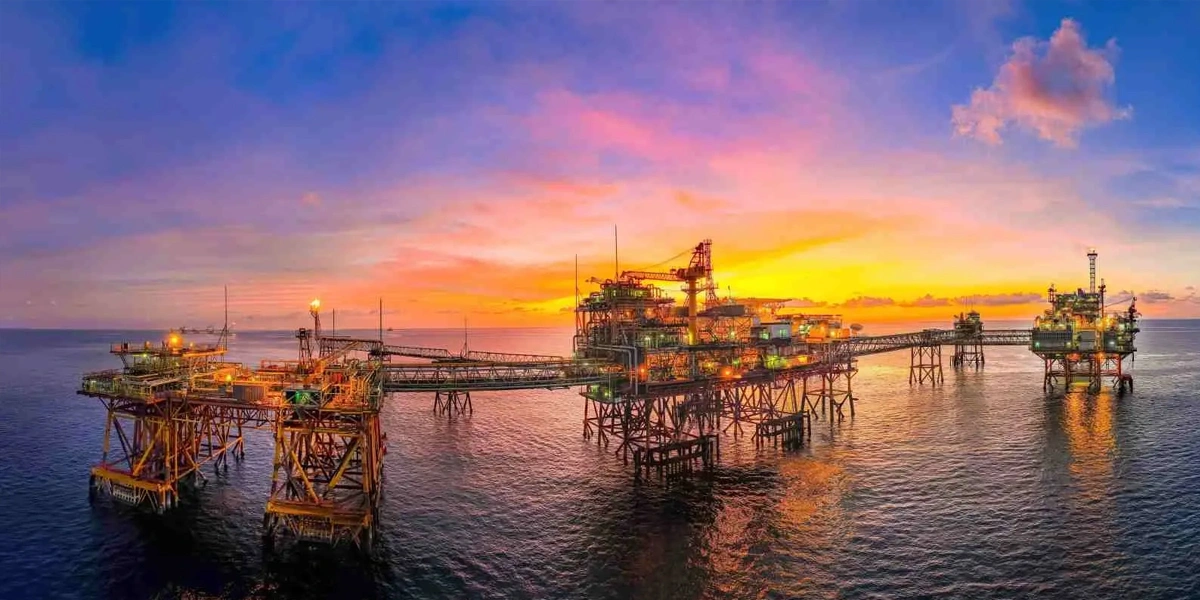
Security measured in weeks of cover: stockpiles, tankers and shared market intelligence are the unglamorous instruments that decide how a large importer absorbs a supply shock.
Energy security is not a barrel in the ground. It is the number of weeks a country can keep functioning if the ships stop arriving.
At a Glance
• Framework: POWERR Asia — Partnership on Wide Energy and Resource Resilience Asia
• Origin: Japan–India Summit of July 2, 2026 (PM Modi and PM Takaichi)
• Pillar one: cooperation on crude and petroleum-product stockpiling and reserve mechanisms
• Pillar two: information-sharing on market trends and joint market-stabilisation efforts
• Pillar three: maritime energy transport, including possible joint investment across the value chain
• Machinery: India–Japan Joint Working Group on Petroleum and Natural Gas, under the Energy Dialogue
Beyond reserves, the statement covers two areas that rarely make headlines and matter enormously. The first is joint work on market information and stabilisation, including exploring energy supplies from third countries and commercial engagement in upstream investment abroad — two large buyers coordinating rather than bidding against each other. The second is maritime energy transport, which both sides identified as a critical pillar of energy security and where they agreed to explore collaboration including joint investments across the shipping value chain. For countries whose energy arrives almost entirely by sea, the tanker fleet is as much a strategic asset as the barrels it carries.
The realistic assessment is that a framework agreement is a beginning rather than an outcome; stockpiling cooperation and shipping investment both require capital commitments and regulatory work that a joint statement can only signal. What gives this one better odds than most is that it has been placed inside existing machinery — discussions will run through the India–Japan Joint Working Group on Petroleum and Natural Gas under the long-standing Energy Dialogue — rather than requiring a new institution to be built first. The constructive measure of success over the next year is therefore concrete and easy to track: whether the working group publishes a work programme with dates, and whether any joint investment in storage or shipping reaches a signed commercial agreement. Frameworks are cheap. Tanks and ships are not.