Blitz Bureau
NEW DELHI:
Before an Indian rides to orbit, the hardware that will bring them home has to be proven — and this month it moved a step closer. The Indian Space Research Organisation has completed three qualification tests for the Gaganyaan crew module, checking the systems that protect a crew through the most dangerous moments of a flight: launch, re-entry and splashdown. It is unglamorous, careful engineering, and it is exactly how a human-spaceflight programme is supposed to advance — one validated system at a time.
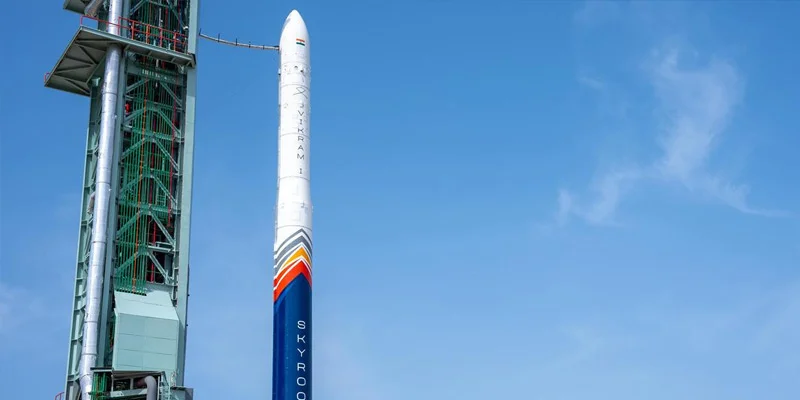
The near calendar follows the same patient logic. ISRO’s first uncrewed Gaganyaan test flight, designated G1, is expected around the end of this year and will carry not an astronaut but Vyommitra, a half-humanoid robot built to occupy the crew seat and report back on the cabin, life-support and safety systems in real flight conditions. The first crewed mission is planned for 2027. Running in parallel is GISAT-2, a geo-imaging satellite designed to send back rapid pictures during floods, cyclones and landslides — one of the seven launches ISRO is targeting this financial year, and a direct link between the space programme and the monsoon playing out on the ground.
Proven, then flown: Three crew-module qualification tests clear the way for Gaganyaan’s uncrewed G1 flight — with the robot Vyommitra in the seat — while GISAT-2 waits in the launch queue.
Human spaceflight rewards patience over drama. Every test passed on the ground is a risk removed from the sky — and a crew brought closer to a safe return.
At a Glance
• Cleared: three Gaganyaan crew-module qualification tests (launch, re-entry, splashdown systems)
• Next: uncrewed G1 test flight expected around end-2026, carrying the robot Vyommitra
• Then: first crewed mission targeted for 2027
• Alongside: GISAT-2 disaster-imaging satellite among ~7 launches planned this fiscal
Why does a sequence of tests deserve attention as much as a launch? Because the value of Gaganyaan is not a single spectacular moment but the durable capability it builds — life-support, re-entry, recovery at sea — that India will own and reuse for decades. Each qualification test is also a pull on a widening ecosystem of engineers, suppliers and testing facilities, and GISAT-2 shows the payoff pointing straight back to daily life, with sharper satellite eyes on exactly the kind of flooding the country is watching this week.
The constructive read is that ISRO is doing this the right way: proving the safety systems first, flying a robot before a human, and keeping an Earth-observation workhorse in the same busy year. The way forward is steady funding, a deeper supplier base and the same discipline carried through to G1 and beyond, so that when an Indian finally launches from Indian soil, it is on the back of a programme that earned the moment test by test. Handled with that care, the caution of today becomes the confidence of 2027.