Blitz Bureau
NEW DELHI: It is the simplest instrument in Indian agricultural policy and, by the number of people it reaches, the largest. The Union Cabinet has approved the continuation of the Pradhan Mantri Kisan Samman Nidhi from 2026–27 to 2030–31 with a financial outlay of ₹3.15 lakh crore, extending a scheme that pays eligible landholding farmer families ₹6,000 a year directly into their bank accounts in three equal instalments.
The scale of what has already been paid out gives the extension its context. More than ₹4.47 lakh crore has been transferred across 23 instalments since the scheme began. The government has cited evidence that 85 per cent of recipient farmers reduced their borrowing as a result — which is the most economically interesting claim attached to the programme, because it locates the benefit not in consumption but in the cost of credit. The extension arrives in a season that needed reassurance: the India Meteorological Department had forecast July rainfall below 94 per cent of the long period average after one of the driest Junes on record, with northwest, northeast and parts of east-central India expected to fare better than the national figure.
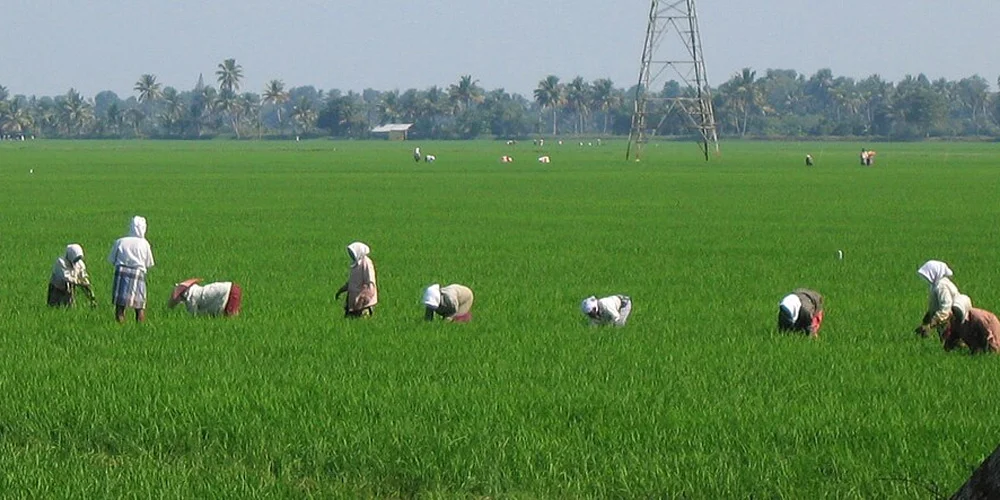
Predictability as policy: ₹6,000 a year in three instalments, extended to 2030–31 — arriving in a season the monsoon has made uneven.
The value of ₹6,000 a year is not what it buys. It is that a farmer knows, in March, that it is coming in April.
At a Glance
• Extension: PM-KISAN continued from 2026–27 to 2030–31
• Outlay: ₹3.15 lakh crore over five years
• Benefit: ₹6,000 per year per eligible landholding farmer family, in three equal instalments
• Delivery: direct benefit transfer into bank accounts
• Paid so far: more than ₹4.47 lakh crore across 23 instalments
• Cited effect: 85% of recipient farmers reduced borrowing
• Season context: IMD had forecast July rainfall below 94% of the long period average
Direct cash transfers are often judged on the wrong question — whether ₹6,000 is “enough” — when the more useful one is what the money displaces. For a smallholder buying seed and fertiliser at the start of a season, the alternative to a state transfer is rarely savings; it is credit, frequently informal credit at rates that consume a meaningful share of the eventual harvest. A payment that arrives on a known schedule reduces the size of that loan, and the reported fall in borrowing among recipients is consistent with exactly that mechanism. Predictability, in other words, is doing more work here than the rupee value suggests, and a five-year extension is itself part of the product.
The constructive question for the second decade is what sits alongside the transfer rather than what replaces it. Income support stabilises a household; it does not by itself raise yields, improve soil, cut input costs or move a farmer up the value chain, and the scheme was never designed to. The complementary agenda is well mapped and mostly under way — micro-irrigation, which now covers roughly 110 lakh hectares, soil health testing, farmer producer organisations that give small growers bargaining power, and better post-harvest storage to cut the losses that erase a good season. Each of those raises income permanently rather than annually. Read that way, PM-KISAN is best understood as the floor that lets a farmer take the risk of investing in the rest — and the more of the rest that is available, the more the floor is worth.