
Blitz Bureau
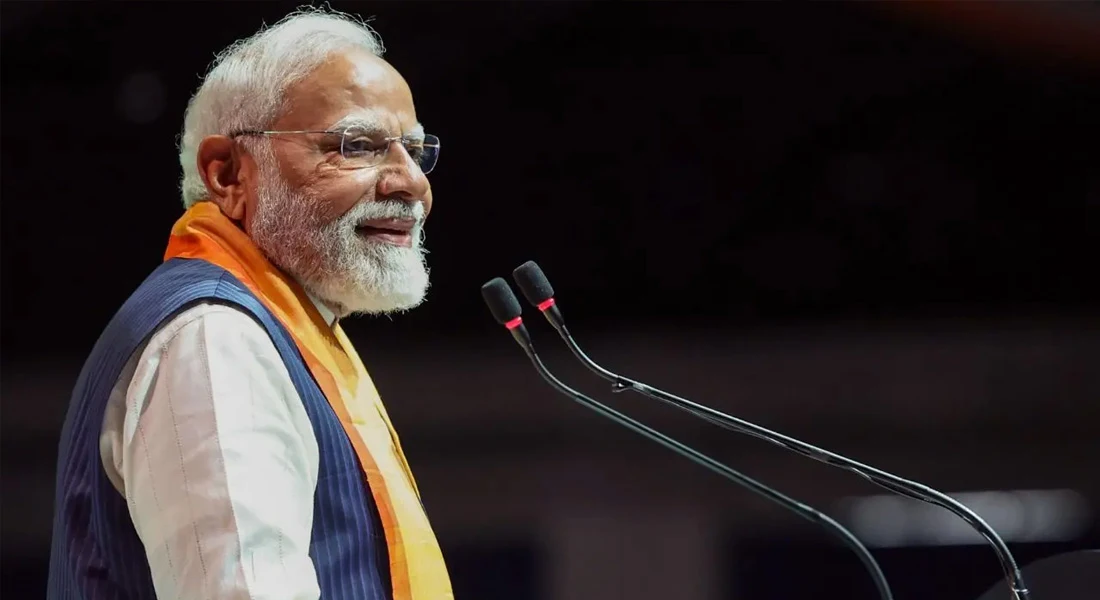
NEW DELHI: The Prime Minister left this morning for Uzbekistan and the Kyrgyz Republic. The four days carry two separate pieces of business, and the second is the larger: the Shanghai Cooperation Organisation is twenty-five years old, and India has been inside it for nine of them.
The Prime Minister’s Office released the text of his departure statement on 29 August 2026, ahead of a visit to the Republic of Uzbekistan and the Kyrgyz Republic running from 29 August to 1 September 2026. The statement is short, and it is worth reading for what it names rather than for what it claims. It names the pursuit of peace, stability and prosperity as the values at the heart of India’s engagement with the world. Then it names four heads of business, and they are the ones by which this visit will be measured.
Tashkent, and four heads of business
The first leg is a state visit to Tashkent on 29 and 30 August, with delegation-level talks with President Shavkat Mirziyoyev. In the Prime Minister’s own words: “I look forward to my discussions with President Mirziyoyev on further deepening our cooperation in trade and investment, digital connectivity, defence, energy, and on advancing our shared visions of ‘Viksit Bharat’ and ‘Yangi Uzbekistan’.”
Two of those four are the difficult ones, and they are difficult for the same reason. Central Asia is landlocked, and India has no land route to it. Trade and energy both wait on carriage. Digital connectivity does not, which is why it sits in the list beside them: it is the one head of cooperation that geography cannot slow down, and it is the head on which India has most to offer.
Bishkek, and a summit at twenty-five
From Tashkent the Prime Minister travels to Bishkek, at the invitation of President Sadyr Zhaparov, for the 26th Summit of the Shanghai Cooperation Organisation on 31 August and 1 September. The Summit marks the organisation’s twenty-fifth year; it was founded in 2001. India has been a full member since 2017 — nine of those twenty-five years, and rather less than half the life of the body it now helps to steer.
The Prime Minister set out the frame he will carry into the room: “India has been an active and constructive member of the SCO since 2017. I look forward to advancing India’s vision for the region, anchored in Security, Connectivity and Opportunity, and to working with fellow members for a region free from the scourge of terrorism, separatism and extremism.” He will also attend the opening ceremony of the 6th World Nomad Games, which he described as “a celebration of the rich living heritage of Central Asia that India holds in deep respect.”
Three words, in that order — security, connectivity, opportunity — are not decoration. They are the sequence in which the region itself reads the agenda, and the middle term is the one that converts the first into the third. For India, connectivity to Central Asia has never been a matter of will; it has been a matter of route.
The visit, as the record sets it out
| Parameter / Metric | Details |
|---|---|
| Departure statement issued | 29 August 2026 |
| Visit period | 29 August – 1 September 2026 |
| Uzbekistan, state visit | Tashkent, 29–30 August |
| Talks with | President Shavkat Mirziyoyev |
| Kyrgyz Republic | Bishkek, 31 August – 1 September |
| Occasion | 26th SCO Summit, on invitation of President Sadyr Zhaparov |
| SCO founded | 2001; the Summit marks its 25th year |
| India a full member since | 2017 — nine of the twenty-five years |
| Named heads of cooperation | Trade and investment, digital connectivity, defence, energy |
| India’s stated anchors | Security, Connectivity, Opportunity |
| Also attending | Opening ceremony, 6th World Nomad Games |
What India will be watching for
A summit produces two kinds of paper. There is the communiqué, which is written before anyone arrives, and there are the bilateral outcome documents, which are not. The second kind is where a visit of this sort is won or lost, and it is the kind that Indian readers rarely see reported once the aircraft is home.
The desk offers one suggestion, and it is a suggestion about publication rather than about policy. The value of a visit like this is settled in the twelve months after it, not in the four days of it. If the Ministry of External Affairs and the Department of Commerce were to publish, alongside each outcome document, a plain implementation calendar — the item, the date by which it is to be done, and the office answerable for it — the reader in Ludhiana or Surat could measure for himself what Tashkent and Bishkek were worth. The information already exists inside both ministries. Printing it would cost nothing and would settle a question that is otherwise settled by guesswork.