Blitz Bureau
NEW DELHI: The Centre has approved a piped-cooking-gas incentive that starts on 1 September. It pays city gas companies in gas rather than in money — and that design choice is the whole story.
The Ministry of Petroleum and Natural Gas has approved an Incentive Scheme for Promotion of Domestic PNG Connections, effective from the first of next month. Its stated purpose is to fast-track the expansion of active piped natural gas connections — the emphasis on active is deliberate. India currently has 1.74 crore domestic PNG connections. A meaningful number of connections in any city gas network are installed but unbilled: the pipe reaches the kitchen, the meter exists, and no gas flows. The scheme is aimed squarely at that gap, and at extending the network into new areas.
The mechanism is unusual and worth setting out plainly. Eligible city gas distribution entities will be allocated an additional 200 standard cubic metres of domestically produced, lower-priced gas for every incremental billed domestic PNG connection achieved during the performance period. The scheme runs in two tranches spanning six months.
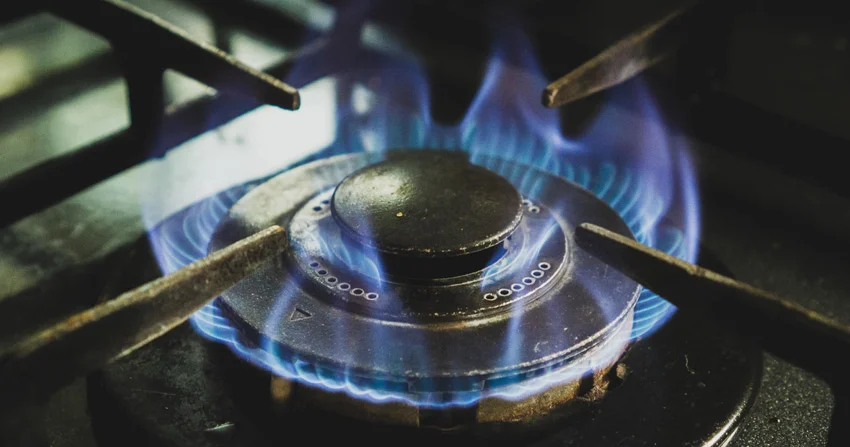
Where the scheme lands: The domestic burner is the point of the exercise. Piped natural gas reaches the kitchen through a metered connection and is billed on consumption, which is why the Ministry has written the incentive around billed connections rather than installed ones.
The incentive is denominated in molecules, not rupees. If the national network grew by a tenth — 17.4 lakh new billed connections — the scheme would release about 34.8 crore standard cubic metres of cheaper domestic gas to the distributors that delivered them.
At a Glance
• Scheme: Incentive Scheme for Promotion of Domestic PNG Connections
• Effective from: 1 September 2026
• Existing base: 1.74 crore domestic PNG connections
• Incentive: 200 SCM of domestic, lower-priced gas per incremental billed connection
• Duration: two tranches over six months
• Funding mechanism: extra domestic gas substitutes costlier LNG bought for the CNG transport segment
• Ministry: Petroleum and Natural Gas
Where does the gas come from? This is the part of the design that repays attention. City gas distributors buy imported liquefied natural gas to serve their compressed natural gas business at the pump, and that LNG is dearer than domestically produced gas. The additional allocation under this scheme substitutes for a share of that costlier LNG, which lowers the distributor’s overall gas-sourcing cost. In other words, the reward is not a cheque from the exchequer; it is a cheaper input, and the company earns it only by producing a billed connection that did not exist before.
For a household, the immediate question is simpler: is piped gas better than a cylinder? On the Ministry’s own framing, piped natural gas is safer, cleaner and more convenient than LPG cylinders and traditional cooking fuels. The practical differences are the ones families notice — no booking, no delivery wait, no lifting, no running out mid-cooking, and a meter that bills what is used rather than what is bought in advance. The corresponding limitation is equally practical: PNG only exists where the distribution network has been laid, which is why the scheme also pays for expansion into new areas rather than only for conversions.
The gap worth naming is coverage. A scheme that rewards billed connections will work fastest where pipes already run, which means dense urban geographies stand to gain before smaller towns. That is not a flaw in the design so much as a sequencing consequence, and the constructive way to close it is publication: a tranche-wise account of how many incremental billed connections each city gas entity achieved, and in which geographies. Six months is a short performance window. Reporting against it clearly would let households in the next set of towns know when the pipe is likely to reach them.