Blitz Bureau
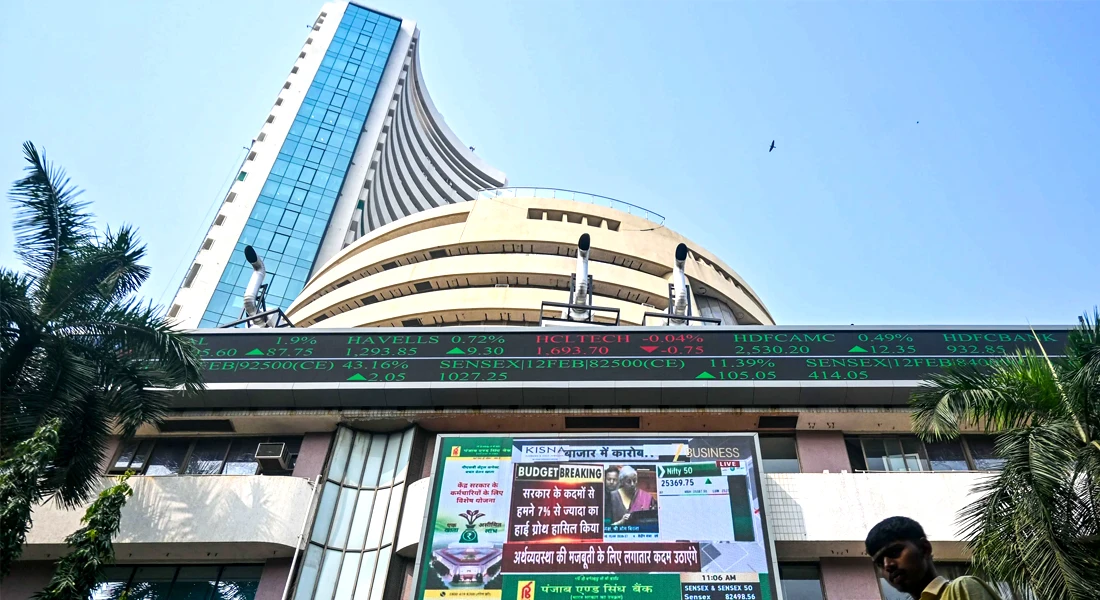
NEW DELHI: Indian benchmark indices ended sharply higher on Monday, snapping a five-session losing streak. The Sensex closed at 76,835.78, up 776 points or 1.02%, while the Nifty 50 finished at 23,995.95, up 229 points or 0.96% and just short of the 24,000 mark. The move was broad rather than narrow: the Nifty MidCap index gained 1.11% and the SmallCap index 1.31%, indicating buying that reached well beyond the largest names.
The proximate trigger came from the oil market. Brent crude dipped below $90 a barrel after a steep decline, easing the single largest external pressure on an economy that imports the overwhelming share of the crude it consumes. Softer geopolitical tension between the United States and Iran, firmer global cues and value buying after the previous week’s correction did the rest. Eternal, InterGlobe Aviation and Infosys were among the leading gainers on the Nifty — a fuel-sensitive airline, a consumer platform and an exporter, which is a fair summary of what the session was pricing.
A barrel-driven session: The Sensex closed at 76,835.78 and the Nifty at 23,995.95 as Brent slipped below $90, with mid- and small-cap indices outperforming the benchmarks.
For an economy that imports most of its crude, the oil price is not a commodity quote. It is a line item in every household budget in the country.
At a Glance
• Sensex: 76,835.78, up 776 points (1.02%) — five-session losing run ended
• Nifty 50: 23,995.95, up 229 points (0.96%)
• Breadth: Nifty MidCap +1.11%, SmallCap +1.31%
• Trigger: Brent crude below $90; easing US–Iran tension; value buying
• Today: ₹20,000 crore government-securities buyback via RBI auction; industrial production data due
Two policy events sit on Tuesday’s calendar and are worth watching more closely than the index. The Centre conducts a buyback of government securities worth ₹20,000 crore through an auction managed by the Reserve Bank of India, covering four securities maturing between October 2026 and February 2027 — a liability-management operation that smooths the redemption calendar and adds liquidity to the system. Separately, industrial production data is released, giving the first read in some weeks on whether factory output is holding the pace it set earlier in the year.
The wider frame remains steady. In its July assessment, the Reserve Bank described the economy as resilient despite external risks, retaining its growth forecast of 6.6% for the financial year ending March 2027 and projecting average inflation of 5.1%. A single strong session does not change a trajectory, and a falling oil price can reverse as quickly as it fell. The constructive reading is narrower and more useful: India’s markets are currently being moved by external inputs it does not control, which is exactly why the domestic work — energy diversification, manufacturing depth, export breadth — is what determines how much those inputs matter next time.