Blitz Bureau
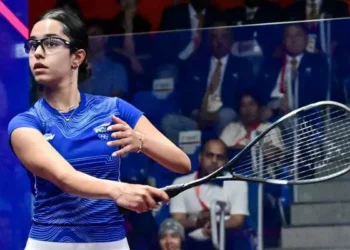
NEW DELHI: The wait was two decades long and it ended in the women’s shot put F57. Sharmila Dhankar won gold at Scotstoun on Monday to become India’s first para-athletics champion at a Commonwealth Games, and to end a twenty-year gap since the country last won any para-athletics medal at these Games. It was the centrepiece of India’s most productive day in Glasgow so far — five medals on the fourth day of competition, taking the national tally to nine: two gold, five silver and two bronze.
The rest of the day’s haul reads like a map of where Indian strength now lies. Sarvesh Kushare took silver in the men’s high jump, opening India’s athletics account at these Games in an event where the country has historically been a spectator. The weightlifting platform produced three more: Gyaneshwari Yadav silver in the women’s 53kg, Valluri Ajaya Babu silver in the men’s 79kg, and Bindyarani Devi bronze in the women’s 58kg. Mirabai Chanu had already delivered India’s first gold of the Games in the women’s 48kg — a third successive Commonwealth title, which is its own kind of record.
A first, and a long-overdue one: Sharmila Dhankar’s gold in the women’s shot put F57 is India’s first para-athletics title at a Commonwealth Games, on a day that also produced silvers in the high jump and on the weightlifting platform.
Integration is easy to announce and hard to fund. A para athlete standing on the top step of a Commonwealth podium is what it looks like when someone actually did the funding.
At a Glance
• Gold: Sharmila Dhankar, women’s shot put F57 — India’s first CWG para-athletics gold
• Day 4 haul: five medals — one gold, three silver, one bronze
• Silvers: Sarvesh Kushare (men’s high jump), Gyaneshwari Yadav (53kg), Valluri Ajaya Babu (79kg)
• Bronze: Bindyarani Devi (women’s 58kg weightlifting)
• Tally after Day 4: nine medals — two gold, five silver, two bronze
What makes the para-athletics gold significant beyond the medal table is the structure behind it. The Commonwealth Games integrate para events into the main programme rather than staging them separately, which means Dhankar competed on the same schedule, in the same stadium and for the same national tally as every other Indian athlete in Glasgow. That design choice has done more for the visibility of para sport than most awareness campaigns, and India’s investment in para-athlete training, classification support and international competition exposure over the past decade is now producing results that are legible to a general audience rather than only to specialists.
The constructive priority is to make sure the twenty-year gap does not repeat. That means keeping classification and coaching expertise available in state centres and not only at national camps, funding the equipment and travel that para athletes need well before a Games year, and building the sports-medicine capacity that lets a thrower or a lifter train through a full four-year cycle without breaking. India’s medal count in Glasgow will be settled in the coming days. The more durable question is whether the pathway that produced Monday’s gold is now permanent enough that the next one arrives in four years rather than twenty.