Blitz Bureau
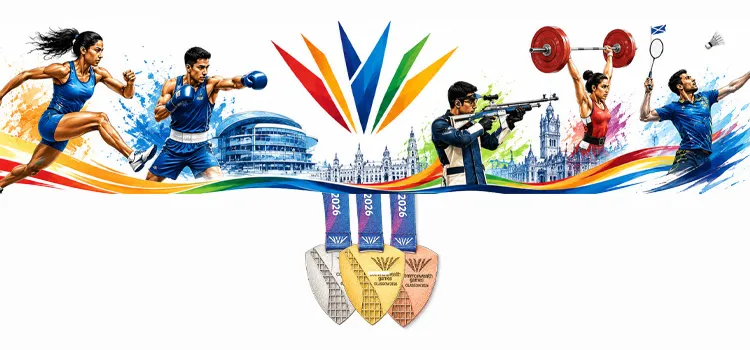
NEW DELHI: India’s performance at the Glasgow 2026 Commonwealth Games offers a lesson in looking beyond the medal tally. India finished fourth with 39 medals – 13 gold, 17 silver and 9 bronze, its lowest total in 24 years, compared with 61 medals at Birmingham 2022. However, the numbers do not tell the complete story.
Glasgow featured only 10 sports, compared with 19 at Birmingham, and excluded several of India’s traditional medal-winning disciplines, including shooting, wrestling, badminton, table tennis and hockey. With these events accounting for 30 of India’s 61 medals in 2022, the reduced tally in Glasgow CWG was inevitable. More significant was India’s ability to adapt, finishing among the top four nations and demonstrating progress in sports beyond its traditional strengths.
The Glasgow campaign reflected a broadening of India’s sporting base. Boxing produced a historic performance, with Indian boxers winning 10 medals, including seven gold. Judo delivered breakthrough moments, while athletics and para-athletics contributed significantly to the medal haul. Such results indicate that India’s sporting ambitions are gradually moving beyond dependence on a few established disciplines. As preparations gather momentum for the Los Angeles 2028 Olympics, the challenge is to convert this growing confidence into a stronger multisport performance and improve upon the sixmedal haul at Paris 2024.
India’s Olympic journey reflects both progress and unrealised potential. At Paris 2024, India won one silver and five bronze medals across shooting, wrestling, hockey and athletics. While these performances demonstrated individual excellence, they also highlighted the need to widen the base of success. Encouraging developments in athletics have strengthened this optimism. The women’s 4x100m relay gold at the Asian Relays Championships in Shaoxing, China, where the Indian quartet of Srabani Nanda, SS Sneha, Sudeshna Shivankar and Tamanna clocked a season-best 43.85 seconds, was an important milestone. Since athletics offers a large share of Olympic medals, sustained investment in track and field will be crucial for India’s global ambitions.
The Glasgow campaign reflected a broadening of India’s sporting base
India’s rise in international sport reflects increased public investment, improved coaching, greater exposure and focused support for elite athletes. Initiatives such as the Target Olympic Podium Scheme and Khelo India have expanded opportunities for young sportspersons, while private academies, corporate sponsorships and professional leagues have strengthened the ecosystem. However, structural weaknesses remain. Success is still concentrated in disciplines such as wrestling, boxing, weightlifting, badminton and shooting. In swimming, gymnastics, cycling and several athletics events, India continues to lag behind leading nations.
Grassroots infrastructure remains uneven, and many talented youngsters lack access to quality coaching, nutrition and sports science. Future progress requires long-term institution building. Talent identification must begin in schools, supported by modern facilities, qualified coaches and scientific training. Sports science, including biomechanics, psychology, nutrition and data analytics, must become central to athlete development.