
• About us
  • Team
  • Privacy Policy
  • Contact
Thursday, October 15, 2026
  • Login
No Result
View All Result
World's first weekly chronicle of development news
  • Blitz Highlights
    • Special
    • Spotlight
    • Insight
    • Entertainment
    • Sports
  • Opinion
  • Legal
  • Perspective
  • Nation
    • East
    • West
    • North
    • South
  • Business & Economy
  • World
  • Hindi Edition
  • International Editions
    • Dubai
    • Tanzania
    • United Kingdom
    • USA
  • Blitz India Business
No Result
View All Result
World's first weekly chronicle of development news
No Result
View All Result

India’s expanding role

GLOBAL ENERGY TRANSITION

by Blitz India Media
March 10, 2026
in Opinion
0
Energy Reforms
Blitz Bureau

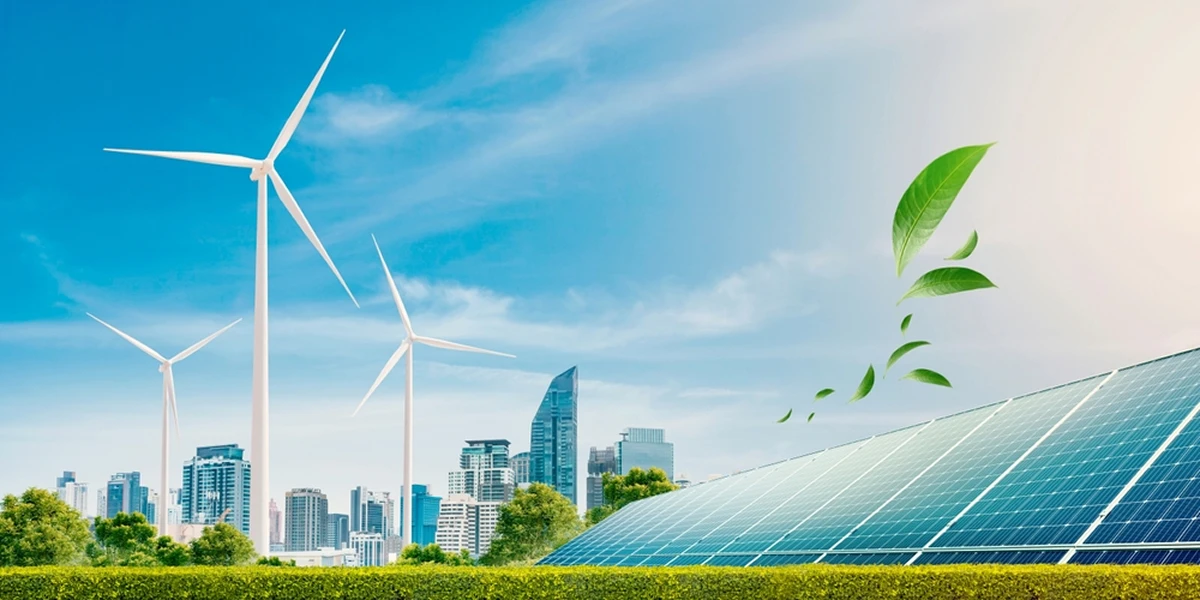
NEW DELHI: IN order to meet its growing energy demand, India has focused on strengthening its systems through policy reforms, infrastructure expansion, and cleaner energy pathways. In June last year, India achieved the milestone of 50 per cent of its cumulative installed electricity capacity from nonfossil fuel sources, five years ahead of its 2030 target under the Nationally Determined Contribution (NDC) to the Paris Agreement.

Reforms across the hydrocarbons sector, expansion of energy infrastructure, and rapid growth of renewable energy are collectively supporting economic growth, job creation, and India’s evolving role in global energy markets.

The effectiveness of India’s energy transition depends not only on expanding infrastructure and cleaner fuels but also on the strength of its governance and regulatory framework across the energy value chain. Clear policies, predictable regulations, and streamlined approval processes are essential to attract investment, reduce project timelines, and ensure a reliable energy supply.

Against this backdrop, the country has undertaken a series of reforms to modernise energy governance and align it with evolving market conditions and transition requirements.

Hydrocarbon reforms

India’s hydrocarbon sector spans the upstream, midstream, and downstream segments. The upstream segment relates to the exploration and production of oil and natural gas. The midstream segment covers the transportation and storage of fuels, and the downstream segment includes refining and distribution. Reforms across these segments are aimed at improving efficiency, enhancing supply security, and supporting a gradual transition to cleaner energy systems.

The upstream sector reforms include: Oilfield (Regulation and Development) Amendment Act, 2025: It modernises upstream regulatory framework by simplifying procedures, enabling integrated energy development, and strengthening investor confidence. Petroleum and Natural Gas Rules, 2025: These rules provide a modern and transparent regulatory framework for the exploration and production of oil and natural gas.

Reforms in the midstream and downstream segments have focused on improving fuel transportation, pricing transparency, and market access.

Tariff structure

Introduced in 2023, the Unified Pipeline Tariff was launched to address regional disparity in gas transportation costs. The UPT system standardises transportation charges across the national gas grid, replacing the earlier distancebased tariff structure. Alongside governance reforms, efforts have focused on expanding energy infrastructure across the country to improve fuel supply chains, gas connectivity, and mobility systems. This has contributed to enhanced energy access, improved system reliability, and cleaner energy use.

The nationwide fuel retail network has been expanded from around 52,000 outlets in 2014 to over one lakh by 2025, improving last-mile fuel availability across urban and rural areas. The cleaner fuel infrastructure has also witnessed rapid growth, with CNG stations increasing from about 968 to over 8,477 and PNG household connections rising from 25 lakh to over 1.59 crore, supporting cleaner mobility and household energy use.

Under the vision of One Nation, One Gas Grid, the natural gas pipeline network has been expanded to over 25,400 km, with an additional 10,459 km under construction, enabling panIndia transportation of gas.

Petroleum marketing

Petroleum marketing infrastructure was strengthened with over 90,000 retail outlets enabled with digital payment facilities, supported by more than 2.71 lakh POS terminals.

Over 3,200 fuel bowsers were commissioned to expand door-to-door fuel delivery, particularly in remote and underserved areas. Electric mobility infrastructure expanded with 8,932 EV charging stations installed at retail outlets under Faster Adoption and Manufacturing of (Hybrid &) Electric Vehicles (FAME) Phase-II, along with over 18,500 additional charging stations set up by oil marketing companies.

Over 500 Apna Ghar truckers’ wayside amenities were established to improve road safety, rest facilities, and welfare for logistics workers. A total of 1,064 integrated energy stations were commissioned as of November 1, 2025, offering conventional fuels alongside alternative energy options along major transport corridors.

With energy access and infrastructure expansion providing the physical foundation for the country’s energy system, the focus has increasingly shifted towards reducing the carbon intensity of energy use while meeting rising demand. Clean energy transition and low-carbon pathways are, therefore, central to balancing energy security, economic growth, and climate objectives.


Related Posts

IRDAI Flags High Insurance Commissions and Mis-selling
Opinion

Whose insurance is it?

October 3, 2026
hiring
Opinion

Job impact crucial to e-mobility push

October 3, 2026
Global Fintech Fest 2026
Opinion

FinTech Fest signals INDIA’S LEAP

September 18, 2026
airline apps India stagnation
Opinion

The APP that lost altitude

September 4, 2026
Water
Opinion

Diplomatic impasse

September 4, 2026
Himalayan infrastructure and climate risk
Opinion

A wake-up call

September 4, 2026
Load More
Next Post
law

Calibrated reform

Recent News

Third road to Ladakh opens new strategic route
News

Third road to Ladakh opens new strategic route

by Blitz India Media
October 15, 2026
0

LEH, 15 October For most of the year, Ladakh depended on two roads to connect from rest of India, the...

Read moreDetails
Rajnath Singh

India offers ASEAN joint manufacture of defence systems

October 14, 2026
India Canada diplomatic ties

India News: Canada Ties, Ports, Minerals and Stubble Fires

October 14, 2026
Asian Champions Trophy 2026

Pathak returns as India names squad for Asian Champions Trophy

October 13, 2026
Electronics production grows seven-fold : MeitY

New Delhi, 13 October : India’s fintech sector raised $2.2 billion in the first nine months of 2026 (January 1, 2026–September 30, 2026), up 14 per cent from $1.9 billion in the same period a year earlier, a report said. The report from data intelligence platform Tracxn Technologies Limited said funding rounds dipped from 260 to 153, adding that the funding was concentrated in a smaller number of large late‑stage rounds, with five mega‑rounds of $100 million or more accounting for $1.1 billion or 48 per cent of total capital. The report said in the first nine months of 2026, digital lending and payments topped the category rankings, while Bengaluru accounts for over three-fifths of all capital raised. On the exit side, IPOs saw a 50 per cent uptick while overall acquisitions slowed. As many as 30 companies raised their first funding round, down 49 per cent from 59 in the previous year. Series A and later rounds totalled 77, down 31 per cent from 112. Late-stage funding (Series C+, PE, and pre-IPO) led the mix, rising 95 per cent to $1.5 billion in the first nine months of 2026 — up from $751 million during the same period in the previous year. This capital surge pushed late-stage investments to 67 per cent of total market funding, the report noted. Earlier stages experienced contractions in capital and deal counts. Early-stage funding fell 33 per cent to $668 million across 52 rounds, compared to $1 billion across 82 rounds in nine months of 2025. Seed funding fell 57 per cent to $73.8 million across 76 rounds, down from $173 million across 148 rounds. New unicorns crossed the billion-dollar threshold in an average of 7.1 years after their Series A funding. Moreover, the industry saw 3 IPOs in nine months of 2026, up 50 per cent from 2 in the previous year, alongside 11 acquisitions, down 45 per cent from 20.

October 13, 2026

Blitz Highlights

  • Special
  • Spotlight
  • Insight
  • Entertainment
  • Health

International Editions

  • US (New York)
  • UK (London)
  • Middle East (Dubai)
  • Tanzania (Africa)

Nation

  • East
  • West
  • South
  • North
  • Hindi Edition

E-paper

  • India
  • Hindi E-paper
  • Dubai E-Paper
  • USA E-Paper
  • UK-Epaper
  • Tanzania E-paper

Useful Links

  • About us
  • Team
  • Privacy Policy
  • Contact

©2024 Blitz India Media -Building A New Nation

Welcome Back!

Login to your account below

Forgotten Password?

Retrieve your password

Please enter your username or email address to reset your password.

Log In

    No Result
    View All Result
    • Blitz Highlights
      • Special
      • Spotlight
      • Insight
      • Entertainment
      • Sports
    • Opinion
    • Legal
    • Perspective
    • Nation
      • East
      • West
      • North
      • South
    • Business & Economy
    • World
    • Hindi Edition
    • International Editions
      • Dubai
      • Tanzania
      • United Kingdom
      • USA
    • Blitz India Business

    ©2024 Blitz India Media -Building A New Nation