Anoop Saxena
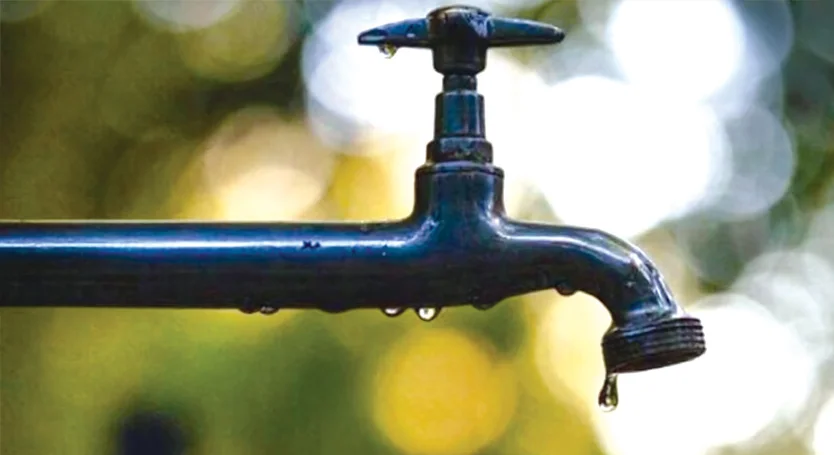
NEW DELHI: In the village of Gadora of Bundelkhand region in Central India, the morning symphony has changed. For decades, it was the rhythmic clink-clink of brass pots against stone wells. Today, it is the hollow hiss of air escaping a blue plastic tap.
Suman Devi, 34, twists the knob. For three minutes, the water is a steady, life-giving stream. Then, it coughs and dies. “The pipes arrived in 2024,” she says, wiping a bead of sweat. “The water? That depends on whether the earth is feeling generous today.”
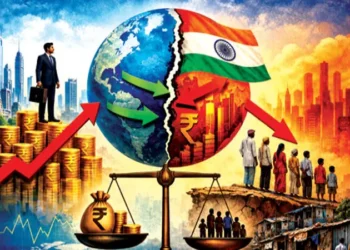
Suman’s tap is the centerpiece of India’s most ambitious social experiment: the Jal Jeevan Mission (JJM). As of March this year, the Government has achieved a staggering 81.7 per cent coverage, meaning over 15.8 crore rural households now have “functional” tap connections. But as the mission enters its second avatar — JJM 2.0, approved just weeks ago with a fresh Rs 8.69 lakh crore outlay – the narrative is shifting from the pipe to the source.
‘Dry pipe’ syndrome
The success of JJM 1.0 was a triumph of engineering. Millions of kilometres of HDPE pipes were laid across the Thar Desert and the Himalayan foothills. However, the State of India’s Environment 2026 report, released last month, offers a sobering reality check. It reveals that India has officially breached the ‘Freshwater Change’ planetary boundary.
In simple terms: we have the plumbing, but we are running out of the liquid gold that fills it.
“Building a tap is a one-time photo-op; keeping it running is a decade-long marriage,” says Dr Ramesh Iyer, a hydrologist specialising in ‘Sponge Villages’. He points out that nearly 30 per cent of the villages certified as Har Ghar Jal (Water in Every Home) in 2024 are now struggling with “intermittent supply” because the local groundwater tables have plummeted.
This is why JJM 2.0 is the most critical policy shift of the decade. Unlike the first phase, which was obsessed with “saturation” (getting a tap to everyone), 2.0 is about “utility-based service delivery.”
Under the new Sujalam Bharat Digital Framework, every village is being assigned a unique ‘Service Area ID’. It’s no longer enough to show a pipe; the Gram Panchayat must now prove the water is flowing, tested for arsenic, and – most importantly – recharged.
The mission has been extended to December 2028, a silent admission that the final 18 per cent of the population – living in the most ‘water-stressed’ and ‘techno-economically challenging’ terrains – will be the hardest to reach.
The climate wildcard
The year 2025 was a brutal year for the country’s water security. With extreme weather events recorded on 331 out of 334 days, the predictable cycle of ‘Monsoon-Recharge-Use’ has broken.
In Bengaluru, the 2025 floods didn’t help the city’s water table; instead, the ‘concrete jungle’ effect sent the water straight into the drains, leaving the borewells dry just weeks later. This has spurred the ‘Sponge City’ movement, but for rural India, the solution is ‘Jan Bhagidari’ (people’s participation).
In Gadora, the community isn’t waiting for a miracle. Under the Jal Arpan initiative, the Village Water and Sanitation Committee (VWSC), led mostly by women, has taken over the operation and maintenance. They collect a small monthly ‘Water Tax’ of Rs 50. It’s a controversial move in a country used to free water, but it’s the only way to pay for the solar-powered pump’s repairs.
The digital frontier
Step into a district collector’s office today, and one won’t see dusty ledgers. One will see the Sujalam Dashboard. Using IoT sensors and geo-tagging, the system tracks the flow of water in real-time. If a pump in a remote village in Odisha stops working, a red light blinks in Bhubaneswar.
But even the best AI can’t create water from a dry aquifer. The success of SDG 6 (Clean Water and Sanitation) now rests on whether India can transition from being a ‘Water Consumer’ to a “Water Manager.”
As Suman Devi says, looking at the greywater she has saved from her morning wash to water her kitchen garden, “The Government gave us the tap. Now, we must give the earth back its water.”
Unlike the first phase, which was obsessed with “saturation” (getting a tap to everyone), JMM 2.0 is about “utility-based service delivery.”