Blitz Bureau
NEW DELHI: In the power corridors of rural India, a new title carries more weight than ‘Pradhan’: meet the Jal Didi.
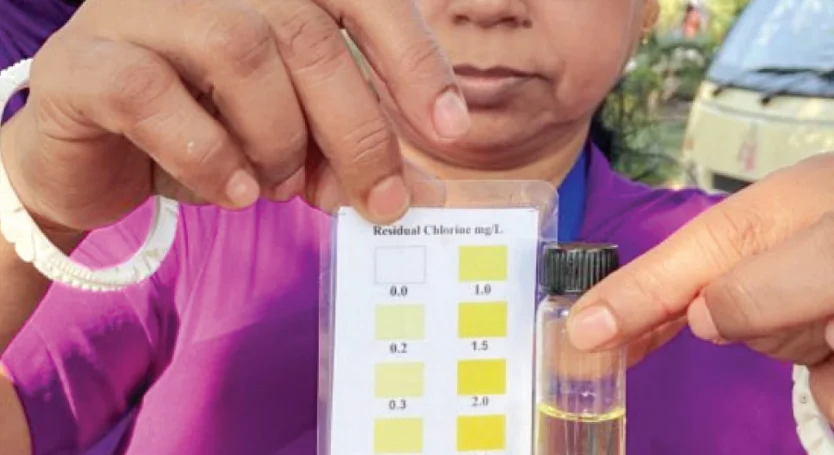
As part of the Jal Jeevan Mission’s empowerment mandate, over 8 lakh rural women have been trained to use Field Test Kits (FTKs) to monitor water quality. But their role has evolved far beyond chemistry. In 2026, the Jal Didi is the village’s resident water auditor, plumber, and diplomat.
Take Meena Bai from Madhya Pradesh. Armed with a smartphone and a pH-testing vial, she ensures her village’s supply isn’t contaminated by the nearby industrial runoff. “Earlier, if the water tasted like iron, we just drank it and fell sick,” Meena says. “Now, if the vial turns purple, I shut down the main valve. The village listens to me because I hold the key to their health.”
The economic impact is staggering. According to SBI Research (March 2026), the mission has saved women approximately 2.5 hours per day that was previously spent trekking for water.
These ‘saved hours’ are fuelling a micro-entrepreneurship boom, with women joining Self-Help Groups (SHGs) to produce everything from solar-lamp components to millet snacks. The Jal Didi isn’t just saving water; she’s saving time, the most precious commodity of all.