Saji Chacko
NEW DELHI: In recent years, pickleball—a sport once unfamiliar to most Indians—has rapidly evolved into one of the country’s most exciting recreational trends. Blending elements of tennis, badminton, and table tennis, the game’s simplicity and accessibility have made it especially appealing in urban India.
While early growth was seen in cities like Mumbai and Bengaluru, it is regions such as Delhi and Gujarat that are now driving the sport’s widespread popularity, each contributing in distinct and compelling ways.
Delhi: Tailored for Urban Living In a city where time is scarce and space even scarcer, pickleball has found the perfect ecosystem to thrive. The rise of the sport in Delhi is closely linked to shifting urban lifestyles—where people are increasingly seeking quick, accessible, and engaging ways to stay active.
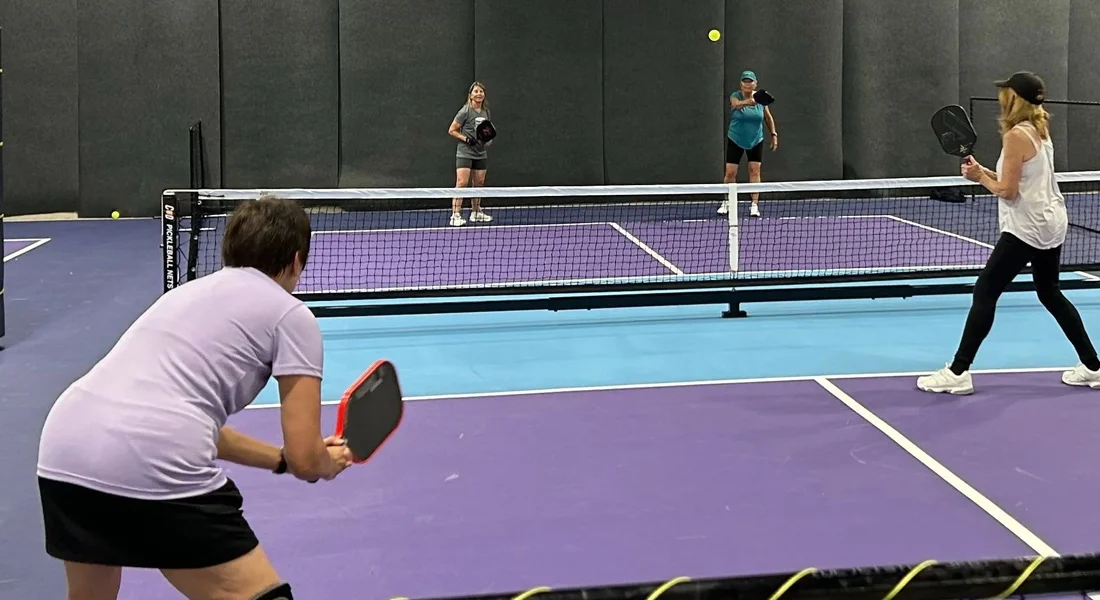
Across neighborhoods like Dwarka, Rohini, and South Delhi, residential societies and sports complexes have begun converting existing badminton and tennis courts into pickleball courts. This adaptability is one of the sport’s biggest advantages. Unlike traditional sports that demand larger fields or teams, pickleball can be played in compact spaces and small groups—making it ideal for city living.
What truly sets pickleball apart in Delhi is its ease of entry. The rules are simple, the equipment is affordable, and the learning curve is minimal.
As Sachin Wadhwa who runs the Pickleball in Gulmohar Park Club explains, the sport’s familiarity—especially its resemblance to table tennis—makes it instantly approachable for many. “Even the court size, roughly a quarter of a tennis court, allows older players to participate comfortably.”
This inclusivity is reflected in the diversity of players. “We have players from the age of 17 to 70,” notes Suryaveer Singh Bhullar, President of the Indian Pickleball Association. “In no other sport do we see such a wide age range playing together.”
The numbers tell a compelling story. Delhi now boasts around 300 pickleball courts, with more being added regularly. At clubs like Gulmohar Park, court bookings are in such high demand that players often need to reserve slots over a day in advance. Weekly revenues from bookings have surged, reflecting the sport’s growing commercial and recreational appeal.
Beyond infrastructure, pickleball is reshaping how Delhiites socialize and stay active. Corporate professionals, retirees, and students are sharing courts—breaking away from the rigid structures of traditional sports. Social media has further amplified this growth, with communities organizing leagues, sharing experiences, and attracting new players. In many ways, pickleball has become more than a sport in Delhi—it is a lifestyle shift.
Gujarat: Organized Growth While Delhi’s growth story is rooted in lifestyle adaptation, Gujarat’s pickleball surge reflects something equally powerful: entrepreneurial vision and structured development.
Cities like Ahmedabad, Surat, and Vadodara have seen a wave of privately developed pickleball facilities. Investors and sports enthusiasts have recognized the sport’s potential early, leading to the establishment of dedicated courts, coaching academies, and regular tournaments. What distinguishes Gujarat is its organized approach. Local associations and clubs actively promote pickleball through structured competitions and training programs, ensuring that players of all levels—from beginners to advanced competitors—have opportunities to grow.
Importantly, the sport is being introduced at the grassroots level. Schools and colleges across the state have begun incorporating pickleball into their sports programs, exposing younger generations to the game early. This not only builds a talent pipeline but also ensures long-term sustainability.
Yet, beyond its competitive framework, pickleball in Gujarat has taken on a unique social dimension. Evening matches often double as networking events, especially among business professionals. Courts become spaces where deals are discussed, friendships are formed, and communities are strengthened. The sport’s informal, friendly nature encourages interaction, making it as much about connection as competition.
This blend of sport and social engagement has been central to its popularity. “In Gujarat, pickleball is not just a game—it is a platform,” feels Suryaveer Bhullar. Whether in a residential society in Delhi or a private club in Gujarat, one theme remains constant: pickleball fosters community.
Its inclusive nature breaks down traditional barriers—age, profession, gender, and skill level all become secondary once players step onto the court. Unlike many sports that can feel intimidating to beginners, pickleball welcomes newcomers with open arms.
It is this accessibility that has drawn such a diverse player base. From young professionals looking for a quick evening workout to retirees seeking an active social life, pickleball offers something for everyone.
As highlighted in the experiences of players and organizers, the sport’s simplicity is its greatest strength. It removes the friction that often prevents people from engaging in physical activity, replacing it with ease, enjoyment, and connection. And in that sense, pickleball’s real victory may lie not on the scoreboard, but in the way it brings people together. In the future, pickleball may not just be another sport Indians play—it could become a key part of how they connect, unwind, and build communities.
Origins of the Sport
Pickleball was created in thesummer of 1965.
- Founders :/strong>It was invented by Joel Pritchard, Bill Bell, and Barney McCallum.
- Origin: The game originated on Bainbridge Island in Washington, USA.
- Reason for Creation: It was invented to entertain the founders’ families during summer when they couldn’t find enough equipment for other sports.
- Initial Equipment Used: Initially, they used ping-pong paddles and a perforated plastic ball (similar to a wiffle ball).
- Type of Court: The first game was played on an existing badminton court with a lowered net.
- Pickleball Name Origin (Popular Story): One explanation is that it was named after the Pritchard family dog, Pickles, who chased the ball.
- Alternate Naming Theory: Another explanation is that the name comes from the term “pickle boat,” referring to a mix of leftover rowers—reflecting the mix of sports (tennis, badminton, ping-pong).
- Early Rule Development: American Barney McCallum helped formalize the rules shortly after the game’s invention.
- Spread of the Game: By the 1970s, pickleball started spreading across the United States, gaining popularity as a recreational sport.
Delhi adapts, Gujarat builds
- Delhi’s Urban Advantage: In Delhi, where time is scarce and space even scarcer, pickleball has found the perfect ecosystem to thrive. The rise of the sport is closely linked to shifting urban lifestyles, where people seek quick, accessible, and engaging ways to stay active.
- Growing Infrastructure in Delhi: Across neighborhoods like Dwarka, Rohini, and South Delhi, residential societies and sports complexes are converting existing badminton and tennis courts into pickleball courts.
- Gujarat’s Structured Growth: Gujarat’s pickleball surge reflects strong entrepreneurial vision and structured development, driving rapid expansion of the sport.
- Private Investment & Facilities: Cities like Ahmedabad, Surat, and Vadodara have seen a rise in privately developed pickleball facilities, including dedicated courts, coaching academies, and regular tournaments.
- Grassroots Development: The sport is being introduced at the grassroots level, with schools and colleges incorporating pickleball into their sports programs, helping build a strong future talent pipeline.